
 By joshua
 Return To Roots To Fight Disease, Ageing, Don tells Nigerians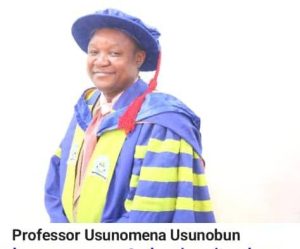
By Ikhili Ebalu, Benin city
Esan-born Professor of Environmental and Biochemical Toxicology at Edo State University, Iyamho (ESUI), Professor Usunomena Usunobun, has called for a national shift towards the deliberate use of indigenous medicinal plants and leafy vegetables, warning that increasing exposure to toxic chemicals in food, drugs and the environment is accelerating disease, ageing and premature deaths.
Delivering the university’s 18th Inaugural Lecture at the Aliko Dangote Auditorium on Wednesday,22nd July, 2026, the renowned Esan-born biochemist emphasized and advocated the compulsory inclusion of leafy vegetables such as bitter leaf, scent leaf and fluted pumpkin (ugwu) in daily diets, describing them as rich sources of antioxidants and pharmacologically active phytochemicals capable of protecting vital organs from toxic damage, insults and assaults.
Speaking on the theme, “Back to Our Roots: The Panacea to Insults and Assaults,” Professor Usunomena urged Nigerians to embrace scientifically validated medicinal plants for disease prevention and management, stressing that many modern drugs are themselves chemicals that may further burden the body.
According to him, the body is under constant attack from toxic substances found in food, air, water and the environment, leading to progressive damage to organs such as the liver, kidneys, heart and spleen.“We live in a toxic world where our bodies are continually exposed to harmful substances despite nature’s abundance of rich medicinal resources. This reality informed the choice of my inaugural lecture title, ‘Back to Our Roots: The Panacea to Insults and Assaults,’” he said.
The professor explained that biochemical insults and assaults refer to chemical and molecular damage inflicted on cells, tissues and DNA by internal stressors and external toxins, often resulting in chronic diseases, cellular dysfunction and accelerated ageing.
He stated that a compromised health status is a consequence of biochemical insults and assault, with a major factor being the excessive production of free radicals & oxidative stress.He noted that toxic exposure occurs through inhalation of polluted air, consumption of contaminated food, skin contact and occupational exposure in industries and laboratories.
According to the Esan-born Professor, Insults and assaults from smoking alone introduces over 60 known carcinogens into the body, responsible for approximately 22% of all cancer deaths worldwide.
Professor Usunomena further raised alarm on high depletion of beneficial soil enzymes (Urease, α-amylase, β-amylase, Acid Phosphatase, β -glucosidase and Dehydrogenase) in soil from mining communities such as Ikpeshi while heavy metals (Mercury, lead, cobalt, copper, Chromium, Nickel, cadmium, Arsenic etc) were in an alarming high rate in the soil from mining community which requires urgent attention as the high concentration pose significant environmental and health concerns due to their persistence, bioaccumulation potential, and carcinogenic properties.
Professor Usunomena lamented that while many developed nations continue to invest heavily in medicinal plant research, Africans are increasingly abandoning traditional herbal resources in favour of synthetic drugs.
“Today, while the King of England is reportedly receiving treatment involving medicinal plants, many Africans continue to rely almost entirely on synthetic chemicals and drugs, exposing their bodies to more insults and assaults.“Fortunately, scientific advancement is gradually taking us back to our roots as medicinal plant research is gaining global recognition and acceptance. We must rediscover and maximize the enormous benefits of our indigenous medicinal plants,” he stated.
Professor Usunomena emphasized that beyond their health benefits, medicinal plants and leafy vegetables are environmentally friendly, biodegradable and cost-effective, making them suitable alternatives in both human and animal nutrition while supporting Nigeria’s environmental sustainability agenda.
Presenting findings from years of research, Professor Usunomena disclosed that commonly used Nigerian medicinal plants significantly reduced liver, kidney and spleen damage, corrected anaemia and provided remarkable hepatoprotective and nephroprotective effects due to their antioxidant properties.
He added that other indigenous medicinal plants such as bitter leaf (Vernonia amygdalina) and sour sop (Annona muricata) demonstrated strong anti-fibrotic properties capable of protecting the liver against fibrosis and early cirrhosis through free radical scavenging, membrane stabilisation and suppression of harmful biochemical processes.
The Esan-born professor warned that although conventional drugs remain important in healthcare, they are becoming increasingly expensive and may produce adverse side effects, whereas many beneficial medicinal plants with proven bioactive compounds remain underutilized or are being exploited by foreign researchers for the development of plant-based pharmaceuticals.
He therefore called for increased investment in scientific research on indigenous medicinal plants to harness their therapeutic potential for improved healthcare delivery and sustainable development.
Professor Usunomena further called on the need for government regulatory bodies like NAFDAC, MAN, SON and others to Network with higher institutions especially in rural and remote communities to help research/identify fake, sub-standard and adulterated products/foods/drinks/drugs and other hazardous chemicals currently in Nigerian market and in circulation.
He further advised and encouraged every home to have a garden for easy access, use and consumption of leafy vegetables such as bitter leaf, ugwu leaf, scent leaf etc
Professor Usunomena, a Fellow of the Nigerian Science Leadership Programme (2024), obtained his B.Sc. in Biochemistry from Ambrose Alli University, Ekpoma, his M.Sc. from the University of Ibadan and his Ph.D. in Environmental and Biochemical Toxicology from the University of Benin.
He attained the rank of Professor on January 1, 2021.The Esan-born Professor Usunomena was chairman of several Mock accreditation committees in Edo State University Iyamho including Chairman, Mock Accreditation Team to Accounting Department in preparation for ICAN accreditation 2021; Chairman, Mock Accreditation Team to Civil and Mechanical Engineering Department in preparation for NUC and COREN accreditation in 2019, 2020 and 2021; Chairman, Edo University Sport committee (2017 – 2018).
He has also served as Member, Edo University Committee to review 2017 Academic Brief Document; Member, Strategic Planning Sub-committee on Quality Education, 2017; Member, Committee on Code of Practice and Ethics of the School of Postgraduate Studies, 2021; Member, Mock Resource Verification team to College of Medical Sciences for Part II MB;BS Programme accreditation in preparation for MDCN accreditation in 2019 and 2021; Member, Mock Accreditation team to Law Faculty in Preparation for Accreditation by NUC 2021; Member, Mock Accreditation team to Nursing Department in Preparation for Accreditation by Nursing and Midwifery Council of Nigeria (NMCN) 2021; Member, 2020 Mock Accreditation team to Department of Nursing in preparation for Public Health Nursing programme accreditation by West African Health Examination Board 2020; Member, Mock Accreditation Team to Medical Laboratory Science Department in preparation for Accreditation by NUC and MLSCN in 2019 etc.
A distinguished scholar, he has published more than 74 scholarly articles in reputable journals, supervised numerous undergraduate and postgraduate students, secured several research grants, including the 2020 and 2024 TETFund Institutional-Based Research Grants, and participated in numerous local and international scientific conferences.
Professor Usunomena has also held several strategic leadership positions at Edo State University, including Dean of the Faculty of Basic Medical Sciences, Director of Academic Planning, Chairman of the University Admissions Board and Head of the Department of Biochemistry.
He currently serves as the Senate Representative on the University’s Governing Council.He has contributed to National Universities Commission (NUC) accreditation AND Resource Visits exercises across more than 12 Nigerian universities, serves as an external examiner to several institutions, assesses professorial candidates for leading universities and remains an active member of the Nigerian Society of Biochemistry and Molecular Biology and the Society for Experimental Biology of Nigeria.
Beyond academia, he is the founder of Freedom Educational Consultants Limited and the Professor Usunomena Usunobun Health Awareness Initiative and Advocacy, through which he promotes public health education and research-driven advocacy on disease prevention.