
 By joshua
 Cardinal Onaiyekan’s Ecclesiastical Authority and Audacity: A Voice That Has Never Been Defined by Political Convenience
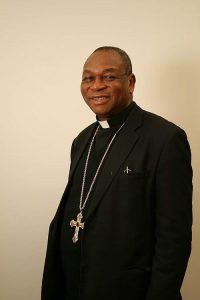
By Christopher Sunday
In 2006, when the debate over President Olusegun Obasanjo’s proposed third term agenda dominated Nigeria’s political space, Cardinal John Onaiyekan delivered a sermon that attracted national attention. At a time when many voices were cautious about confronting the powerful, the then Archbishop of Abuja spoke against any attempt to alter constitutional limits for personal political advantage. His message was not driven by partisan calculations but by a deep conviction that democratic institutions, justice, and the common good must remain above individual ambition.
Nearly two decades later, Cardinal Onaiyekan is again in the news following his comments after the meeting between the Catholic Bishops’ Conference of Nigeria and President Bola Ahmed Tinubu. Some have interpreted his remarks as opposition to the Tinubu administration, but such conclusions overlook the character of his public ministry and the foundation of his interventions over the years.
The Cardinal’s voice has never been defined by who occupies the Presidential Villa. It has been guided by his ecclesiastical authority, the responsibility of a senior shepherd of the Church to speak on issues of morality, justice, peace, and the welfare of society. His position gives him not only the privilege of engaging leaders but also the moral obligation to raise concerns when he believes the interests of the people require it.
Beyond ecclesiastical authority, Cardinal Onaiyekan has also demonstrated remarkable audacity, the courage to speak truth to power, regardless of whose government is in place or how uncomfortable his message may be. That audacity was evident during the third term controversy under President Obasanjo, and it remains evident today.
The Church, in its social teaching, has historically maintained that political leadership is a service to humanity and that public authorities must always be accountable to the people they govern. Therefore, when religious leaders engage governments, it should not automatically be reduced to political opposition. Constructive criticism is not hostility; accountability is not antagonism.
Those who accuse Cardinal Onaiyekan of being against President Tinubu because he expressed concerns about national issues may be viewing his intervention through a partisan lens. History, however, shows a different pattern. The Cardinal has challenged power before, regardless of the personality involved, because his primary allegiance is to principles rather than political interests.
Nigeria’s democracy requires voices that can engage authority without fear. It requires leaders who can listen even when criticism is uncomfortable. Cardinal Onaiyekan’s interventions represent that important democratic space where conscience, faith, and civic responsibility meet.
His ecclesiastical authority gives him a platform; his audacity gives him the courage to use it. And that combination has made him one of Nigeria’s most consistent voices on matters of national conscience.