
 By joshua
 RESCUE, RESTORE, RISE: WHY HON. PAUL UKWENYA SAYS EXPERIENCE IS THE EDGE IDAH/IBAJI/IGALAMELA-ODOLU/OFU NEEDS
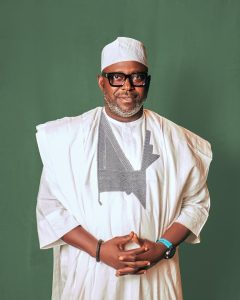
For Hon. Paul Ogwu Ukwenya, the road to the House of Representatives is not paved with promises alone, but with a deep, firsthand understanding of the challenges and possibilities within Idah, Ibaji, Igalamela-Odolu, and Ofu Federal Constituency.
In his newly unveiled manifesto titled _“Rescue, Restore, Rise,” anchored on the slogan “Restoring Hope. Delivering Results. Securing Our Future,” the Peoples Democratic Party (PDP) aspirant is positioning himself not just as another candidate, but as the one candidate who already knows the terrain, the people, and the gaps that need to be closed.
At the heart of Ukwenya’s pitch is the argument that representation must go beyond rhetoric. He says his years of engagement with the people of the constituency have given him an intimate knowledge of the systemic issues holding the area back — from decaying school infrastructure and under-equipped health centers to youth unemployment and the perennial threat of flooding in riverine communities.
“I offer myself to serve with humility, competence, and purpose,” Ukwenya stated in the manifesto’s introduction. “Our constituency is blessed with rich human and natural resources, yet too many of our families still grapple with insecurity, unemployment, and limited access to education and healthcare.”
That understanding, he argues, is what will allow him to hit the ground running if elected. Rather than spend his first months learning the ropes, Ukwenya says he will leverage his existing network and insight to push for targeted interventions and attract partnerships that deliver immediate value to all four LGAs.
The manifesto reads like a response to the day-to-day realities of constituents. On education, Ukwenya is proposing concrete steps: renovating classrooms, supporting teacher welfare and recruitment, creating a constituency-funded scholarship scheme, and establishing ICT centers to prepare students for a digital economy. His special focus on girl-child education, through incentives to boost enrollment and retention, addresses a long-standing barrier to development in many rural communities.
Security and healthcare also feature prominently. Ukwenya plans to strengthen community policing and legislative advocacy for better funding of security agencies, while expanding medical outreaches and upgrading primary healthcare centers across every ward. For a constituency where riverine areas like Ibaji are frequently cut off during floods, his commitment to emergency relief and consistent supply of essential drugs could prove critical.
Perhaps the most striking part of the document is its emphasis on youth. Ukwenya has outlined a multi-pronged approach that includes vocational training centers, SME grants, agricultural value chain development, and internship programs to connect graduates with opportunities. He also intends to attract private investment to create jobs locally rather than wait for federal allocations.
For social inclusion, the manifesto promises monthly support for vulnerable senior citizens, targeted empowerment for widows and low-income women, and inclusion of persons with disabilities in government programs. Infrastructure development — roads, electricity, flood control, and market upgrades — rounds out a plan that touches every pillar of community life.
Ukwenya is also making accountability a defining feature of his campaign. He has pledged to establish an open constituency office, hold quarterly town hall meetings, and publish annual performance reports. It’s a direct appeal to constituents tired of representation that ends at election day.
What sets Ukwenya apart, according to the manifesto, is the combination of experience and local understanding. While other aspirants may bring ambition, he argues that ambition without context often results in misplaced priorities and abandoned projects.
He points to the PDP as the platform best suited to deliver inclusive governance and social justice, but insists that it is the individual on the ballot who must translate party ideals into tangible outcomes. “This manifesto is a practical contract,” he wrote, framing it as a binding commitment rather than political messaging.
Ukwenya concludes with a rallying call: that transforming Idah, Ibaji, Igalamela-Odolu, and Ofu into a constituency of opportunity, security, and dignity requires a representative who is both accessible and accountable.
For supporters, the argument is straightforward — in a race where experience, connection to the grassroots, and a clear policy roadmap matter, Hon. Paul Ogwu Ukwenya represents the continuity and competence needed to move the constituency forward.
As election season gathers momentum, the question for voters in Idah, Ibaji, Igalamela-Odolu, and Ofu may ultimately come down to this: who has not only the vision, but the knowledge and resolve to turn that vision into results? Ukwenya believes he does. And he’s asking constituents to rise with him.