
 By joshua
 HALLELUJAH ! PETER OBI FINALLY CONFRONTS THE EVIDENCE QUESTION
By Musa Bakare
Ahead of 2027, the political argument around the 2023 presidential election is beginning to shift. Rhetoric is surrendering to reality, emotion is giving way to evidence, and political mythology is finally confronting the cold discipline of facts.
For Peter Obi, his colleagues in the opposition and their supporters, the scales are at last beginning to fall from their eyes.
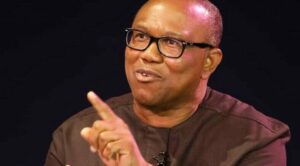
In a recent BBC interview, Obi was confronted with the fundamental question that has hovered over his political narrative since 2023: What evidence proves that he actually won the presidential election he has so vehemently claimed he won?
His response was striking. While maintaining his usual belief that he won, he acknowledged that there is no evidence anywhere in the world establishing that claim.
That admission should force Nigeria to revisit one of the most persistent political narratives of the last three years.
Obi felt he deserved to win. But feeling is not fact. Belief is not evidence, and conviction is not a certificate of victory.
Elections are won through ballots cast by citizens, votes counted and collated according to law, results declared by the constitutionally empowered electoral authority and, where challenged, tested before the courts.
In 2023, the Independent National Electoral Commission declared Asiwaju Bola Ahmed Tinubu the winner with 8,794,726 votes, ahead of Atiku Abubakar with 6,984,520 votes and Peter Obi with 6,101,533 votes.
Obi and Atiku felt they deserved to win and challenged the result. They had every democratic and constitutional right to do so. But democracy does not end when a petition is filed. It continues through evidence.
The Presidential Election Petition Court dismissed the challenges in September 2023.
The Supreme Court subsequently dismissed the appeals and affirmed President Tinubu’s election in October 2023.
That is the historical record. And this is where the opposition must confront an uncomfortable question: How long can a political claim survive after failing to establish itself through the ballot, the evidence and the courts?
For almost three years, Nigerians have been subjected to two competing versions of the 2023 election, one based on the official electoral record and judicial determinations, and another based largely on the conviction that a different outcome should have occurred.
As the saying goes, if wishes were horses, beggars would ride.
But democracy cannot operate on the principle of “I believe I won, therefore I won.”
If every defeated candidate can permanently proclaim himself the winner without producing evidence capable of establishing that claim, then no election can ever be credibly concluded.
Every result becomes temporary. Every judicial decision becomes optional. Every defeated politician becomes a perpetual claimant to an imaginary mandate.
President Bola Ahmed Tinubu did not become President because Peter Obi or Atiku Abubakar conceded to him. He became President because Nigerians voted for him, INEC declared him winner of the 2023 presidential election, and the courts upheld that result after all legal challenges were heard.
The Presidency of Nigeria is not determined by social media popularity, television narratives, opinion polls, rallies, hashtags or the intensity of supporters’ convictions. It is determined by votes and the law.
Peter Obi has every right to contest in 2027, but he must prepare his mind for both success and failure. What he must desist from is further attempts to cajole Nigerians into confusing a political belief about election results with an established fact.
Obi and others in the opposition must note: the 2027 election must be a different conversation. It must not be another referendum on who believes he won in 2023.
It must be a referendum on who can govern Nigeria better today and tomorrow. And on that battlefield, President Tinubu has a record to defend.
The reforms. The infrastructure projects. The economic restructuring. The student loan programme. The expansion of social intervention measures. The strengthening of Nigeria’s fiscal position. The renewed emphasis on agriculture, investment and domestic production. The difficult but necessary decisions taken in the national interest.
These are precisely the foundations upon which continuity would be built.
Judgment in 2027 will be based on records, facts and programmes, not on the unfinished emotional argument of 2023.
With the monumental campaign machinery of the APC and President Tinubu clearly in view, the opposition may return to the familiar lamentations of 2023 after 2027. It may resurrect old narratives and reopen old wounds.
But Nigeria is moving forward. The 2027 presidential election will not be won by whoever tells the most dramatic story about the past or those wishing they win, It will be won by whoever successfully convinces Nigerians that he deserves their confidence for the future.
And in their assessment of President Tinubu’s record, his reforms and the growing political strength of the APC, the opposition should prepare for another hard political reality: the ballot box will once again disappoint the prophets of political rhetoric.
In 2027, not Peter Obi’s belief or conviction, not Atiku Abubakar’s lamentations, not social media campaigns and certainly not revisionist narratives will decide.
When the votes are counted, the verdict will belong to the Nigerian people.
The battle is no longer about rewriting 2023. It is about winning the future for Nigeria and Nigerians with Asiwaju Bola Ahmed Tinubu.
Musa Asiru Bakare, Member, TSG, writes from Lokoja, Kogi State.
October 8, 2026