
 By joshua
How Regional Arithmetic Favours Atiku Abubakar in 2027
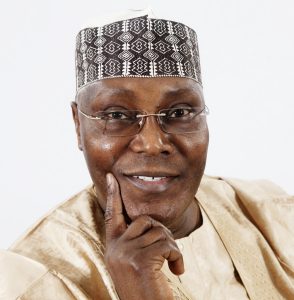
Photo by www.mortenfauerby.dk
©mortenfauerby 2010 – all rights reserved
Nigeria’s 2027 presidential contest is shaping up around a potentially decisive regional dynamic, though it remains contingent on the widely speculated exit of Peter Obi from the ADC to the NDC. Should that realignment materialize, the race could feature two formidable Southern candidates, Bola Ahmed Tinubu from the South-West and Peter Obi from the South-East against a single Northern heavyweight, Atiku Abubakar from the North-East. Such a configuration would significantly reshape the electoral map and redefine the path to victory.
Drawing inspiration from the wisdom and uncommon analytical depth of the former presidential candidate Chief Dele Momodu, it is worth recalling how he accurately predicted the outcome of the 2015 Nigerian presidential election, breaking it down zone-by-zone and state-by-state with remarkable precision. His October 2014 piece, “Buhari versus Jonathan: In Search of a Mathematician,” remains a testament to strategic political forecasting. While I may not claim such mathematical exactness, I will make a clear and reasoned case that the most viable path to defeating Tinubu in 2027 lies in rallying behind Atiku Abubakar.
President Tinubu’s post-2023 strategy appears to have shifted after an early realization that his relationship with the North had weakened, with growing discontent and opposition forces he could neither easily contain nor ignore. In response, he seems to have turned decisively toward consolidating the South, strengthening ties in the South-South, engaging political actors in the South-East, and reinforcing his natural base in the South-West in a bid to secure that region as a unified stronghold. This creates the impression that the South may lean toward continuity. However, should Peter Obi contest independently, that cohesion fractures. The Southern vote would likely split between Tinubu and Obi, opening space for Atiku Abubakar to gain footholds, especially if he secures a strategic running mate from the region.
In contrast, the North presents a different and potentially decisive equation. There is a growing perception across the region that the political moment favors consolidation behind Atiku Abubakar more than ever before. Several factors are often cited in this regard. First is the belief among many Northern voters that the current administration has exhibited ethnic bias in appointments and governance. Second is the widespread perception of imbalance in policy direction and project distribution, with flagship initiatives such as the Lagos-Calabar coastal highway seen by many as disproportionately favoring the South-West. Third, the religious sentiment that played a role in the 2023 elections appears to be losing its mobilizing power, with many voters signaling a shift away from identity-based considerations toward broader governance concerns.
Additionally, persistent insecurity and underdevelopment in many parts of the North continue to shape political expectations, with many citizens prioritizing leadership they believe can directly address these challenges. Finally, Atiku’s recent positioning of 2027 as his final presidential bid, alongside renewed emphasis on his policy proposals, appears to be resonating with the significant segments of the Northern electorate. Taken together, these dynamics suggest that Atiku is strongly positioned to secure a more unified and possibly expanded Northern mandate than in previous cycles.
The implication is straightforward: a divided South versus a relatively unified North could tilt the balance. In such a scenario, Atiku’s path to victory becomes more viable, not despite Obi’s participation, but partly because of it. The 2027 election, therefore, may be less about religious alignments, as seen in 2023, and more about regional calculations.
While outcomes remain uncertain, this emerging structure suggests that the opposition’s most realistic chance against an incumbent lies in leveraging regional arithmetic effectively and in that equation, Atiku Abubakar appears strategically advantaged…
Dr. Sani Sa’idu Baba writes from Kano, and can be reached via drssbaba@yahoo.com