
 By joshua
 Shittu: Religious Differences Should Not Become Walls Against Peaceful Coexistence
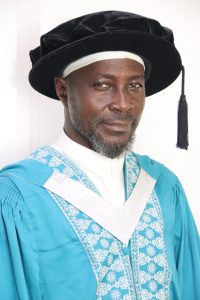
For generations, Nigerians of different faiths have shared the same streets, schools, markets, workplaces and neighbourhoods. They have traded together, celebrated together and, in difficult moments, stood by one another.
But Professor Abdulazeez Balogun Shittu believes something dangerous happens when religious identity stops becoming a source of moral strength and begins to serve as a wall separating citizens.
Delivering the 54th Inaugural Lecture of the University of Abuja, now Yakubu Gowon University, Abuja, on September 24, 2026, Shittu, Professor of Islamic Thought and Comparative Religion, sounded a warning over what he described as “religious insularity.”
His lecture, titled “Religious Insularity: A Threat to Peaceful Coexistence in Nigeria,” was less a theoretical academic exercise than a reflection on one of Nigeria’s most persistent challenges: how to live with religious difference without allowing it to become a source of division.
Shittu defined religious insularity as an exaggerated attachment to one’s religious identity accompanied by suspicion, rejection or condemnation of others.
For him, the problem is not deep religious commitment. Rather, the danger begins when faith is used to establish superiority over others.
He identified two dimensions of the problem—intra-religious and inter-religious insularity. Intolerance, he noted, can develop between Muslims and Christians, but it can also emerge within the same religious community when sectarian or denominational differences become grounds for hostility.
That distinction, he argued, is important because Nigeria’s religious tensions cannot always be reduced to a simple Muslim-Christian divide.
Shittu traced religious insularity to several factors, including inadequate knowledge of one’s own faith, ignorance of other religions, stereotypes, misinformation, intolerance and the politicisation of religion.
He was particularly concerned about the influence of information and the media.
In an era when an unverified religious claim can spread across social media within minutes, irresponsible reporting, he warned, can deepen suspicion and damage relationships that took generations to build.
Drawing from Islamic teachings, Shittu cited Qur’an 5:48, which recognises religious differences while urging people to “race to all that is good,” and Qur’an 60:8, which calls for justice and righteousness toward those who do not fight Muslims or drive them from their homes.
He also referred to the Prophet Muhammad’s interactions with Jewish and Christian communities and historical examples associated with Umar ibn al-Khattab to illustrate how religious conviction can coexist with respect for people of other faiths.
Perhaps the most striking dimension of the lecture was Shittu’s distinction between religiosity and spirituality.
A society may be visibly religious—filled with sermons, ceremonies, religious symbols and public declarations of faith—while failing to reflect the ethical values that religion is expected to cultivate.
The consequences, he warned, can include discrimination, loss of trust, social division and the manipulation of religion to justify violence.
His proposed solution begins with knowledge.
Shittu called for greater religious literacy, accurate information, verification of claims, fairness, tolerance and responsible leadership. He urged religious leaders to become examples of peaceful coexistence, journalists to avoid inflammatory reporting and politicians to resist exploiting religious differences for political gain.
His message ultimately goes beyond the mosque, church or classroom.
It speaks to the Nigerian home, workplace, newsroom, marketplace and political arena.
Nigeria does not need to eliminate religious differences to achieve peace. Instead, Nigerians must learn to manage those differences with justice, humility and mutual respect.
A Muslim should not have to become less Muslim to respect a Christian. A Christian should not have to become less Christian to respect a Muslim.
That, perhaps, is the central challenge posed by Professor Shittu’s lecture.
In a country where religious diversity is permanent, the ability to live peacefully with difference is not merely an ideal.
It is a national necessity.