
 By joshua
 Rebuilding Collective Strength in Kogi East: Why the Aminu Suleiman Conversation Continues to Grow
By Christopher Sunday
Nations and peoples rarely decline because they lack potential. More often, they decline because critical moments arrive and unity fails to prevail over personal ambition. Today, Kogi East stands at such a defining moment in its political history.
For the Igala and Bassa people, the present political atmosphere demands more than familiar slogans, emotional rhetoric, or fragmented ambitions. It demands sober reflection, strategic thinking, and leadership capable of transforming the region’s enormous human and political potential into measurable progress.
Across communities in Kogi East today, conversations among traditional rulers, professionals, youths, women groups, political stakeholders, and community leaders increasingly revolve around one central question: who possesses the credibility, temperament, competence, and emotional intelligence to unify the region and effectively represent its collective aspirations?
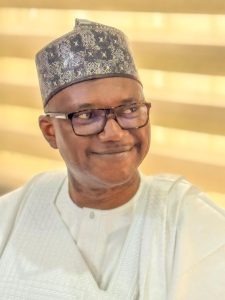
For many, one name continues to emerge naturally within those conversations: QS Aminu Abubakar Suleiman, FNIQS.
The growing support around Aminu is not rooted in slogans or manufactured populism. Rather, it is anchored on an established reputation for humility, discipline, accessibility, and professionalism. In an era where public confidence in leadership continues to decline because of arrogance, detachment, and unfulfilled promises, his calm and people-oriented disposition stands out remarkably.
Those who have interacted closely with him consistently describe a man who listens before speaking, consults before acting, and values human relationships beyond political calculations. He demonstrates respect for elders and traditional institutions while simultaneously inspiring confidence among younger generations seeking a more competent, inclusive, and idea-driven style of leadership.
At a time when many young people across Kogi East are increasingly frustrated by unemployment, weak infrastructure, shrinking economic opportunities, and declining public trust in governance, the region requires far more than emotional political speeches. It requires leadership with negotiation capacity, administrative understanding, and strategic vision.
This is where QS Aminu Abubakar Suleiman continues to attract growing attention.
As a Fellow of the Nigerian Institute of Quantity Surveyors, he represents a culture of planning, accountability, coordination, and measurable results. These qualities are urgently needed in a district yearning for purposeful representation capable of attracting development, strengthening federal presence, and converting opportunities into concrete outcomes for ordinary citizens.
The ordinary people of Kogi East desire not merely representation, but recognition. They seek leadership that understands their struggles, speaks their concerns with courage, and pursues development beyond media appearances and political propaganda.
Indeed, the challenges confronting Kogi East today are too serious for experimental leadership. Rising economic hardship, youth restiveness, inadequate infrastructure, and weakening political bargaining power require a representative with both intellectual depth and practical understanding of governance.
Perhaps Aminu’s most defining political quality, however, is his bridge-building disposition. In a political environment frequently weakened by rivalry, distrust, and internal fragmentation, he has steadily emerged as a rallying point for those who believe the future of the Igala and Bassa people depends on political cohesion rather than continuous division.
He understands a truth history has repeatedly demonstrated: a divided people negotiate from weakness, but a united people speak with influence.
This explains why increasing calls for him to emerge as a consensus figure within the region are not merely sentimental appeals. They are strategic reflections shaped by political reality. History consistently shows that fragmented political interests weaken regional influence, reduce bargaining power, and ultimately deprive the people of effective representation.
The Igala and Bassa people cannot afford another cycle of avoidable political disunity.
What Kogi East requires at this critical period is leadership with broad acceptability, emotional intelligence, administrative competence, and the humility to place collective interest above personal ambition. Many stakeholders increasingly believe QS Aminu Abubakar Suleiman embodies those qualities.
Across the region, support continues to grow around the need for representation that restores dignity to public office, prioritizes the people above propaganda, and speaks for Kogi East with courage, intelligence, maturity, and integrity.
For many observers, Aminu now represents more than political ambition. He symbolizes the possibility of a more strategic, stable, and forward-looking Kogi East built on shared purpose rather than internal division.
As consultations and political engagements continue across the district, one reality is becoming increasingly difficult to ignore: if the Igala and Bassa people are truly committed to strengthening their collective future, then unity must become the foundation of their political direction.
And if history ultimately rewards regions that choose wisdom over division, then Kogi East may already be approaching its defining political moment.
Christopher Sunday is an academic, consultant, and public affairs commentator based in Kogi State.