
 By joshua
 Obi and Kwankwaso’s Calculated Exit: Is NDC a Shield or the Next Political Battlefield?
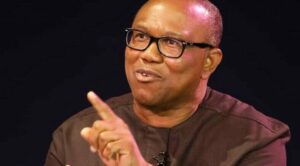
By Christopher Sunday
Nigeria’s opposition politics appears trapped in a tightening vice, where internal crises are no longer purely organic but increasingly shaped by external pressures. The persistent factionalization within the Labour Party Nigeria and the New Nigeria Peoples Party reflects more than leadership struggles; it signals a deeper pattern of systemic destabilization. Parties that should be consolidating ideologies and expanding their grassroots base are instead caught in endless disputes that weaken their credibility and coherence.
Within this fragile environment, the ruling All Progressives Congress, under President Bola Ahmed Tinubu, is widely accused by critics of deploying financial influence and state institutions to frustrate opposition parties. Through regulatory chokeholds, prolonged litigations, and internal disruptions, opposition platforms are kept in a constant state of disarray. The result is a political landscape where competition is not driven by ideas or performance, but by survival.
It is against this backdrop that the strategic recalibration of Peter Obi and Rabiu Musa Kwankwaso must be understood. Their movement toward the emerging National Democratic Coalition (NDC) is less about opportunism and more about political self preservation. For Obi, particularly, distancing from the crisis ridden African Democratic Congress, a party entangled in a brutal leadership struggle, appears to be a calculated decision to avoid being trapped in a system already laden with judicial and administrative landmines.
The judiciary itself has not escaped public suspicion. Allegations of political influence continue to trail its operations, with figures like Nyesom Wike having, at different times, made comments that reinforce the perception that legal outcomes can be politically engineered. Whether exaggerated or not, such narratives further erode confidence in institutions meant to safeguard democratic integrity.
What emerges is a troubling reality: opposition parties are no longer primarily engaged in policy articulation or manifesto development. Instead, they are running helter skelter, dodging crises, court rulings, and regulatory traps. Nigerian politics, increasingly, is defined by godfatherism, judicial maneuvering, and institutional gatekeeping rather than by ideological competition or grassroots mobilization.
The role of the Independent National Electoral Commission also comes under intense scrutiny. Since 2023, attempts by political actors to register new parties have reportedly faced delays and administrative obstacles. This raises fundamental concerns about the openness of the democratic space and whether new entrants are genuinely given a fair opportunity to participate.
It is within this context that the NDC enters the conversation, prompting a critical question: is it a shield or merely a political stunt?
On one hand, NDC appears to function as a shield, a strategic refuge for opposition figures seeking to escape suffocating internal crises and reposition themselves within a hostile political environment. With existing platforms weakened by factional battles and external interference, the need for a fresh structure becomes both logical and necessary.
On the other hand, there is a compelling argument that NDC risks becoming just another short lived political experiment. Nigerian political history is replete with coalitions that began with promise but quickly collapsed under the weight of internal contradictions, infiltration, and systemic pressure. If the same forces that destabilized other opposition parties find their way into NDC, then its formation may ultimately be seen as reactionary rather than transformative.
The paradox is striking. A ruling party that has consolidated significant political power, including the alignment of numerous governors, still appears wary of a truly competitive opposition. This contradiction fuels the perception that the destabilization of opposition platforms is not accidental, but strategic.
For Obi and Kwankwaso, therefore, the move to NDC may represent both caution and calculation. It is a shield in the immediate sense, a means of survival in a constrained political space. But it could easily become the next battlefield the moment it begins to gain traction. If patterns hold, the platform may soon face internal disputes, legal challenges, and institutional scrutiny similar to those that plagued its predecessors.
This raises a deeper, more unsettling question: what is the future of a democracy where opposition parties are systematically weakened? Politics may not be a moral sanctuary, but neither can it be governed by the ruthless logic of a mafia enterprise. When political competition is stifled through manipulation rather than contested through ideas, democracy risks becoming a managed illusion rather than a lived reality.
If the NDC is to avoid this fate, it must prove that it is more than a temporary refuge. It must evolve into a resilient, ideology driven platform capable of withstanding both internal tensions and external pressures. Otherwise, it will merely confirm a growing fear that in Nigeria, new political movements are not always built to lead, but often to absorb shocks.
And if that becomes the norm, then the crisis is no longer about parties. It is about the very soul of the nation’s democracy.