
 By joshua
 Kogi Central Needs Issue-Based Politics, Not Clan Divisiveness
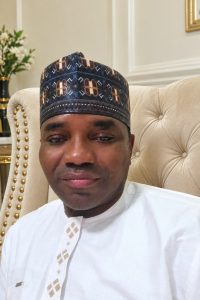
By Alh. Nazir Yusuf Ochi, CNA
There comes a time when a society must pause and decide what future it wants. For Kogi Central, that time is now.
Our recent political history should give us cause for sober reflection. For years, contests in the senatorial district were marked by hostility, with clan sentiments and allegations of marginalisation weaponised for political advantage. The consequences were painful.
Those familiar with events of 2007 and 2011 will recall tension and violence in parts of the district that led to loss of lives, destruction of property and the breakdown of long-standing relationships. While some families had the means to recover, many ordinary households bore the scars for years.
That experience should remind us that unrestrained political ambition leaves consequences that outlive its perpetrators.
THE PEACE WE ENJOY IS FRAGILE
In recent years, Kogi State has enjoyed relative stability. Whatever our differences on governance, the value of peace that allows citizens to travel, trade, educate their children and participate in politics without fear cannot be over-emphasised.
It is against this background that recent rhetoric around the emerging contest in Kogi Central is worrisome.
On social media, statements attributed to political actors have questioned the family background, identity and worth of opponents. Such narratives risk inflaming passions and reviving old divisions.
Political competition should be about records, competence and plans for the future, not about diminishing individuals on the basis of ancestry.
Leadership is not a clan inheritance, nor should aspiration be determined by the popularity of a surname. In a democracy, every qualified citizen has the right to seek office as provided by law.
DESTINY AND THE LESSON OF HISTORY
For people of faith, there is a humbling lesson: no one controls destiny absolutely. We plan and work, but the outcome rests with Almighty Allah.
History is replete with examples. Prophet Muhammad (Peace Be Upon Him) was born into the family of Abdullah, yet his greatness was established through character and mission. In our own national politics, former President Goodluck Jonathan rose from a modest background to lead the country. President Bola Tinubu, despite sustained criticism, attained the highest office.
These examples should teach humility. No one should assume that another’s background disqualifies them from leadership or service.
Why then should we turn a political contest into a debate about who someone’s father is, when the real issues are competence, accountability and development?
SETTING THE RECORD STRAIGHT
In view of the public discussions, I wish to address claims about the family background of former Governor Yahaya Bello, based on my knowledge of our local history.
The Ochi Zubair family is known in Ebiraland. His grandfather, the late Adayi Ochi Zubair, is remembered as a kinsman to the late Ohinoyi of Ebiraland, Ibrahim Atta Omadivi, who engaged in business, agriculture and animal husbandry. His son, Alhaji Bello Ipemida Ochi, is said to have encouraged education among his children.
His first son, Prof. Bello Ohiani, became an academic. Former Governor Bello himself is a chartered accountant with a master’s degree.
I state this not to suggest that family background confers entitlement, but to insist that public discourse should be guided by facts, not insults or attempts to diminish identity. Ultimately, worth should be measured by character, competence and service.
KOGI CENTRAL BELONGS TO ALL OF US
As another electoral cycle approaches, every qualified aspirant has the right to contest. The Independent National Electoral Commission determines eligibility; the electorate decides at the ballot.
No clan, family, party or individual should claim exclusive ownership of Kogi Central’s political future.
We share a common heritage and a responsibility to protect our children’s future. We may belong to different parties and support different candidates, but that should not make us enemies.
This responsibility rests especially on leaders and aspirants. Words matter. A careless statement by an influential person can be repeated thousands of times and used to justify hostility among ordinary citizens.
Those who seek leadership must show maturity. Winning an election is not worth destroying the society they hope to govern.
Instead of mobilising around clan divisions, we should be debating youth unemployment, education, healthcare, infrastructure, agriculture, security and economic prospects. These are the issues that affect ordinary people.
AN APPEAL
I appeal to our brothers and sisters, community leaders and political stakeholders: let us not allow political manipulation to set our home ablaze again.
Let our campaigns be based on issues, not insults. Let disagreements be guided by reason, not hatred. Let leaders compete with ideas, not divisions.
We must resist responding to every provocative statement with another. When we encounter inflammatory claims, we should verify them and refuse to be instruments of conflict.
We have learnt, painfully, that rebuilding after violence is far harder than preventing it.
After politics, life continues. After elections, we will still meet in our communities, attend celebrations, do business and share public spaces. Today’s political opponents remain tomorrow’s neighbours and relatives.
No ambition is worth the life of an innocent person. No victory can compensate a family for the permanent loss of a loved one.
Kogi Central does not need another season of hostility. It needs unity, purposeful leadership and development that reaches the ordinary people.
Alh. Nazir Yusuf Ochi, a Chartered Accountant, writes from Okene, Kogi State.