
 By joshua
 INTERFAITH DIPLOMACY IN NIGERIA: What it is. What it is not.
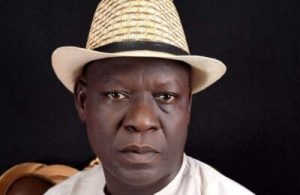
By Amb. Hon. Abdulsalam Bawa DANGANA
EXECUTIVE SUMMARY
Nigeria is a nation of deep faith. Over 230 million people pray in Mosques, Churches, Shrines, and Homes daily. With this spiritual strength comes a responsibility: to ensure that faith becomes a force for nation-building, not nation-breaking.
“Interfaith Diplomacy” is the deliberate practice of using religious actors, institutions, and values to prevent conflict, build trust, and advance the common good. It is not about merging religions. It is about managing our differences with wisdom so that we can build one Nigeria together.
This article explains what Interfaith Diplomacy means in the Nigerian context, what it does “not” mean, and why it is one of the best strategies for our socio-economic and political growth.
1. WHAT INTERFAITH DIPLOMACY IS
Interfaith Diplomacy is practical peace work guided by faith. In Nigeria, it means:
A. Structured Engagement Between Religious Leaders
It is Imams and Pastors sitting together before a crisis, not just after. It is the Christian Association of Nigeria (CAN) and the Nigerian Supreme Council for Islamic Affairs (NSCIA), together with Traditional rulers, forming early warning and rapid response teams in volatile Communities in Plateau, Kaduna, Benue, and Zamfara.
B. Using Shared Values to Solve Shared Problems
Both the Bible and the Qur’an command justice, compassion, and care for the neighbour. Interfaith Diplomacy translates these values into action: joint feeding programmes during Ramadan and Lent, interfaith Health Outreaches, and faith-based Schools admitting Children of all backgrounds.
C. A Tool of Governance and Development
Government partners with religious institutions because, they have trust and reach that the state sometimes lacks.
Example: During COVID-19 and polio campaigns, Mosques and Churches were the most effective channels for public health messaging. During floods and IDP crises, faith organizations are often first responders.
D. Diplomacy From “Home to Home” to National Level
It starts at the compound level. The market woman in Lokoja who sells to both faiths. The youth leader in Goza who ensures both Eid and Christmas are secure. It scales up to state and national policy dialogue on issues like education, security, and poverty.
In short: Interfaith Diplomacy IS
Building bridges of trust.
Preventing violence. Promoting social cohesion.
Unlocking development by ensuring that religion unites rather than divides.
2. WHAT INTERFAITH DIPLOMACY IS NOT
Misconceptions have made many Nigerians suspicious of the term. Let us be clear.
A. It Is NOT Syncretism or “One Religion”
Interfaith Diplomacy does not ask a Christian to become Muslim or a Muslim to become Christian. It respects theological differences. The goal is coexistence, not conversion. Section 38 of the 1999 Constitution (As amended ) guarantees freedom of religion. We uphold it.
B. It Is NOT a Political Gimmick
It is not a photo-op of leaders shaking hands during elections and then returning to hate speech. Genuine interfaith work is year-round, grassroots, and measured by results: fewer deaths, more schools open, more markets trading in peace.
C. It Is NOT Weakness or Compromise on Doctrine
To tolerate does not mean to agree with everything. A Pastor can disagree theologically with an Imam and still work with him to stop banditry in their Locsl Government Area and State. Strength is the ability to disagree without killing.
D. It Is NOT Only for Religious Leaders
Government, media, civil society, youth, and women groups must be part of it. If only “big men” do it, it will fail. Basically, home to home – is where it must live.
E. It Is NOT a Substitute for Justice and Security
Prayers and dialogue cannot replace policing, courts, and accountability. Interfaith Diplomacy works with the state, not instead of it.
3. WHY NIGERIA NEEDS INTERFAITH DIPLOMACY NOW
1. Security: Most communal conflicts in North-Central and North-West Geopolitical Zones have religious and ethnic coloration. Early interfaith intervention saves lives and livelihoods.
2. Economy: Investors do not invest where there is religious violence. Peaceful states attract trade. Our markets, farms, and technology hubs need stability.
3. Politics: When elections are framed as “us vs them” by faith, governance suffers. Interfaith Diplomacy reframes politics around issues: jobs, education, health etcetera.
4. Social Cohesion: A generation of young Nigerians is growing up with more suspicion than experience of the “other.” We must give them a different story.
4. RECOMMENDATIONS FOR ACTION
To move from idea to impact, Nigeria should:
1. Establish State Interfaith Councils for Development
Formal bodies in all 36 States and FCT with Government, Christian Association of Nigeria (CAN), Nigerian Supreme Council for Islamic Affairs (NSCIA), and Traditional rulers to co-design projects in education, health, women and youth empowerment.
2. Institutionalize Religious Literacy in Schools
Teach students about religions, not to convert them. Knowledge kills fear.
3. Fund Faith-Based Peace Infrastructure
Provide small grants to interfaith groups doing mediation, trauma healing, and community projects.
4. Hold Leaders Accountable for Hate Speech
Religious and political leaders who incite must face consequences.
5. Celebrate Stories of Coexistence
Use media to amplify the Imam (Imam Abdullahi Abubakar – Barikin Ladi, Jos) who protected and saved Christians, the Church that donated to a Mosque, a Christian (Mr. Peter Gyendyeng) who built a Juma’at Mosque for Muslims, the Islamic Cleric who awarded fully paid Scholarships to Christian students and the joint Business Co-operatives of Christians-Muslims. What we celebrate, we multiply.
CONCLUSION: FROM COEXISTENCE TO CO-PROSPERITY
Nigeria will not succeed as “a Christian Nigeria” or “a Muslim Nigeria.” Nigeria will succeed as “one Nigerian nation” where people of different faiths see each other as partners in destiny.
Interfaith Diplomacy is not an abstract ideal. It is a national security strategy. It is an economic strategy. It is a moral strategy.
The farmer in Benue State, the fisherman in Bayelsa State, and the trader in Kano State may pray differently, but they both pray for rain, for peace, and for their Children’s future. That is our common ground.
Let us build on it.
May GOD bless the Federal Republic of Nigeria.
Amb. Hon. Abdulsalam Bawa DANGANA writes from APO Legislative Quarters, Gudu District, Abuja, FCT, Nigeria 🇳🇬
Email: abdulsalamdangana6@gmail.com
Tel: +2348035044020