
 By joshua
 CPI Leads Advocacy On Ganaja Charter of Demand and Flood Resilience Action Plan, Visit N- HYPPADEC
In a bid to further strengthen the project on Ganaja Charter of Demand and Flood Resilience Action Plan, the Executive Director, Challenge Parenthood Initiative, Eunice Agbogun, in partnership with Heinrich Böell Stiftung and Arctic Infrastructure facilitated a community-led engagement in Ganaja where collective priorities were identified through extensive community consultations, technical assessments, and multi-stakeholder workshops held between 2024 and 2025.
As a way forward, five priority working groups were created based on the five priority demands identified: 1. Rehabilitation of Nyama Nyama Road through the 500 Housing unit route, 2. Provision of a functional primary healthcare, 3. Improved welfare for internally displaced persons, 4. Provision of potable water, 5. Dredging of the River Niger and construction of additional dams.
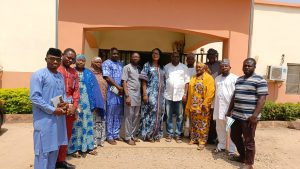
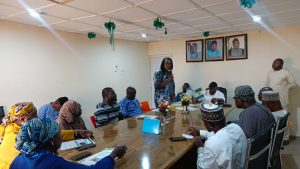
CPI together with the priority working groups on provision of potable water and IDP welfare, paid an advocacy visit to the Kogi state coordinator of Hydroelectric Power Producing Areas Development Commission (HYPPADEC), Dr. Micheal Omeiza Ajayi on Friday 7th February, 2026.
The two working groups presented their advocacy messages and commended HYPPADEC for a mechanized borehole in Ganaja community, while asking for more in different locations.
In response, the state Coordinator of N-HYPPADEC, Michael Omeiza Ajayi, said HYPPADEC is willing to collaborate with organised community groups like the Ganaja Advocacy Working Group; he expressly promised to work with the team to provide more water infrastructure for the community.
He urged CPI and the community advocacy working groups to map possible areas where water facilities are most needed in Ganaja community and get back to HYPPADEC with feedback.
HYPPADEC equally committed to supporting the IDP camps in Ganaja but stated that such intervention is channelled through Kogi State Emergency Management Agency (SEMA) and National Emergency Management Agency (NEMA), urging the team to work closely with the local government and state government agencies to access such interventions.
The visit was timely and fruitful as it opened a new chapter of collaboration between the Ganaja community and HYPPADEC as possible areas of collaboration for sustainable development were explored, discussed, and commitments made from the duty bearer (HYPPADEC).