
 By joshua
 Aliagan Descendants Challenge Historical Claims on Ilorin Dynasty, Demand Correction of ‘Distorted Facts’
The descendants of the Magaji Aliagan family in Ilorin have faulted parts of a recent biography written by Professor Abubakar Imam Ali-Agan on the newly turbaned Sarkin Malamai of Ilorin, Shaykh Imam Ya’qub Ali-Agan, describing some of the historical claims in the piece as misleading and inconsistent with documented and oral records of the Aliagan dynasty.
In a detailed rejoinder signed by Professor Taiye Shehu Aliagan, Alhaji Danialu Tunde Olokoba Aliagan, Mallam Uthman Taiye Kawu, Imam Muhammad La’aro Yakub Aliagan and Professor Isiaka Zubair Aliagan, the family said the write-up by Professor Abubakar, though commendable in celebrating his father’s contributions to Islamic scholarship, contained “factual inaccuracies that must be clarified for posterity.”
According to the family, the claim that the Aliagan dynasty was founded by “two jolly friends” who later became the Magaji and Imam lineages is historically inaccurate. They insisted that the Aliagan family was founded solely by Mallam Aliyu, a warrior-scholar who migrated from Oyo-Ile to Ilorin before the fall of the old Oyo Empire.
“Our ancestor, Mallam Aliyu, founded the Aliagan quarters after settling in Ilorin with the consent of the first Emir, Shehu Abdul Salami. There has never been any historical record of two parallel families or of an ‘Imam lineage’ existing separately from the Magaji Aliagan dynasty,” the rejoinder stated.
The family further noted that the relationship between the Magaji Aliagan family and the present Imam’s lineage began only in the 1960s through intermarriage, and not as a foundation of dual authority. They recalled that the father of the current Imam, the late Imam Busayr, was protected and supported by Magaji Aliagan Danialu, who later approved his installation as Imam of the Aliagan Mosque in 1983.
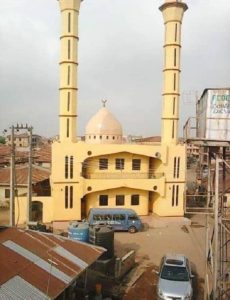
The rejoinder also corrected claims regarding the origin of the Aliagan Mosque, explaining that the first mosque was established by Mallam Aliyu himself when old age prevented him from walking to the Agbaji Mosque for prayers. “The mosque was later expanded during the tenure of Magaji Aliagan Danialu, who invited thirteen families to form its congregation and appointed his learned brother, Mallam Uthman, as the first Imam of the enlarged mosque,” the family explained.
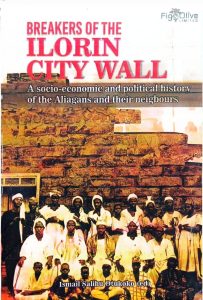
On the etymology of the name ‘Aliagan,’ the family maintained that while infertility may have been one of several theories, the name’s origin remains open to multiple interpretations documented in Breakers of the City Wall: A Socio-Economic and Political History of the Aliagans and their Neighbours. They added that the claim linking the dynasty’s origin to “Magaji Abdulganiyu” or describing him as its progenitor has no basis in any known Ilorin historical record.
The statement also faulted the reference to “Ode Nla” as the original name of the compound, saying the term was only a descriptive reference to the size and prominence of the Aliagan compound, which was traditionally called Ile Aliagan.
“The truth of our family history is not a matter of emotion or sentiment. It is supported by both oral and written evidence known across Ilorin. We have no quarrel with anyone celebrating their lineage, but we must correct distortions that could mislead future generations,” the family declared.
They reaffirmed that there has only ever been one Magaji Aliagan dynasty, with authority over both political and religious matters within the Aliagan quarters, and that all Imams of the mosque have been appointed under the authority of the reigning Magaji.
“We hold the current Imam, Shaykh Ya’qub Ali-Agan, in high esteem as a respected scholar and the present Sarkin Malamai of Ilorin. Our response is not out of disrespect but to uphold the truth of our shared heritage and the integrity of Ilorin’s traditional system,” the family concluded.
They encouraged those interested in the true history of the dynasty to consult the book Breakers of the Ilorin City Wall, which documents the socio-political development of the Aliagan family and its role in the emirate’s history.