
 By joshua
 Karimi’s Call for Restraint and the Politics of 2027
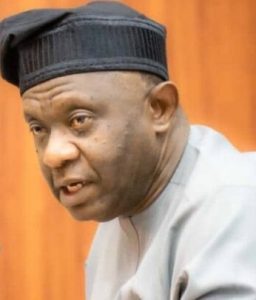
By Musa Tanimu Nasidi
As political activities gradually gather momentum ahead of the 2027 general elections, the growing tension within political parties has continued to expose the fragile nature of internal democracy in Nigeria. In many instances, supporters and loyalists often become the drivers of political conflicts through provocative statements, social media attacks and unnecessary confrontations that deepen divisions among party stakeholders.
It is against this backdrop that the recent appeal by Senator Sunday Karimi to his supporters deserves careful attention.
The senator representing Kogi West Senatorial District, in a statement issued on Thursday, urged his supporters and members of the All Progressives Congress, APC, to avoid inflammatory comments capable of creating disunity within the party. His message, though brief, carries significant political meaning at a time when permutations ahead of 2027 are already shaping conversations across the country.
Political observers believe that the warning may not be unconnected with the growing contest for relevance and influence within the APC in Kogi State and beyond. In recent months, social media has become a battleground for political loyalists, many of whom engage in verbal attacks against perceived opponents in a bid to defend their preferred leaders.
Karimi’s intervention therefore appears to be a strategic attempt to calm tensions and redirect the energy of his supporters toward party unity and political consolidation rather than needless hostility.
The senator specifically appealed to social media supporters to focus more on promoting his achievements and contributions over the last three years instead of engaging in divisive rhetoric. That position reflects a growing realization among politicians that excessive political attacks often damage not only opponents but also the image of the political party itself.
In Nigeria’s evolving political climate, social media has become a powerful instrument capable of shaping public perception. While it offers politicians direct access to the people, it has also become a breeding ground for misinformation, insults and political propaganda. Many political crises that begin online eventually spill into real-life confrontations among supporters.
Karimi’s statement may therefore be seen as an effort to prevent avoidable internal crises before the 2027 political season fully unfolds.
Another important aspect of his message was the emphasis on unity within the APC and support for President Bola Ahmed Tinubu’s Renewed Hope agenda. By reaffirming loyalty to the party and aligning himself with the president’s political direction, Karimi appears to be positioning himself within the mainstream structure of the APC ahead of future political negotiations.
His disclosure about a fruitful meeting with Governor Ahmed Usman Ododo also carries political significance. In Kogi politics, relationships among elected officials, party leaders and the state government often determine the stability or division within the ruling party. Publicly acknowledging cordial engagement with the governor may be aimed at reassuring supporters that cooperation, rather than confrontation, remains the preferred path.
Beyond Kogi West, the senator’s appeal raises broader questions about the conduct of political supporters in Nigeria. Political loyalty should not translate into hostility against others. Democracy thrives better where debate is issue-based and driven by ideas instead of personal attacks and bitterness.
As the 2027 elections approach, politicians and their supporters must understand that internal cohesion will play a major role in determining the strength of political parties. Divisions created by reckless comments, online abuse and unnecessary political rivalry may weaken structures that should ordinarily be preparing for governance and electoral competition.
For Senator Karimi, the message appears simple: supporters should project achievements, strengthen unity and