
 By joshua
 VIOLENT CONFLICTS AND SUSTAINABLE DEMOCRACY IN NIGERIA
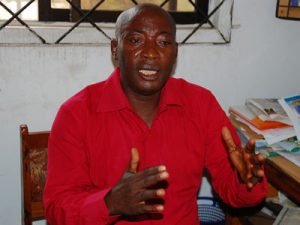
BY IDRIS MILIKI ABDUL
Violence has become a recurring feature of Nigeria’s political and social life, and its consequences are far-reaching. From post-election crises to the current waves of terrorism, banditry, and communal clashes, the persistent eruption of conflict continues to undermine the prospects of democratic consolidation, let alone sustainable democracy.
The implications are both immediate and long term. An environment marked by intra and inter-ethnic clashes, riots, violent demonstrations, armed confrontations, breakdown of law and order, and political assassinations cannot be friendly to investment. Local and foreign investors avoid such spaces, and without investment, development becomes impossible. The bloodshed, displacement, and bitter animosities that follow civil strife are sufficient reason to condemn violence as a tool for resolving grievances.
This is why government at all levels must act deliberately. In Kogi State, for instance, there is an urgent need to constitute a permanent crisis response committee. Such a body should comprise people of proven integrity drawn from the three senatorial districts and must be non-partisan. It should include security agents, genuine civil society organizations, media practitioners, members of the Nigerian Bar Association, youth and women groups, and religious leaders. The goal is to ensure early warning, rapid response, and impartial mediation before tensions degenerate.
Nigeria’s democratic experience since independence reveals a wide gap between ideal and reality. While democratic societies are built on the culture of peaceful settlement of conflicts, our practice has often tilted toward coercion. Those in power frequently place a high premium on acquiring and retaining office. This has bred political intolerance, unbridled partisanship, corruption, disregard for constitutionalism, and weak accountability. On the other hand, our pluralistic society is fractured along ethnic, religious, and socio-political lines, making management of diversity a constant challenge.
For democracy to take root, the government must skillfully manage issues of identity, legitimacy, and distribution. When the state fails to respond to these fundamental questions, participation and distribution crises emerge, and violent conflict becomes inevitable. Power must be exercised inclusively. The allocation of resources must be transparent and equitable. Nigeria’s state structure, inherited from colonialism, was not designed for the people. It was imposed for exploitation. That legacy still reflects in divisive concepts of “indigene” and “settler,” despite constitutional guarantees of equality and non-discrimination.
Conflict itself cannot be wished away. In every human society, the pursuit of divergent interests over scarce resources will produce friction. Whether the resource is land, jobs, or political power, competition is inevitable. Even conflicts dressed in religious or ethnic garb are ultimately about power — power over people’s beliefs, welfare, and future. What matters is how societies manage conflict.
The rise of ethnic militias illustrates the danger. Many of these groups claim to defend their communities, yet their operations are unregulated, poorly led, and often turn violent against members of the same group they profess to protect. This raises serious questions about their sincerity. Nigerians must understand that what cannot be settled peacefully will not be achieved through violence.
A major driver of this cycle is underdevelopment and the failure of democracy to improve living conditions. When citizens remain disempowered and exploited, they gravitate toward ethnic exclusiveness, patronage, and desperation. This creates fertile ground for corruption, injustice, executive overreach, legislative impunity, and miscarriage of justice.
Development programming must therefore be conflict-sensitive. Projects should be designed, implemented, and evaluated in ways that do not worsen tensions, and where possible, help to reduce them. Repression alone will not work because violence is only a symptom of deeper socio-economic and political problems. What is needed are policies that guarantee social and economic security, invest in human capital development, and create real opportunities for citizens.
Underdevelopment is not the absence of growth, but a measure of comparative progress. A society’s level of development can be seen in its schools, hospitals, life expectancy, child mortality rates, malnutrition, disease burden, and literacy. By these standards, the gap between Nigeria and developed nations remains wide and troubling.
The tragedy of this moment is that those who contributed to our current crisis show little remorse. For years, landmines have been planted on our path to greatness — ethnic landmines, religious landmines, manufactured party crises, arm-twisting of the legislature, disobedience to court orders, and the economic ruin of ordinary Nigerians. The atmosphere is polluted with spite, self-interest, lies, distrust, and vengeance. Even with collective resolve, the road ahead will be difficult. Vigilance is required to frustrate every evil plot.
*CONCLUSION*
Conflict and crisis cannot be eliminated from human society, but their escalation can and must be managed. Political societies survive through prevention, resolution, and transformation of conflict. For Nigeria’s democracy to consolidate, civilian leaders must practice good governance. That means open government, respect for the rule of law, and an end to the sit-tight mentality that breeds mediocrity.
More fundamentally, there is a categorical imperative to restructure the Nigerian federation and transform a state system that remains dependent, exploitative, and anti-people. Without this, all other suggestions will amount to little. The structure and processes of the state determine what we can achieve in democratic institutionalization, human capital development, peaceful coexistence, credible elections, and national integration.
As we approach the 2027 general elections, the real challenge before Nigerians is clear: we must choose democracy of empowerment over liberal market democracy. That is the ultimate cure for violent conflicts in Nigeria.