
 By joshua
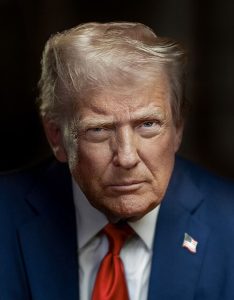
 Trump Boiws to Beijing: How China’s Rise Forced America’s Strongman to Change His Tone
By Abdulkarim Abdulmalik
For years, Donald Trump sold Americans and much of the world a simple political story: China was cheating, America was losing, and only confrontation could restore U.S. greatness.
He called China a “currency manipulator.” He imposed massive tariffs. He launched a bruising trade war. He repeatedly accused Beijing of “ripping off” the United States. The rhetoric was muscular, nationalistic, and unapologetically confrontational.
But politics has a way of colliding with reality as Trump leaked his venom spit, wore the suite of a statement that values diplomacy and visited Xi in Beijing.
And from that beautiful Chinese capital, Trump was telling a very different story.
Standing beside Xi Jinping, Trump sounded less like a warrior confronting a rival superpower and more like a statesman acknowledging an uncomfortable truth: America can no longer dictate the global economic order alone.
“We’re going to have a fantastic future together. I have such respect for China. The job you’ve done. You’re a great leader,” Trump reportedly told Xi. He added: “I say it to everybody.”
Whether one sees the statement as diplomacy, pragmatism, or surrender depends largely on political perspective. But one thing is difficult to ignore: the tone has changed dramatically.
And tone matters in geopolitics.
The symbolism was even more striking because Trump did not arrive in Beijing alone. He came with some of the most powerful corporate figures in America — men and women who collectively represent the commanding heights of U.S. finance, technology, manufacturing, aviation, artificial intelligence, and global commerce.
There was Elon Musk of Tesla and SpaceX.
There was Tim Cook of Apple.
There was Jensen Huang of NVIDIA.
Finance giants like Larry Fink, Stephen Schwarzman, and David Solomon were present.
Executives from Boeing, Visa, Mastercard, Qualcomm, Micron, and GE Aerospace followed closely behind.
This was not merely a diplomatic visit. It looked like an economic pilgrimage.
The message beneath the optics was impossible to miss: despite years of political hostility, America’s largest corporations still need China.
That dependence may explain why the aura of absolute confidence that once defined Trump’s China rhetoric now appears diminished. A brand new Trump at the microphone!
The old Trump projected dominance. The new Trump appears more cautious, more transactional, and perhaps more aware of America’s limitations in an emerging multipolar world.
Politics at the highest level can be unpredictable, sometimes. Great powers would shift from confrontation to negotiation, especially when the costs of conflict become too high. But the question is whether Trump’s recent overture is a mark humility after a disgraceful outcome of his unprovoked war against Iran or it is a strategic realism.
The contrast is stark. It is gruff.
This is the same Trump who once suggested American companies should decouple from China. Yet the very business titans accompanying him to Beijing have deep commercial ties to the Chinese market. Apple depends heavily on Chinese manufacturing.
Tesla’s Shanghai operations are central to its global production strategy. Nvidia and Qualcomm see China as a critical battleground for future technological dominance. Wall Street giants continue searching for opportunities within China’s enormous financial market.
The economic truth neither Washington nor Beijing can easily escape is this: the two economies remain deeply intertwined.
For all the slogans about decoupling, neither side can afford a complete divorce.
China, meanwhile, has spent the last decade positioning itself for precisely this moment. While the United States wrestled with internal political polarization, China invested aggressively in infrastructure, manufacturing, artificial intelligence, electric vehicles, rare earth minerals, semiconductor ambitions, and global trade networks.
Through projects linked to the Belt and Road Initiative, Beijing expanded its influence across Asia, Africa, Latin America, and parts of Europe.
The result is that America is no longer dealing with the China of the 1990s or early 2000s — a rising economy dependent on Western approval.
It is dealing with a strategic rival that increasingly believes it can shape global systems on its own terms.
That reality appears to have forced a recalibration in Washington.
The tariffs hurt China, but they also hurt American businesses and consumers. Supply chain disruptions exposed how dependent U.S. industries had become on Chinese manufacturing.
American companies discovered that replacing China was far more difficult than political speeches suggested.
Even America’s allies have struggled to fully disengage from Beijing because China remains central to global trade.
This is why Trump’s softer tone in Beijing matters beyond personality or political theatre. It may signal recognition that confrontation without cooperation is unsustainable.
The bigger question is whether Americans themselves are prepared to accept this new balance of power.
For decades after the Cold War, the United States operated as the unquestioned global superpower.
Today, however, the international system is evolving into something more competitive and less predictable. China’s rise has introduced a level of strategic parity that Washington cannot simply dismiss with rhetoric or tariffs.
And perhaps Trump understands that better now than before.
The image of the once-combative president praising Xi Jinping while surrounded by America’s corporate elite carries a certain irony. The man who built political momentum by attacking China now finds himself engaging Beijing with careful diplomacy and economic realism.
Some will call it wisdom. Others will call it capitulation.
But maybe the deeper story is not about Trump alone. Maybe it is about the changing structure of global power itself.
Because when the leaders of America’s biggest corporations travel to Beijing alongside a president who once vowed economic war against China, one conclusion becomes unavoidable: the world has changed.
And perhaps, for the first time in a long while, Trump knows it too.