
 By joshua
 TINUBU 2027: WHY NIGERIA NEEDS CONSOLIDATION, NOT ANOTHER RESET
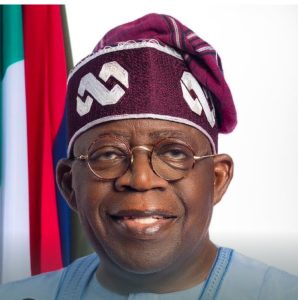
After three years of difficult economic and institutional reforms, measurable signs of stabilisation are emerging. The argument for 2027 should therefore include a serious consideration of whether Nigeria consolidates an unfinished reform project or embarks upon another costly policy reset.
By Dr Williams Charles Oluwatoyin
There is a recurring weakness in Nigeria’s democratic development that deserves serious attention. Every four years, we tend to approach governance as though national development must begin afresh. A new administration arrives, questions much of what it inherited, changes policies, creates new programmes, abandons some existing initiatives and begins another cycle of experimentation. The consequence is a country that is constantly starting but too rarely consolidating. As Nigeria moves towards 2027, therefore, the assessment of President Bola Ahmed Tinubu should rise above personalities, party slogans and emotional political divisions. The more important question is whether the country should interrupt a difficult programme of structural reform just when measurable signs of stabilisation are beginning to emerge, or consolidate what has been started while demanding that the benefits reach ordinary Nigerians much faster.
Any credible assessment must begin with what Tinubu met in May 2023. Nigeria was carrying an expensive petrol subsidy regime, facing acute fiscal pressures, struggling with multiple foreign exchange rates, dealing with inadequate public revenues, chronic electricity problems, high unemployment and underemployment, weaknesses in human-capital development and a grave security challenge ranging from terrorism to banditry, kidnapping and communal violence. These problems were not all created by one administration, nor did they begin immediately before Tinubu assumed office. Many had accumulated over decades. What distinguished the new government was its decision to confront some of them almost simultaneously rather than continue managing them incrementally.
That decision came at enormous cost. The removal of petrol subsidy and the reform of the foreign exchange system contributed to sharp increases in transportation, food and production costs and weakened household purchasing power. Businesses struggled with operating expenses, families adjusted consumption, and many Nigerians experienced genuine economic pain. Any attempt to write the history of these reforms without acknowledging that hardship would be intellectually dishonest. Support for an administration should never require denial of the lived experience of citizens. The more useful question is whether the pain was merely destructive or whether the underlying economic indicators now suggest that some of the difficult adjustments are beginning to produce a more stable foundation.
On that question, independent evidence is increasingly significant. In its June 2026 Article IV assessment, the International Monetary Fund stated that strong reforms over the previous three years had produced improved macroeconomic outcomes and strengthened Nigeria’s resilience. The IMF estimated real economic growth at 4 per cent in 2025 and projected 4.1 per cent for 2026. Gross international reserves increased from approximately $40 billion at the end of 2024 to about $46 billion at the end of 2025, while net international reserves increased from $23 billion to $35 billion. The Fund was equally clear that conditions remained difficult for many Nigerians, estimating poverty at 63 per cent under the national poverty line and noting serious food insecurity. That balance is important: progress in macroeconomic stabilisation is increasingly visible, but it has not yet matured into prosperity for a sufficiently large proportion of the population.
Nigeria’s own statistics reinforce the point that the economy is showing movement rather than stagnation. The National Bureau of Statistics reported that real GDP grew by 3.89 per cent in the first quarter of 2026, compared with 3.13 per cent in the corresponding quarter of 2025. Manufacturing expanded by 3.29 per cent year-on-year, while the non-oil economy accounted for more than 96 per cent of real GDP. These numbers should not be confused with household prosperity. GDP growth does not automatically reduce the price of garri, rice, rent or transportation. But economic recovery has to begin somewhere, and an economy recording stronger output, improving reserves and greater macroeconomic stability is in a better position to produce jobs and incomes than one trapped in prolonged fiscal and monetary instability.
The critical test, therefore, is what government does with the space created by reform. Economic statistics mean little to a young Nigerian unable to pay school fees, a graduate without employable skills, a public servant whose income has been eroded by inflation, or a family living in fear of kidnappers. This is where the different strands of the Tinubu administration begin to make better sense when viewed together. NELFUND, the renewed TVET drive, wage adjustments, security-sector reforms, infrastructure investment, power-sector interventions and agricultural support are better understood not as isolated announcements but as attempts, at different levels of maturity, to translate economic restructuring into human and productive capacity.
Consider the Nigerian Education Loan Fund, NELFUND. Before its present implementation, Nigeria had scholarship schemes, bursaries and previous attempts at education financing, but it did not have an operational national interest-free student loan programme functioning at anything close to the present scale. For many families, admission into a university, polytechnic or college of education could become almost meaningless if parents could not raise fees at the required time. Talented students deferred admission, suspended studies or placed unbearable financial pressure on households simply because education had to be paid for immediately.
That picture is changing. NELFUND’s own impact platform currently reports more than 1.064 million students supported, over ₦184 billion in loans disbursed and more than 300 institutional partners. The broader NELFUND platform also records more than one million registered students. These are official figures and the scheme will properly be judged over time by repayment sustainability, transparency and its capacity to survive changes of government. Nevertheless, its social importance is difficult to dismiss. The child of a farmer should not abandon tertiary education simply because one farming season was poor; neither should the daughter of a petty trader lose admission because her mother cannot produce an entire semester’s fees in one payment. NELFUND is gradually weakening the direct connection between temporary family poverty and permanent educational disadvantage.
Yet university access alone cannot solve Nigeria’s youth employment crisis. For decades, the educational system placed disproportionate emphasis on academic certification while technical and vocational education was too frequently treated as the option for those who supposedly could not enter university. The economy paid dearly for that cultural mistake. Universities produced thousands of graduates searching for scarce office jobs while industries, construction companies and emerging technology sectors continued to require competent welders, electricians, automobile technicians, machine operators, solar installers, fabricators, plumbers and other skilled professionals. Nigeria became a country with unemployment existing alongside skills shortages.
The present emphasis on Technical and Vocational Education and Training, TVET, is therefore more consequential than is sometimes appreciated. Official Federal Ministry of Education figures show more than 1.3 million applications, 160,000 young people matched to training opportunities, over 73,000 trainees enrolled, more than 1,700 accredited centres and over 30 NBTE-recognised trades, with approximately ₦13.98 billion disbursed through the initiative. Training is structured around tuition support, stipends and start-up pathways in selected trades. Before the current drive, vocational interventions existed but were often fragmented across agencies and programmes. What is now emerging is an attempt to create a much larger national architecture connecting accreditation, training, funding and employability.
The July 2026 launch of Power Force demonstrates how such training can be connected directly to a national economic need. The programme is designed to train 5,000 young Nigerians in smart-meter installation and related technical skills, with recognised certification and pathways into employment and entrepreneurship within the electricity value chain. Nigeria simultaneously needs millions of additional meters and thousands of technically competent young people capable of installing and maintaining them. A sensible government policy should connect those two problems. That is precisely what Power Force seeks to do.
For Nigerian youths, the significance of this shift should be considered carefully. A country with one of the world’s largest youth populations cannot build its future around the expectation that government will employ every graduate. The sustainable alternative is to build a generation of technicians, creators, programmers, artisans, installers, farmers, fabricators, entrepreneurs and industrial workers who can earn incomes independently while increasing national productive capacity. In that sense, NELFUND and TVET are complementary. One widens access to formal education; the other begins restoring dignity and economic value to skills acquisition. Both attempt to place human capital closer to the centre of development policy.
But the same government asking citizens to acquire skills and become productive must also confront the deteriorating purchasing power of Nigerians already in employment. Here again, a useful before-and-now comparison is possible. The national minimum wage Tinubu inherited was ₦30,000. In 2024, his administration agreed to a new ₦70,000 minimum wage, an increase of about 133 per cent, while shortening the statutory review expectation from five years to three. This does not mean that ₦70,000 has become sufficient to meet the needs of an average family. Inflation has consumed a considerable proportion of the nominal increase. But it remains a significant revision of the wage floor and establishes a framework for more frequent review.
Beyond the minimum wage, the Federal Government approved salary increases of between 25 and 35 per cent for categories of federal employees in 2024, covering workers across education, health and security-related structures. The monthly NYSC allowance, previously ₦33,000, was raised to ₦77,000, while the Federal Government commenced implementation in 2026 of a 40 per cent increase in the Consolidated Academic Allowance for members of ASUU, effective from January. These measures should not be exaggerated into a claim that the public sector has suddenly become adequately remunerated. It has not. But the movement is clear: compared with the remuneration structures inherited in 2023, significant upward adjustments have occurred across several categories of the federal workforce.
The issue of remuneration assumes even greater importance when one considers the men and women being asked to confront terrorists, bandits and kidnappers. Security remains one of Nigeria’s most serious national emergencies. Any article claiming that insecurity has been defeated would lose credibility immediately. Communities are still attacked, people are still abducted and criminal groups continue to operate in parts of the country. The relevant question is whether the state is intensifying its response and whether there is evidence of improved operational capacity.
Recent developments provide grounds for cautious optimism. On 6 August 2026, Nigerian security forces rescued 308 people abducted in Niger and Kwara States. President Tinubu described it as the largest same-day rescue operation conducted by a joint security team in the country, a description reported by Reuters while appropriately attributing the claim to the Presidency. The significance lies not merely in the number rescued but in what such coordinated operations suggest about intelligence gathering, inter-agency cooperation and operational reach.
The campaign against insecurity must, however, be assessed over time rather than through individual victories. Terrorism in the North-East, banditry in the North-West, kidnapping across parts of the North-Central region and other criminal threats developed over many years and cannot realistically disappear through a few operations. What government can reasonably be expected to demonstrate is sustained pressure, improved intelligence, better equipment, recruitment, institutional coordination and stronger welfare for those doing the fighting. On this last issue, the administration has recently taken a major step.
Effective from September 2026, President Tinubu approved a new military pay structure providing increases of 80 per cent for personnel from private to staff sergeant, 50 per cent from warrant officer through colonel, and 30 per cent for senior officers above colonel, including generals. The measure raises the annual military wage bill substantially, but its importance should be considered against the danger faced by service personnel. Before the new adjustment, military pay had increasingly struggled to reflect the risks associated with confronting heavily armed terrorist and criminal networks. Better remuneration cannot substitute for weapons, intelligence or leadership, but morale is itself a strategic asset.
Tinubu has also established a support fund for wounded Armed Forces personnel and families of fallen officers, pledging his presidential salaries since assuming office as seed funding. The symbolism should not be overstated, but neither should it be ignored. A soldier going into a forest against armed criminals must know that the nation recognises the risks being taken, while families of personnel killed in service should not be left to carry the burden of sacrifice alone. Security policy is not only about purchasing weapons. It is about the human beings expected to use them effectively.
Yet Nigeria cannot shoot its way out of every security problem. Sustainable security is inseparable from development. Communities with roads, electricity, productive agriculture, functioning schools and economic opportunities are inherently more resilient than communities in which young people see no legitimate route to advancement. This is why the discussion naturally moves from security and human-capital development to infrastructure and the productive economy. A technician trained through TVET needs electricity to operate machinery. A farmer needs roads to reach markets. A small manufacturer requires affordable energy and predictable logistics. Without those supporting systems, training people merely prepares them for frustration.
On infrastructure, the scale of ongoing work is significant. In its May 2026 third-anniversary account, the Presidency reported that more than 2,700 kilometres of highways and major roads were under construction, reconstruction or rehabilitation. These include major corridors such as the Lagos-Calabar Coastal Highway, the Sokoto-Badagry Super Highway, the Abuja-Kaduna-Zaria-Kano Road and the East-West Road. Because these are government figures, their ultimate value must be measured by completion, quality and actual economic impact, not merely kilometres announced. Nevertheless, large transport corridors matter because the cost of moving people, agricultural produce and manufactured goods is itself a major component of the cost of doing business.
Energy reform follows the same logic. One of the structural changes underway is the attempt to diversify Nigeria’s transport-energy system away from almost total dependence on petrol. The Federal Government commissioned four significant CNG infrastructure projects across Lagos, Abuja and Owerri in May 2026, while the Presidential CNG Initiative’s mandate was expanded in March to incorporate electric vehicles and charging infrastructure. These interventions followed petrol subsidy reform and are intended to create cheaper and cleaner transport alternatives.
This transition deserves urgency rather than celebration. CNG will mean little to the average motorist if conversion facilities remain distant or unaffordable, just as electric mobility will remain an elite idea without charging infrastructure and financing. But the policy direction is rational. If Nigeria has removed a universal petrol subsidy, the long-term answer cannot simply be to tell citizens to endure higher transport costs. Government must create alternative fuels, mass-transit systems and energy options capable of reducing those costs over time. Consolidation therefore means taking CNG and electric mobility from demonstration projects to mass accessibility.
The same principle applies to agriculture. Food prices remain one of the greatest sources of pressure on Nigerian households, and any claim of economic success will sound hollow to a family struggling to feed itself. The proper solution is not permanent dependence on food imports or episodic distribution of palliatives. Nigeria must produce more food at lower cost, reduce post-harvest losses, increase mechanisation, improve storage and ensure that farmers can obtain inputs at the right time.
Official figures released in June 2026 show that more than 449,000 metric tonnes of fertiliser inputs, equivalent to approximately nine million bags, had been secured, while the government said 515,720 bags of locally produced fertiliser were being distributed to 128,930 smallholder farmers across 25 states and the Federal Capital Territory. The country also has more than 90 operational fertiliser blending plants, according to the Presidency. Those numbers will ultimately matter only if they produce larger harvests and lower food prices, but that is precisely why agricultural policy must be allowed enough planting seasons to mature.
This brings us inevitably to taxation and public revenue. Nigerians understandably approach taxation with suspicion, particularly where citizens believe that public officials do not demonstrate sufficient prudence with public resources. Yet there is an unavoidable economic reality: a country cannot sustainably demand better roads, universities, security, healthcare, electricity infrastructure and social protection while maintaining a weak revenue system. The challenge is therefore to increase legitimate public revenue without suffocating workers, entrepreneurs and small businesses.
The administration’s tax reforms are intended to simplify a fragmented system, reduce multiple taxation and shift some of the burden away from vulnerable households. The Presidency has stated that essential goods and services including food, education and healthcare receive zero VAT treatment under the new framework, while rent, public transportation and renewable energy are exempted. These measures will be judged by their implementation, especially by whether ordinary Nigerians and small businesses genuinely experience a simpler and fairer tax environment.
Tinubu himself provided a moment of characteristic humour when discussing the subject. At the commissioning of the Nigeria Revenue Service headquarters in Abuja, after speaking about the need for a stronger and more accountable revenue institution, he concluded: “God bless Nigeria… and the tax collectors.” The audience could laugh, but the policy question underneath the joke is serious. Nigeria needs revenue, but government must earn public confidence in how that revenue is collected and spent. A citizen is more willing to pay legitimate taxes where roads work, schools function, hospitals provide care and government visibly cuts waste.
It is at this point that the different components of the administration’s programme begin to form a more coherent picture. Economic reform seeks to stabilise the foundation. NELFUND attempts to widen educational opportunity. TVET tries to convert the country’s youth population into skilled productive capacity. Wage reforms seek to protect workers from some of the pressures created by adjustment. Improved military welfare supports the security campaign. Roads, electricity reforms and alternative energy are intended to lower the structural cost of production and movement. Agricultural programmes target food supply, while tax reform seeks to create a more sustainable revenue base to fund government itself. The programmes vary in effectiveness and maturity, but they are not entirely disconnected initiatives.
This is also why serious supporters of the administration should resist the temptation to oversell its record. Nigerians know when food is expensive. They know when electricity fails. They know when a relative is kidnapped, when transportation consumes too much of a salary and when a business cannot obtain affordable credit. Propaganda cannot defeat lived experience. A stronger defence of Tinubu’s record acknowledges both the gains and the deficits. The IMF itself offers a useful model: it recognises improved macroeconomic outcomes and greater resilience while simultaneously warning about poverty, food insecurity and the continuing need for improvements in electricity, agriculture, infrastructure, human capital and security.
The administration must therefore be judged not only by what it has started but by what it is capable of finishing. Food prices must fall substantially. The security agencies must push kidnapping, banditry and terrorism much further towards the margins of Nigerian life. Electricity reform must translate into more reliable supply rather than remain mainly a regulatory achievement. Government itself must reduce waste and demonstrate fiscal discipline. Corruption must be confronted without regard to political affiliation. NELFUND must remain transparent and financially sustainable. TVET graduates must move from training centres into jobs, apprenticeships, contracts and businesses. Salary reviews must be accompanied by greater productivity in the public service. Roads must be completed to standard. CNG infrastructure must spread far beyond a few major cities.
These unfinished responsibilities do not erase the reforms already undertaken. They define what the next stage must accomplish. There is a profound difference between continuity and complacency. Continuity means preserving reforms that are producing value, correcting those that are underperforming and completing investments whose benefits require time. Complacency would mean treating electoral endorsement as evidence that everything is working. Nigeria needs the former, not the latter.
This distinction matters because structural reforms behave differently from ordinary government programmes. Their costs often arrive before their benefits. Removing an unsustainable subsidy can increase prices immediately; the fiscal savings and investment adjustments take longer to materialise. Foreign exchange reform can initially create painful currency movements before greater transparency and market stability develop. Infrastructure may consume billions for years before a completed highway begins shortening travel time and lowering logistics costs. Education financing and vocational training require years before beneficiaries become productive workers and employers. Agriculture requires successive planting cycles. Security reform requires institutional rebuilding. Nations therefore risk making a costly mistake when they repeatedly change direction after absorbing the painful first stage of reform but before collecting the longer-term dividends.
This is the intellectual basis of the consolidation argument. It is not a declaration that every policy has succeeded. It is an argument that Nigeria has already incurred a substantial part of the economic, social and political cost associated with major structural adjustment and should think carefully before discarding reforms whose outcomes are only beginning to mature. An economy growing at 3.89 per cent in the first quarter of 2026, with stronger reserves and an IMF assessment acknowledging improved macroeconomic resilience, is not yet the economy Nigerians deserve. But neither is it the same economy that entered the reform period.
That is why consolidation should be one of the central concepts in the national conversation towards 2027. NELFUND needs consolidation so that today’s one million beneficiaries become tomorrow’s professionals and entrepreneurs. TVET needs consolidation so that training leads to employment and enterprise rather than certificates alone. Security reforms need consolidation until mass kidnapping becomes exceptional rather than familiar. Wage reforms require consolidation through productivity and periodic review. Electricity decentralisation needs time to translate regulatory change into dependable power. CNG and electric mobility must move from infrastructure rollout to ordinary accessibility. Agricultural interventions need enough seasons to increase supply and reduce food prices. Roads under construction need completion.
The next stage, therefore, should not simply be another round of reform announcements. It must be about conversion: converting macroeconomic stability into household stability; student loans into graduates; vocational training into businesses and jobs; higher security spending into safer communities; fertiliser into cheaper food; roads into lower logistics costs; and improved government revenue into visibly better public services. That is the standard against which any argument for political continuity ought to be measured.
Nigeria has travelled through an extraordinarily difficult period of adjustment. The tunnel has been long, and for many families it remains uncomfortable. But the evidence increasingly suggests that there is light ahead. The responsible response is neither blind celebration nor automatic rejection. It is to examine what has changed, preserve what is working, correct what is not, and insist that the sacrifices already made by Nigerians produce tangible dividends.
The reforms have been far-reaching. They have been hard. But Nigeria today has a functioning national student-loan architecture of unprecedented scale, a substantially expanded national TVET initiative, higher minimum and federal wage structures, a major new military remuneration package, intensified security operations, significant road construction, expanding alternative transport-energy infrastructure, agricultural input interventions and a tax framework intended to rationalise revenue collection. None of these eliminates the country’s remaining problems. Together, however, they provide substantial material for a serious national debate about the merits of policy continuity.
As 2027 approaches, Nigerians should therefore ask a deeper question than whether the last few years have been comfortable. They have not. The question is whether, having borne so much of the difficult cost of restructuring, the country should preserve and improve reforms that are beginning to show measurable outcomes or incur the uncertainty of another fundamental policy reset. That judgment ultimately belongs to Nigerian voters, who are entitled to weigh both the gains and the shortcomings.
Nigeria has paid heavily for change. The challenge now is to turn adjustment into abundance, reform into prosperity, skills into employment, economic growth into stronger household incomes, and security operations into lasting peace. Whatever political choice Nigerians make in 2027, consolidation, accountability and measurable improvement in people’s lives should be at the centre of it.
About the writer
Dr Williams Charles Oluwatoyin is a public affairs analyst from Kogi State and Convener of the North Central Coalition for Leadership (NCCL).