
 By joshua
 Karimi’s Bridge Of Prosperity: How One Rural Link Revived Farms, Markets, Hope In Kogi West
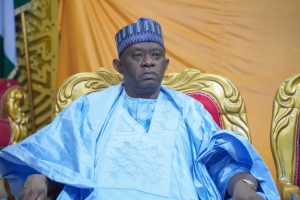
… From farm gates to market stalls, the reconstruction of Pakuta Bridge has restored more than a road — it has restored livelihoods
In rural Kogi, a bridge is never just concrete and steel. It is the pathway between harvest and market, between toil and income, between isolation and opportunity.
That truth became painfully clear when the Pakuta Bridge collapsed.
Strategically located between Aiyegunle-Gbede in Ijumu Local Government Area and Kiri Kingdom in Kabba-Bunu LGA, the bridge was the economic lifeline for a vast agricultural corridor stretching into Kupa North, Kupa South, Eggan communities in Lokoja LGA and dozens of neighbouring settlements.
When it caved in, the entire value chain collapsed with it.
Farmers could still harvest, but they could not evacuate. Perishable crops rotted on farms. Traders avoided the route. Transporters who dared to ply the longer, dangerous alternative charged exorbitant fares. Farmers who desperately needed cash were forced to sell at giveaway prices to the few buyers willing to endure the ordeal. Consumers, in turn, paid more. Markets in Aiyegunle-Gbede, Kiri, Kupa and Eggan thinned out. Small businesses — shopkeepers, food processors, artisans, mechanics — felt the squeeze. Even school children, patients and families visiting loved ones were cut off.
It was a classic case of how infrastructure failure impoverishes agrarian communities.
*Karimi Steps In*
It was at this critical point that the Senator representing Kogi West, Senator Sunday Steve Karimi, intervened.
Moved by the distress of his constituents, Senator Karimi undertook the reconstruction of the bridge as a direct constituency intervention to reconnect communities and revive the local economy.
In October 2024, leading national dailies — _Independent Newspapers, Nigerian Tribune_ and _The Guardian_ — reported the release of an initial ₦17 million for the project, based on a joint technical assessment by engineers, community representatives and stakeholders.
Chairman of the Project Implementation Committee and Asiwaju of Kiri Kingdom, Professor Olu Obafemi, confirmed the release of the funds and assured that the committee would transparently supervise its utilisation.
Subsequent releases followed as work progressed, until the bridge was fully completed, restoring vehicular movement and commercial flow across the corridor.
What made the intervention remarkable was not just the funding, but the model.
Traditional rulers, including the Olu-Kiri of Kiri and his cabinet, community leaders, technical professionals and youth representatives were fully involved in monitoring the reconstruction. Site visits by traditional institutions, regular community briefings and local supervision gave the project credibility, ownership and local content.
It was political representation working hand-in-hand with community institutions.
*Beyond Concrete: Economic Impact*
Today, the story has changed.
Farm trucks are back on the road. Traders from Lokoja, Kabba and beyond now confidently access farm clusters in Aiyegunle-Gbede and Kiri. Competition among produce buyers has returned, giving farmers stronger bargaining power and better prices. Transport costs have dropped. Markets are bustling again.
The ripple effects are visible: more money in the hands of farmers, more goods in the markets, more customers for roadside businesses, and renewed social and cultural interaction among previously isolated communities.
The same bridge that carries yams and cassava to market also carries children to school, pregnant women to health centres, and workers to their jobs. It has reduced isolation and rekindled inter-community commerce and kinship.
*The Way Forward*
As commendable as the reconstruction is, stakeholders have called for a sustainable maintenance plan to protect the investment. Regular inspection of the bridge and grading of the approach roads linking Aiyegunle-Gbede, Kiri, Kupa and Eggan will be critical to ensuring that the bridge delivers its full economic value for years to come.
That responsibility now rests with relevant government agencies, local authorities and the benefiting communities.
What remains undeniable, however, is that Senator Sunday Steve Karimi has demonstrated what purposeful representation means — identifying a painful, everyday problem and solving it in a way that directly improves lives.
Pakuta Bridge is no longer just a crossing over water. It is a bridge to prosperity, a symbol of reconnection, and a testament to the fact that when leadership listens, communities thrive.
Indeed, as the people say, a good turn deserves another.