
 By joshua
 SAFEGUARDING NIGERIA’S DEMOCRATIC PROCESS: ISSUES AND PROSPECTS
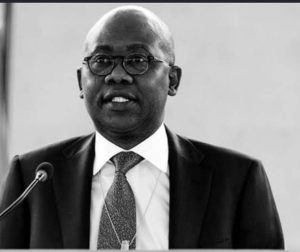
*By Mr. Mohammed Bello Adoke, CFR, SAN, FCI.Arb*
*1. Introduction*
I am delighted at the invitation to deliver the Keynote Address at the 2026 Annual Law Week of the Nigerian Bar Association, Abuja Branch (the Unity Bar). The theme of this year’s Law Week – *Safeguarding Nigeria’s Democratic Process* is apt and contemporary, as it essentially mirrors the yearnings and aspirations of millions of Nigerians for a democratic process that guarantees their right to vote and be voted for at elections that are free, fair and credible. It’s only when this right is fully realised and guaranteed that democracy holds a meaningful prospect for the people.
It is in this context that I wish to express my profound gratitude to the leadership of the Unity Bar under the able leadership of *Steve O. Emelieze, Esq., FCI. Arb* for the singular honour and privilege of addressing this eminent gathering. I congratulate the Law Week Committee for organising what promises to be a very successful Law Week.
Distinguished Colleagues, Ladies and Gentlemen, a closer examination of our polity will reveal that Nigeria stands at democracy’s precarious crossroads. It’s been 27 years since the 1999 Constitution heralded civilian rule and vested sovereignty in the people, yet trust in the electoral process continues to erode perilously. The 2023 general elections claimed 89 lives amid violence, recorded a dismal 27% voter turnout, the lowest since 1999 and left INEC, the electoral management body’s credibility shattered, as reported in the 2023 EU Election Observation Mission’s Final Report.
Vote-buying infected 40% of voters according to Yiaga Africa’s Nigeria Election Parallel Vote Tabulation and Incident Report 2023, while Presidential Election Petition Tribunals delayed 12 months beyond the 180-day constitutional limit under section 285(6) of the Constitution of the Federal Republic of Nigeria, 1999, according to INEC, 2023 General Elections Tribunal Report (2024), constituting grave constitutional infractions.
Democracy in Nigeria has endured since 1999. That, in itself, is no small achievement. But let us be honest: endurance is not the same as excellence, and continuity is not the same as credibility. A democracy is not measured merely by how often it holds elections, but by how deeply its people trust the outcomes of those elections.
Thus, the real question before us this morning is not whether Nigeria is democratic. It is far more searching: Are we safeguarding the democratic process, or merely managing its appearance? Because when the process loses credibility, democracy does not collapse overnight; it erodes. Slowly. Quietly. Almost imperceptibly. Until one day, participation becomes routine, but belief has already left the room.
Esteemed Colleagues, a post-mortem of Nigeria’s democratic process, especially the unfortunate occurrences witnessed in the polity, has understandably occasioned anxiety amongst the populace, forcing Nigerians to question whether indeed the 2027 elections will renew our democratic experiment or destroy it irreparably.
Nigerians do not yearn for democracy for its own sake, nor do they want to be passive onlookers in the democratic process. They want a democratic process that guarantees their participation — one where elections are free, fair and credible.
Safeguarding the democratic process, therefore, demands more than procedure. It demands integrity in the process, discipline among political actors, courage from institutions, and vigilance from citizens. It requires that the law is not only written, but obeyed; that institutions are not only established, but trusted; and that elections are not only conducted, but believed.
This keynote proceeds from that urgency. It interrogates the structural challenges confronting Nigeria’s democratic process, the prospects for restoring credibility, and advances concrete recommendations anchored in constitutional principles, electoral law, and institutional responsibility.
*2. Constitutional and Legal Foundations*
(a) Sovereignty and Participation
Esteemed colleagues, at the heart of Nigeria’s democratic architecture lies a simple yet profound idea: power belongs to the people. This is not a rhetorical flourish; it is a constitutional command.
Section 14(2)(c) of the Constitution of the Federal Republic of Nigeria 1999 (as amended) provides that:
> “The participation by the people in their government shall be ensured.”
This provision must be read together with Section 14(2)(a), which declares that sovereignty belongs to the people of Nigeria from whom government derives all its powers and authority.
Taken together, these provisions establish the normative foundation of Nigerian democracy: government is not self-originating; it is people-derived.
However, the Constitution does not merely proclaim sovereignty; it imposes a duty on the state to ensure participation. That word, *ensure* , is not passive. It is active. It suggests obligation, not aspiration. It requires creating conditions that allow citizens to participate meaningfully in governance.
Participation, therefore, is not satisfied by the mere existence of elections. It requires that such elections be accessible, credible, transparent, and reflective of the electorate’s will. Anything less reduces participation to form without substance.
(b) Electoral Participation
Electoral participation operates at multiple levels:
1. The right to vote – the most visible expression of sovereignty
2. The right to be voted for – the opportunity to seek public office
3. The right to choose freely – without coercion, inducement, or manipulation
These dimensions collectively define what may be called substantive participation.
The courts have consistently emphasised that the right to vote is not merely procedural but foundational. It is the mechanism by which sovereignty is exercised in practice. Yet, participation must be distinguished from mere presence. A citizen who votes under intimidation, or whose vote is compromised by fraud, participates only in form, not in substance.
Electoral participation is further governed by constitutional provisions such as sections 65, 106, 131, 177 (relating to qualification for office) and Sections 66, 107, 137, 182 (dealing with disqualification).
On paper, the Constitution provides a robust framework for participation. But in practice, several distortions occur:
Party primaries often undermine the constitutional promise of equal opportunity
Financial barriers restrict access to political competition
Electoral malpractices dilute the value of participation
This creates what may be described as a participation paradox: citizens are constitutionally empowered to participate, but structurally constrained from doing so meaningfully.
The judiciary has, at various times, intervened to protect the integrity of participation. In Amaechi v INEC, (2007) 9 NWLR (pt. 1040) 504, the Supreme Court underscored the centrality of political parties in Nigeria’s electoral system, holding that votes are cast for the party rather than the individual candidate.
While this decision strengthened party-based democracy, it also highlighted a critical reality, which is that the locus of participation is often mediated through political parties.
Similarly, in cases relating to disqualification and eligibility, the courts have emphasised strict compliance with constitutional provisions, reinforcing the rule of law as the backbone of democratic participation.
(c) Participation as a Democratic Obligation
It is tempting to treat participation as a right alone. But in a functioning democracy, it is also a responsibility. Citizens are not merely beneficiaries of democracy; they are its custodians.
Where participation declines, democracy weakens.
Where participation is compromised, legitimacy suffers.
Where participation is manipulated, democracy becomes hollow.
The real challenge, therefore, is not the absence of legal provisions. The Constitution speaks clearly. The law is not silent. The challenge lies in translating constitutional promise into lived reality.
This requires the strengthening of electoral institutions, enforcing compliance with legal standards, ensuring transparency in political processes, and fostering civic awareness and responsibility.
Consequently, section 14(2)(c) is more than a constitutional provision; it is a democratic test. It asks a simple but profound question:
> Are Nigerians truly participating in their government, or merely observing it?
Until participation becomes meaningful, inclusive, and credible, the promise of sovereignty will remain only partially fulfilled.
I submit with respect that a democracy where sovereignty is only partially realised is a democracy still in search of itself.
*3. Structural Challenges in the Quest to Safeguard the Democratic Process*
Nigeria’s democracy is bedevilled by a myriad of challenges that have, over time, militated against its effective performance. They include:
*(i) Betrayed Legal Framework -* The Electoral Act 2022 promised a renaissance with innovative provisions aimed at guaranteeing free and fair elections, such as:
Section 52(1), which dealt with biometric accreditation
Section 64(5), which provided for IReV real-time upload
Section 135, which mandated the serialisation of result forms
Yet, implementation faltered spectacularly due to INEC’s failure to upload the 2023 presidential results from 148,000 polling units within 24 hours, as acknowledged in its 2023 General Elections Report, constituting a breach of section 60(4).
The provisions of Section 78 of the 2022 Electoral Act on agent accreditation were bypassed by proxy voting, while Section 97, which prohibited vote-buying, proved ineffective due to poor enforcement.
*(ii) Electoral Violence -* Since 1999, Nigeria’s electoral process has been marked by cyclical malfeasance, defying institutional maturation.
The First Republic’s 1964/65 crises, massive rigging, *operation wetie* violence foreshadowed military interventions in the body politics of the country, but the Fourth Republic polls reveal persistent pathology.
The 2003’s infamous *ghost polling* and result fabrication, where INEC under Professor Maurice Iwu certified Muhammadu Buhari’s 2.7 million votes as 18,000, triggered Buhari v INEC 1 NWLR (Pt 1129)1’s seminal pronouncement on collation integrity.
The 2007’s *do-or-die* infamy saw ballot-snatching across 22 states, with EU observers decrying a *fundamental lack of transparency.*
CLEEN Foundation’s Electoral Violence Tracker 1999–2023 logged 1,227 fatalities, with non-state actors (cult groups, political thugs) responsible for 62% of the fatalities.
Electoral violence continues to undermine democratic participation. Incidents recorded during the 2019 and 2023 elections include:
voter intimidation
ballot snatching
attacks on electoral officials
*(iii) Monetisation of Politics -* The ridiculously high cost of obtaining Expression of Interest & Nomination forms has excluded otherwise willing participants in the political process.
On average, the Expression of Interest & Nomination Forms announced by political parties for the 2027 General Elections range from N5 to N100 million, depending on the office for which one is seeking nomination.
This problem is further exacerbated by the phenomenon of *vote buying*, which regrettably has become an institutionalised practice in Nigeria.
Although section 97 of the Electoral Act, 2022 outlawed or criminalised vote-buying, it proved to be a toothless provision against inducements of N1,000–N10,000 documented across Lagos, Kano, and Rivers states, according to Yiaga Africa’s Nigeria Election Parallel Vote Tabulation and Incident Report 2023.
You will agree that the net effect of persistent vote buying is that it transforms elections into economic transactions rather than democratic choices.
*(iv) Internal Party Democracy -* This is one of the greatest challenges in the democratic process, as almost all political parties were guilty of undermining internal party democracy despite Section 84 of the Electoral Act, 2022, which mandated democratic primaries.
Experience has shown that in practice, candidates were imposed, and party rules were circumvented.
In PDP v Sylva (2012) LLJR-SC, the Supreme Court emphasised the importance of compliance with party procedures, but this has not made much difference to the political class.
Today, almost all existing political parties are guilty of failing to promote internal democracy.
The Judiciary has become a battlefield for parties unwilling to adhere to their internal processes designed to promote harmony, peace, and tranquillity, thereby contributing to the rancour being witnessed in the political space.
*(v) Electoral Maladministration -* The point has been made that INEC’s manual collation flaws persisted as a malignant cancer despite the Electoral Act 2022’s unequivocal electronic mandates under section 64(5), which required real-time result uploads via the IReV platform.
Recall the case of Buhari v INEC 1 NWLR (Pt 1129) 1, where Onnoghen JSC at 45 denounced the *deliberate subversion of collation integrity.*
The 2023 presidential election epitomised this recidivism because, despite BVAS achieving 95% biometric accreditation, only 28% of polling unit results appeared on IReV within 24 hours, constituting a prima facie breach of sections 60(4) and 64(6), as reported in INEC’s 2023 General Elections Report (2024).
Although the introduction of BVAS has improved voter authentication, disputes arose in 2023 regarding electronic transmission.
In Oyetola v INEC, (2023) JELR 112598 (CA), the Court held that failure of electronic transmission is not fatal unless it affects the result.
This exposes a gap between technological expectations and legal standards.
Most disturbing is that electoral offences are rarely prosecuted. Sections 114–129 of the Electoral Act, 2026, provided penalties, yet enforcement has been almost negligible, thereby perpetuating impunity.
*(vi) Judicialisation of Politics -* The increasing reliance on the courts to determine electoral outcomes is concerning.
Recently, former President Goodluck Ebele Jonathan, GCFR, expressed significant concerns about the judiciary’s heavy involvement in Nigeria’s electoral disputes, arguing that *the ballot paper, rather than the court, should determine winners.*
He advocated reforms to limit judicial intervention and to ensure that electoral disputes are resolved before officials take office.
I couldn’t agree more with him.
Nigeria’s electoral circles are preceded and followed by a litany of cases to determine whether a candidate was duly nominated or has been duly elected.
Consequently, the electorate’s participation in determining their choices for the relevant political offices is gradually eroding.
The phrase *go to court* has become a silent reminder to the electorate that judges and courts determine who is actually nominated and/or elected.
In the 2023 Electoral Circle, the cases Atiku Abubakar v INEC (2023) and Peter Obi v INEC (2023) exemplify this malaise.
I respectfully submit that while judicial review is essential, excessive reliance on the courts to determine election outcomes risks undermining electoral legitimacy.
*4. Imperatives for Safeguarding Nigeria’s Democratic Process*
Nigeria’s electoral landscape remains under constant reform, especially after each electoral cycle.
Consequently, the National Assembly responded to the hue and cry in the aftermath of the 2023 General Elections by passing the 2026 Electoral Act into law.
Apart from the Act, INEC, the election management body, has a new Chief Executive Officer and a couple of National Commissioners appointed by the President and confirmed by the National Assembly.
Safeguarding Nigeria’s democratic process will require the following:
4.1 Appropriate Legal Regime
The Electoral Act 2026 has repealed the 2022 Act and introduced several reforms to strengthen democratic participation ahead of the 2027 general elections.
_(i) Mandatory Technology for Accreditation & Results_
The Act recognises BVAS as the sole accreditation method.
Section 47 formally recognises the Bimodal Voter Accreditation System as the only legal way to accredit voters, thereby replacing older manual methods that depended exclusively on the Voters Register.
This has the salutary effect of reducing impersonation and multiple voting.
The retention of electronic transmission of results is another development.
Under the current regime, INEC is mandated to transmit polling unit results to the IReV portal. While Form EC8A remains the legal basis, where there is a “communication failure”, the law now mandates the online visibility of polling unit results, giving citizens real-time access to scrutinise outcomes.
_(ii) Deepening Internal Party Democracy_
The abolition of indirect primaries is another significant innovation in the 2026 Electoral Act.
Section 84(2) restricts party candidate selection to only direct primaries or consensus.
Indirect primaries, which often concentrate power in a few delegates and encourage money politics, have been phased out.
From the perspective of enhanced democratic participation, this is a good development as it puts candidate selection directly in the hands of broader party members.
The introduction of the Digital membership register also has a salutary effect.
Section 77 requires all parties to maintain a digital register of members, issue membership cards, and submit it to INEC 21 days before the primaries.
This requirement is strict, as parties that fail to comply will not be allowed to field candidates.
This will minimise the incidence of ghost delegates and the monetisation of primaries.
_(iii) Stricter Accountability & Inclusion_
The 2026 Electoral Act has imposed tougher penalties for electoral offences.
Vote buying, impersonation, and result manipulation now attract up to 2 years’ imprisonment or fines of ₦500,000–₦2m.
Similarly, presiding officers who frustrate electronic transmission risk a 6-month jail term or a ₦500,000 fine.
Resident Electoral Commissioners (RECs) who withhold documents risk 2 years’ jail, with no option of a fine.
Dual party membership is also prohibited.
Section 77 now prohibits an individual from belonging to more than one party at a time, with penalties of up to a ₦10 million fine or 2 years’ jail term.
This strengthens party discipline and reduces political opportunism.
Accessibility provisions under the Act mandate queue separation where cultural norms require it and support for visually impaired voters, making polling units more inclusive.
_(iv) Financial & Administrative Reforms_
The Act provides dedicated funding for INEC, with disbursement required at least 6 months before elections.
This provides INEC with greater planning certainty and operational independence.
Also, the revised campaign spending limits have made campaign spending more realistic as caps have been raised to reflect inflation:
Presidential: from ₦5bn to ₦10bn
Governorship: from ₦1bn to ₦3bn
Senate: from ₦100m to ₦500m
The goal is to reduce illegal financing while acknowledging economic realities.
Furthermore, PVC remains mandatory for voting.
The Act rejects proposals for electronic IDs, keeping the PVC as the only valid ID for voting to preserve register integrity.
_(v) Legal Clarity for Citizens_
The 2026 Electoral Act enhances legal clarity for citizens.
Section 72(2) allows a certified true copy of a court order to suffice for swearing in a candidate if INEC refuses to issue a certificate.
This prevents INEC delays from frustrating court judgments.
Also, the provisions on timely document release are praiseworthy.
RECs are mandated to release certified true copies of election documents within 24 hours of payment, and failure to do so is punishable by 2 years’ imprisonment.
This will speed up evidence gathering for petitions that had been a challenge in the past.
We can therefore safely conclude that the 2026 Act shifts power closer to ordinary party members through direct primaries and digital registers, while using technology to make voting and result collation more transparent.
At the same time, it stiffens penalties to deter malpractice.
Although there are still debates around the *communication failure* clause in Section 60(3), as it isn’t clearly defined and could be misused, overall, the intent is to make the process more credible and participatory.
4.2 Independence of the Electoral Management Body
It should be noted that while the legal regime may contain provisions aimed at ensuring free, fair and credible elections, the role of the electoral management body in implementing the laws is critical to achieving the overall objective of conducting free, fair and credible elections.
INEC should implement the electoral laws and discharge its mandate transparently and independently.
In Amaechi v INEC, 5 NWLR (Pt 1079) 227 at 284 (Tobi JSC), institutional independence was affirmed as “sine qua non to credible polls.”
INEC must be manifestly seen by the electorate and the political parties it regulates as operationally independent.
Its decisions and actions must not give the impression that it aligns with other vested interests in the political process.
A situation where the credibility of the electoral management body is called into question, rightly or wrongly, as is the case today, does not augur well for Nigeria’s democratic process.
INEC must do more to interpret the law, regulate political parties, supervise its staff, and insulate itself from executive control, to build and retain public confidence and trust among the Nigerian people.
4.3 Judiciary
The judiciary plays a critical role in resolving electoral disputes.
How the judiciary is perceived in the discharge of its adjudicatory function is critical to the survival of democracy.
While it is not contemplated that the judiciary should replace the electorate in determining political choices, when electoral disputes end up in court, they are expected to be handled impartially and expeditiously.
Constitutional adjudication demands that the 180-day tribunal timelines specified by section 285(6) are ruthlessly enforced through physical and virtual hearings.
Nigerians were greatly inspired by the Electoral Jurisprudence emanating from Kenya, where Supreme Court of Kenya in Raila Odinga v IEBC Presidential Petition No 1 of 2017 annulled polls within 14 days for 5% form irregularities.
Nigeria’s 2023 tribunal’s 381-day delay mocked this benchmark.
We must embrace technology and eschew frivolous suits that unduly clog tribunals’ dockets.
Above all, the judiciary should shun corruption in all its ramifications, ensure consistency in decisions and expedite electoral cases.
4.4 Political Parties
Political parties, which are the greatest beneficiaries of the political process, must bear responsibility in safeguarding it.
Political parties must be more active in discharging responsibilities relating to voter education and sensitisation, ensuring inclusive participation and equal opportunities for all segments of society in the political process, and implementing policies and programmes that benefit the people.
Above all, political parties should ensure internal democracy.
Excessive monetisation of the political process has been a mitigating factor to effective participation and should be addressed.
The cost of Expression of Interest and Nomination forms should not be used to eliminate candidates from political contests deliberately.
Although the 2026 Electoral Act has outlawed indirect primaries, which aided the monetisation of the political process to the detriment of the people, care should be taken not to replace them with the “coronation” of candidates through the instrumentality of the consensus arrangement, as is being witnessed across the country.
4.5 The Electorate
The electorate enjoys a pride of place in the democratic process as they, through their votes, determine who is elected.
The electorate must be alive to their responsibilities of determining who governs them.
An electorate that is alive to its responsibilities will shun monetary inducements to elect leaders who will govern them well, and where such leaders fail them, they should be able to replace them by voting them out of office, devoid of sentiments related to ethnic and religious affinities.
The point is that considerations such as stomach infrastructure, the candidate’s religion, ethnic base, etc., should not play a significant role in the election of candidates if Nigerians are truly desirous of safeguarding the democratic process.
*5. Conclusion*
Distinguished Colleagues, safeguarding Nigeria’s democratic process requires a tripartite pact:
strong institutions
accountable leadership
an engaged citizenry
If these three pillars hold, Nigeria will not merely conduct elections; it will emerge as a democracy that delivers peace, equity and development for all.
The task is demanding, but the future of over 200 million Nigerians depends on getting it right.
The call to action is for Nigerians to resolve, individually and collectively, to safeguard our democratic process.
Democracy is not preserved by constitutions alone, nor by INEC, nor by the courts. It is preserved by a people who refuse to let it die.
Nigerians must be vigilant and avoid complacency; prioritise institutions over personalities because parties and politicians will come and go.
But if INEC is weak, if the judiciary is compromised, if the legislature is silent, then democracy is rendered bare.
We must resolve to strengthen the democratic process irrespective of the country’s leadership.
Our constitution has declared under Section 14(2)(a) that:
> “sovereignty belongs to the people,”
clearly signalling that the people are the ultimate custodians of democracy.
So, I leave you with this charge:
> Democracy is not an event that happens every four years. It is a life we must choose daily to the full.
If we sleep, thieves enter and take it away. But if we stand as watchmen, Nigeria will not only have elections; Nigeria will have a future.
The ballot is in our hands.
The responsibility is on our shoulders.
The time to safeguard it is now.
History’s verdict awaits.
> Will we rise and be counted as a professional body?
Let it be said that:
> “When democracy trembled, the Bar stood unbowed.”
God bless the Federal Republic of Nigeria.
God bless the Nigerian Bar Association.
God Bless the Unity Bar.
– Being the Text of the Keynote Address delivered at the Annual Law Week of the Nigerian Bar Association, Abuja Branch, 20th May 2026 by Mr. Mohammed Bello Adoke, CFR, SAN, FCI.Arb; LL.B (Hons) ABU, B.L; Adv. LL.M. Public International Law (Leiden), former Attorney General of the Federation and Minister of Justice, Federal Republic of Nigeria.