
 By joshua
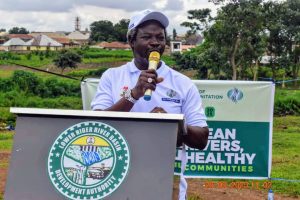
 OPENING REMARKS DELIVERED BY ENGR. OLUMOROTI GEORGE OLUSOLA, MANAGING DIRECTOR, LOWER NIGER RIVER BASIN DEVELOPMENT AUTHORITY (LNRBDA), ILORIN ON THE OCCASION OF THE 2025 WORLD RIVERS DAY AT RIVER FOMO, ALAGBADO, KWARA STATE, ON MONDAY 29TH SEPTEMBER 2025.
Protocols
* The Board Chairman of the Lower Niger River Basin Development Authority Alhaji abdullateef Gidago Alakawa.
* The Honourable Commissioner for Water Resources, Kwara State –
* The Honourable Commissioner for Environment and Tourism, Kwara State –
* The Honourable Commissioner for Agriculture and Rural Development, Kwara State –
* Representatives of the Federal Ministry of Water Resources and Sanitation
* Members of Water Users’ Associations, Ilorin.
* Our Royal Fathers and Traditional Rulers
* Community Leaders, Elders, Youth Groups and Women Groups.
* Distinguished Stakeholders and Invited Guests.
* My Colleagues and Staff of the Lower Niger River Basin Development Authorit
* Gentlemen of the Press
* Ladies and Gentlemen
It is with great pleasure that, on behalf of the Management and Staff of the Lower Niger River Basin Development Authority, I welcome you all to the 2025 World Rivers Day celebration here at the banks of River Fomo in Alagbado, Ilorin.
World Rivers Day, designated by the United Nations, is a global celebration of waterways. It highlights their ecological, cultural, economic and recreational value while promoting public awareness of their importance to humanity. The theme for this year, “Clean Rivers, Healthy Communities”, reflects the very essence of our gathering. It reminds us that the health of our rivers is directly linked to the well being of our people, the prosperity of our farmers, and the sustainability of our environment. Clean rivers provide safe drinking water, healthy ecosystems, and secure livelihoods. When rivers are degraded, our health, food systems, and future are also placed in jeopardy.
_OPERATIONAL ACHIEVEMENTS OF LNRBDA_
In line with our mandate and in pursuit of clean and well managed rivers, the Lower Niger River Basin Development Authority has made notable progress:
1. Solar Powered Irrigation Pumps
More than two hundred farmers in Kwara and Kogi States now benefit from solar powered irrigation pumps. These systems reduce reliance on fossil fuels, lower costs, and allow farmers to irrigate more land efficiently during the dry season.
2. Food Security Partnerships
In collaboration with the Kogi State Government, we are investing in the production of more than seven thousand tonnes of rice in a single season. In Kwara State, we have released arable land in areas such as the Malete Alapa corridor to support both large scale and smallholder farming. From the Shonga irrigation scheme alone, we expect to produce more than three thousand tonnes of paddy rice during the forthcoming dry season, with an additional two thousand tonnes from the Girinyan irrigation scheme. These efforts align with Mr President’s renewed hope agenda on food security.
3. Flood and Erosion Control
We have constructed flood and erosion control structures, rehabilitated canals, expanded irrigation schemes, and strengthened water supply projects. We now apply modern tools such as drones, bathymetric surveys, GNSS and hydrological monitoring stations to guide our planning and improve productivity.
4. Federal Government Support
Under the leadership of President Bola Ahmed Tinubu, the Federal Government has approved the expansion of twelve River Basin Development Authority projects across the nation. This demonstrates strong political will to enhance irrigation farming, flood mitigation, and river basin development. These interventions are aligned with national programmes such as the Water for Expanded Irrigated Agriculture Programme, the Partnership for Expanded Irrigation Programme, and the broader Eight Point Agenda of the Federal Government.
_Technical Insights and Sustainable River Management_
To ensure clean and sustainable rivers, we are implementing the following measures:
1. Hydrometeorological Monitoring and Data Driven Decision Making Hydromet stations enable us to gather rainfall, discharge, water quality and sediment load data. This helps us predict floods, assess pollution levels, and plan irrigation schedules with real time accuracy.
2. Solar Powered Pumping and Renewable Energy Integration Solar powered systems are reducing emissions, lowering operational costs, and enhancing sustainability. Their design is tailored to the specific water use patterns of farmers.
3. Channel Desilting, Canal Lining and Flow Management We are rehabilitating canals, removing obstructions, and constructing weirs and dykes where appropriate. These measures maintain free flow, reduce erosion and improve water delivery.
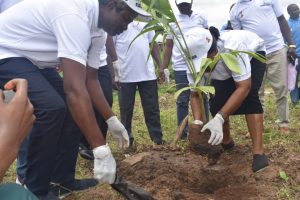
4. Erosion Control and Riparian Buffer Zones Planting grasses and trees along riverbanks, enforcing no build zones, and managing runoff are some of the strategies being deployed to protect riverbanks.
5. Community Waste Management and Pollution Control We are working with communities to improve sanitation, provide WASH facilities, regulate industrial effluents, and discourage harmful waste disposal. Waste traps, environmental enforcement, and community clean-up campaigns are part of this strategy.
6. Capacity Building and Community Training Farmers, youth and women groups are being trained on sustainable agriculture, water conservation, soil management, climate resilience and efficient irrigation practices such as drip systems.
Future Plans and Strategic Goals:
Looking ahead, our objectives are clear:
Expand irrigable land and rehabilitate intake structures:
Scale up solar powered irrigation to reach more farmers:
Upgrade water supply schemes to provide clean treated water to communities:
Launch river restoration projects to stabilize banks and remove invasive species:
Strengthen pollution monitoring and enforcement in collaboration with regulators:
Increase investment in flood risk management and climate change adaptation, including early warning systems:
These steps underline our resolve to ensure that our rivers do not only flow but flourish for generations to come.
_Stakeholder Collaboration_
Colleagues, friends and partners, let me emphasize that no single institution can achieve this vision alone.
With local communities and traditional institutions, we preserve indigenous knowledge and build ownership.
With Water Users’ Associations, we ensure fair water distribution and efficient irrigation.
With State Governments, we strengthen land use policies, environmental enforcement and agricultural extension.
With the Federal Government, we align with national priorities and draw on Abuja’s political will and resources.
With private sector actors, NGOs and academic institutions, we promote innovation, investment and research.
Rivers do not respect political boundaries. Protecting them requires collective responsibility.
_A Call to Action_
Ladies and gentlemen,
River Fomo is a vital resource but it is threatened by pollution, encroachment and unsanitary practices. If we fail to act, our health, our food systems, and the prosperity of our farmers will all be at risk. But if we rise to the challenge, we can secure clean water, healthier communities, and sustainable development.
I therefore urge us all to:
Refrain from dumping waste into rivers and adopt safe sanitation practices
Protect riparian zones and avoid destructive encroachment
Embrace water saving technologies and renewable energy solutions
Support environmental enforcement and hold polluters accountable
Together, let us make “Clean Rivers, Healthy Communities” not just a theme, but a reality.
_Closing_
In closing, let me remind us that rivers are the arteries of life. They sustain ecosystems, nourish soils, provide water, and enrich our culture. Yet they are under strain. Protecting them is our collective duty.
Water is life. Respect it. Conserve it. Protect it.
May this World Rivers Day renew our resolve to safeguard River Fomo and all our rivers, ensuring they remain sources of life, health and prosperity for generations to come. Let us all commit to becoming ambassadors of clean waters and healthy communities.
Thank you, and God bless.
Engr. Olumoroti George Olusola, Managing Director, Lower Niger River Basin Development Authority. September 2025