
 By joshua
 NATASHA AKPOTI-UDUAGHAN: FIVE PILLARS OF HER RECORD IN KOGI CENTRAL
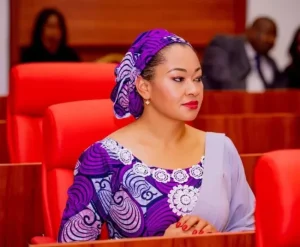
An assessment of constituency delivery, legislative performance, economic empowerment and political representation ahead of the 2027 elections.
In Nigerian politics, the true measure of representation is not merely the number of speeches delivered in the chambers of the National Assembly, nor the frequency with which a politician appears in the headlines. It is the extent to which public office translates into tangible benefits for the people, stronger institutions, expanded opportunities and a better future for the constituency.
Senator Natasha Akpoti-Uduaghan, who represents Kogi Central in the 10th National Assembly, has built a public profile around constituency development, economic empowerment, infrastructure and her advocacy on national issues. Her tenure has attracted both significant support and controversy, making her record an important subject of public assessment as the 2027 general elections approach.
Here are five major areas that define her record in office.
1. Translating Campaign Commitments into Tangible Constituency Projects
One of the most visible aspects of Akpoti-Uduaghan’s representation has been her emphasis on physical development across Kogi Central’s five local government areas: Adavi, Ajaokuta, Ogori-Magongo, Okehi and Okene.
Reports published by Nigerian media outlets in late 2025 documented a range of constituency interventions, including solar-powered water facilities, streetlights, market infrastructure, school facilities and security-related projects. Among the reported projects were two modern markets in Okene and Okehi, each designed with 80 shops and supporting facilities, alongside new school facilities in the Osara-Abobo community of Adavi
The significance of such projects lies in their potential to address everyday challenges. Reliable water supplies can reduce the burden on households, functional markets can expand opportunities for traders, and improved school infrastructure can create a more conducive learning environment.
These interventions correspond to longstanding community development priorities. To determine the extent to which all her campaign promises have been fulfilled, however, each commitment must be compared with its delivery status, beneficiaries and evidence of sustained operation.
The record of completed and functioning projects is therefore an important starting point for assessing the senator’s promise of constituency-focused representation.
2. A Record of Constituency Development Beyond the Senate Chamber
Legislative performance is a central responsibility of every senator, but effective representation also involves attracting development opportunities and facilitating interventions that improve the lives of constituents.
Akpoti-Uduaghan’s constituency programme has included reported investments in water access, electricity infrastructure, public lighting, education and community security. Media reports on her second anniversary in office also documented the provision of eight 500kVA transformers and the reconstruction of a police facility in Ihima, alongside other local interventions.
These activities provide a basis for examining her performance as a constituency representative. The relevant questions include whether the projects meet local needs, whether they are distributed fairly across the district, and whether the facilities remain functional after commissioning.
Her legislative record must also be assessed separately through sponsored and co-sponsored bills, motions, committee participation, oversight activities and the progress of proposed legislation. The National Assembly’s official records provide an important reference point for that assessment.
A complete performance scorecard should bring these two dimensions together: work within the legislature and practical interventions in the constituency. Neither should be used as a substitute for the other.
3. Economic Empowerment and Opportunities for Women and Young People
Youth unemployment, limited access to capital and the high cost of starting a business remain major challenges for communities throughout Nigeria. Economic empowerment programmes can help address these problems when they provide beneficiaries with useful equipment, practical skills and opportunities to build sustainable livelihoods.
According to reports of the senator’s constituency programmes, her interventions have included the distribution of sewing machines, grinding machines, freezers, agricultural equipment and other business tools. The reported programmes have also included vocational and technology-related training for young people and women.
Such interventions can be particularly valuable when they enable beneficiaries to establish small businesses, improve existing enterprises or develop marketable technical skills.
The long-term impact, however, depends on more than the number of items distributed or people trained. It should also be measured by the number of beneficiaries who establish viable businesses, increase their incomes, create employment and continue operating successfully.
This makes the sustainability of the empowerment programmes an important part of any serious evaluation of her tenure.
4. Investment in Education, Healthcare and Digital Opportunity
Development is most meaningful when it strengthens the capacity of people to improve their own circumstances. Education, healthcare and digital access are therefore essential measures of constituency representation.
Reports on Akpoti-Uduaghan’s interventions have highlighted school infrastructure, learning support and efforts to expand access to technology. In December 2025, Punch reported that she had unveiled plans for legacy projects at Federal Government College, Idoani, her alma mater. The announced projects included an auditorium, a multipurpose hall, staff quarters, solar streetlights and a solar-powered water system, with completion scheduled for a later date.
Her constituency development activities have also included a healthcare-related intervention: the reported commissioning of a CT scanner donated by NLNG to the Federal Medical Centre in Lokoja.
These initiatives illustrate different approaches to social development, from strengthening learning environments to supporting diagnostic capacity in healthcare.
It remains important to distinguish between projects completed in Kogi Central and initiatives located elsewhere, as well as between announced plans, projects under construction and facilities already in operation. That distinction allows the public to assess both the reach and the actual results of each intervention.
5. Political Representation, Visibility and Advocacy
Akpoti-Uduaghan made history as the first woman elected to represent Kogi State in the Senate. Her election added a new dimension to political representation in a state where women have historically faced significant barriers to attaining high elective office.
Her tenure has also brought her into the national conversation on parliamentary procedure, gender equality and the treatment of dissenting voices in public institutions.
In 2025, she was suspended from the Senate for six months following a dispute over parliamentary procedure and conduct. The episode generated widespread public debate, with supporters questioning the fairness of the action and the Senate leadership defending its disciplinary process. The controversy demonstrated both the national attention surrounding her political career and the institutional difficulties that marked part of her first term.
For constituents, the broader question is how effectively their representative has used her public platform to advance their interests, influence national policy and secure opportunities for the district.
Visibility and political resilience are not, by themselves, proof of legislative effectiveness. Their value ultimately depends on whether they contribute to concrete outcomes for the people represented.
Conclusion: Measuring Representation by Results
The assessment of Senator Natasha Akpoti-Uduaghan’s first term should go beyond political loyalties and competing narratives. Her reported constituency projects, empowerment programmes, educational and healthcare interventions, and place in the national political conversation provide several important areas for examination.
Yet a rigorous assessment must also consider the quality and sustainability of completed projects, the geographical spread of benefits, the progress of legislative proposals, transparency in public spending and the extent to which campaign commitments have been fulfilled.
Ultimately, the people of Kogi Central deserve a representative whose record can be examined through verifiable evidence. The most useful public discussion ahead of 2027 is one that compares promises with outcomes, distinguishes achievements from ongoing projects, and measures representation by its lasting benefits to the constituency.
That is the standard by which any incumbent—and any challenger—should be assessed.