
 By joshua
 IFFs Are Illegally Earned Money, Nigeria’s Laws Are Strong But Citizens Keep Beating Them, Says Ex-EFCC Director
Former Director of the Economic and Financial Crimes Commission, EFCC, Mr. Aliu Mohammed Yusuf, says Illicit Financial Flows, IFFs, are “money illegally earned.”
He warned that although Nigeria has strong laws in place, citizens keep beating the legal framework until they are apprehended, which is why the media must join the fight against IFFs.
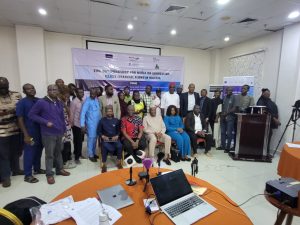
Yusuf spoke on Day 1 of a two-day workshop for media practitioners organised by the Africa Network for Environment and Economic Justice, ANEEJ, with funding from the European Union under the SecFin Africa Project. The workshop held 25th–26th June 2026 at Hawthorn Suites, Abuja, is themed “Strengthening the Capacity of CSOs and Journalists to Contribute to Addressing IFFs in Nigeria.”
Delivering a paper on “Assessment of Nigeria’s Legal and Institutional Framework for Addressing IFFs,” Yusuf clarified the distinction between money laundering and IFFs.
“Money laundering focuses on concealment of criminal proceeds while IFF focuses on the movement of illicit funds,” he said.
He listed activities that constitute IFFs to include tax evasion, trade mis-invoicing, money laundering, bribery, theft, FX racketeering, dubious privatisation, and payments to phantom contractors.
Yusuf highlighted major weaknesses undermining the fight against IFFs, including inadequate funding, overlapping jurisdiction among agencies, poor inter-agency analysis, shortage of skilled manpower, information sharing gaps, and duplication of efforts.
He also pointed to challenges within the legal framework such as weak verification of company ownership, poor compliance by companies, complex ownership structures, fragmented data sharing, and limitations under the Data Privacy Act.
Despite multiple laws, Yusuf said enforcement remains weak because “citizens have most times beaten the laws until they are apprehended.” He urged journalists to understand the legal tools available so they can track and expose illicit flows before perpetrators escape justice through their reportage.
ANEEJ said the workshop was designed to understand capacity gaps among journalists and CSOs in tracking IFFs, assess how well Nigeria’s legal and institutional framework is being used, and identify support reporters need to follow money trails effectively.
The organisation said it will use insights from the workshop to design targeted training, improve access to data and investigative tools for journalists, and strengthen collaboration between the media, CSOs and government agencies.
The goal is to equip media practitioners to monitor public finance, expose illicit flows, and hold institutions accountable for recovered funds.
ANEEJ urged reporters to get abreast with legal frameworks that enable them to follow and track IFFs, stressing that informed reporting is critical to blocking leakages and redirecting resources to national development.