
 By joshua
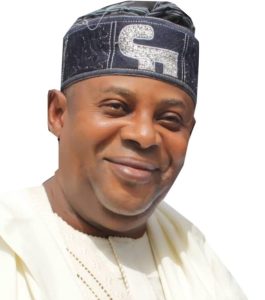
 HON. FALEKE, THE WORKAHOLIC CAMPAIGN ARCHITECT: IN OSUN 2026, BUILDING TODAY FOR TOMORROW’S BATTLE
By Musa Bakare
Some politicians campaign for elections; others use elections to build a political future.
That distinction aptly captures Rt. Hon. James Abiodun Faleke’s intensive engagement in Osun ahead of the August 15, 2026 governorship election.
His mission goes beyond just supporting the APC candidate, Alhaji Bola Oyebamiji. It is about reconnecting people, rebuilding relationships, strengthening political structures and laying the groundwork for the larger contest of 2027.
As the workaholic National Secretary of the highly successful APC 2023 Presidential Campaign Council, Faleke has once again demonstrated that politics is architecture, not noise.
He has engaged party leaders, political elders, traditional rulers, religious leaders, Asiwaju supporters, youths, artisans, market women, ethnic communities, former office holders and ordinary citizens across the state.
The strategy is deliberate. While every voter may not be a political heavyweight, every voter carries a ballot. His approach, as demonstrated during the 2023 presidential campaign and now in Osun 2026, is therefore not mere mobilisation; it is listening, connecting and organising.
The 2023 presidential election in Osun demonstrated that the APC possesses substantial strength in the state. President Bola Ahmed Tinubu polled 343,945 votes against Atiku Abubakar’s 354,366, a difference of only 10,421 votes.
That narrow margin should not be viewed merely as an opposition victory; it should be treated as both a warning and an opportunity. Political strength must be converted into organised electoral strength, and such strength cannot be built overnight.
Faleke understands that political influence is spread across society. Party elders provide experience; traditional rulers command community influence; youths provide energy; artisans and market women provide grassroots reach; support groups provide networks; while ordinary citizens provide the ultimate democratic currency, the votes.
When properly coordinated, these elements become a formidable political ecosystem.
His engagement has also extended beyond the conventional APC establishment, including reported interactions with former Ekiti Governor Ayo Fayose and Accord Party leaders. This reflects the wisdom of coalition building: politics is ultimately the art of finding common ground among people with different histories and interests.
His political philosophy, fully aligned with President Bola Ahmed Tinubu’s tradition of grassroots mobilisation, coalition building and strategic organisation, is evident in his efforts to coordinate Asiwaju supporters and strengthen the APC’s wider political family.
His walk through Osogbo in support of Oyebamiji equally sends a powerful message: leadership must leave the conference room and meet the people where they live, work and vote.
There is a deeper lesson here. Leadership is stewardship. Political influence is not an inheritance but a responsibility. The wise politician does not ask only, What can I gain from this election but, What structure will remain when the election is over.
That is the difference between political consumption and political investment.
Political maturity, however, demands realism. Meetings, photographs and endorsements do not win elections. Votes do.
The true measure of Faleke’s intervention is therefore, stronger coordination, deeper mobilisation, increased turnout and ultimately victory for the APC candidate.
More significantly, his engagement with political actors preparing for the 2027 presidential election shows that his thinking extends far beyond Osun’s August 15 contest.
The machinery for 2027 cannot be assembled in 2027. It must be built now.
In Osun, Faleke is not merely campaigning; he is connecting, organising and strengthening political relationships.
A structure without relationships becomes bureaucracy; relationships without structure become sentiment. But when relationships and structures converge, political power emerges.
That is the essence of Faleke’s method: transforming goodwill into organisation, organisation into mobilisation, and mobilisation into electoral power.
Osun 2026 is therefore more than August 15. It is a test of whether relationships can become political strength and whether the lessons of 2023 can produce a stronger strategy for 2027.
Hon. Faleke understands the assignment.
Elections are won at the ballot box, but political victories are built long before voters enter the polling booth.
Musa Asiru Bakare
Political Analyst
Writes from Lokoja, Kogi State
August 14, 2026