
 By joshua
 Ex-NGF DG, Osaro Onaiwu to Governors: This Is the Time to Build, Tap Capital Markets for Transformational Infrastructure,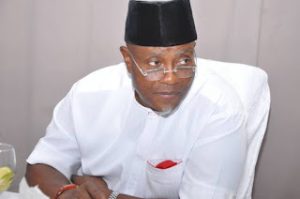
Former Director General (DG) of the Nigeria Governors’ Forum (NGF), Mr. Earl Osaro Onaiwu, has called on state governors to seize what he described as a significant opening in Nigeria’s subnational economy to raise long term capital and embark on transformational infrastructure projects capable of reshaping their states for decades.
Mr. Onaiwu made the call in a statement issued on Wednesday in Abuja.
According to the ex-NGF DG, “With fuel subsidy removal changing the structure of public finances, Federation Account allocations rising and debt pressures moderating, states now have greater room to think bigger about development. This is not the time for states to simply expand expenditure, but an opportunity to make bold infrastructure and industrial decisions that can unlock investment, create industries and generate thousands of jobs.”
“The central question for governors should now be how to convert stronger state finances into the roads, power systems, industrial zones, transport networks and other productive assets required to build competitive state economies,” Mr. onaiwu added.
He noted that “The removal of the petrol subsidy represents a major shift in the financial relationship between the Federal Government and the states.
“Resources previously absorbed by the subsidy regime are no longer creating the same pressure on public finances, while increased revenues flowing through the Federation Account have strengthened the financial position of state governments.
“At the same time, debt pressures have moderated, giving states with sustainable finances greater capacity to consider long-term funding for development.
The erstwhile NGF boss further stated that “The opportunity should be used strategically. Rather than allowing increased revenues to disappear into recurrent expenditure, states can leverage their stronger financial position to access much larger pools of institutional capital and accelerate projects that would otherwise take many years to finance through annual budgets.”
Mr Onaiwu urged governors to look beyond the limitations of conventional budget financing.
He opined that “Major infrastructure projects often require substantial upfront capital and long development periods. Attempting to finance such projects entirely through annual budgets can delay completion, increase costs and limit the scale of what governments can undertake.”
The capital market, according to him, provides another route. He explained that “Through appropriately structured bonds, Sukuk and other long-term instruments, qualifying states can mobilise substantial capital for projects in power, transportation, industrial development, housing, healthcare, agriculture, logistics and water infrastructure.
“States should not be afraid of capital market financing simply because it involves borrowing. The real consideration should be what the capital creates.
“Debt used to finance consumption leaves an obligation. Capital deployed into productive infrastructure can leave behind roads, power systems, industries and economic assets that continue generating value long after the financing has been repaid.”
The former NGF helmsman said: “Governors should increasingly think about infrastructure as a tool for attracting investment rather than simply a government responsibility.
“Private capital follows opportunity, but major investors also require infrastructure.
“Manufacturers need power. Agricultural processors need transportation and storage. Mining companies need roads and logistics. Industrial investors need serviced land, water, energy and access to markets.
“States that deliberately build these foundations can position themselves to compete for domestic and international investment.
“A strategic road can open an entirely new economic corridor. An industrial park with reliable power can attract manufacturers. Modern logistics infrastructure can connect agricultural production to national and export markets.
“The objective should therefore be to use public financing strategically to unlock multiples of that amount in private investment.”
Maintaining that industrialization must drive job creation, Mr Onaiwu said “Nigeria’s employment challenge also requires states to move aggressively towards industrialisation. Government cannot become the principal employer of an expanding population.
Sustainable employment will increasingly depend on the ability of states to attract and grow businesses in manufacturing, agriculture and agro processing, energy, mining, technology, construction and logistics. For that to happen, governors must create the infrastructure that allows businesses to operate competitively.”
The ex-NGF DG advised states to begin to develop industrial corridors, manufacturing clusters and investment zones around major infrastructure projects, creating an economic ecosystem in which infrastructure, industry and employment reinforce one another.
“The goal should not simply be to build another road or another facility. It should be to determine what new economic activity that infrastructure will unlock.”
Mr Onaiwu said the present economic environment requires governors to make decisions whose benefits may extend well beyond their political tenures.
According to him, “Some of the infrastructure Nigeria requires cannot be delivered through small, incremental interventions. It will require ambitious projects, substantial capital and disciplined long-term planning.”
He cautioned, however, that greater financing capacity must be matched by greater responsibility, adding that “Capital raised through the market should be attached to clearly defined projects, measurable economic outcomes, transparent utilisation of proceeds and credible repayment structures.”
He also advised that “States should develop bankable project pipelines and engage credible financial advisers, issuing houses, trustees and institutional investors to determine the most appropriate financing structures.”
He said: “The opportunity before state governments is ultimately bigger than borrowing.
“It is about using the current economic transition to build the foundations of the next generation of state economies.
“This is the time for states to build the infrastructure that attracts capital, the industries that create jobs and the economic assets that will continue generating prosperity long after the present administrations have left office.”