
 By joshua
 BEYOND GOVERNANCE – The Small Things That Make Ahmed Ododo Different
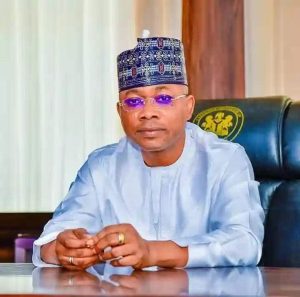
Beyond the familiar measure of governance in kilometres of roads and billions in budgets, there is a quieter, more enduring metric – the small things that touch the heart. In Kogi State, Governor Ahmed Usman Ododo, a man known for his quiet mien, is redefining leadership not just by what his administration builds, but by who his administration remembers.
It was not announced with fanfare. At the close of the 2026 Batch B Stream II NYSC Orientation Course at Asaya in Kabba, his Commissioner for Youth and Sports arrived not just with a speech, but with 29.8 million naira. Twenty thousand naira each for 1,490 young Nigerians posted to serve in Kogi, to help them get to their places of primary assignment. For many of those corps members, it was the first time a government acknowledged that patriotism has a cost.
Weeks earlier, on his direct order, a team of doctors rolled into Koton-Karfe Correctional Centre with portable digital X-ray machines powered by artificial intelligence. They screened and treated 188 inmates and correctional personnel. One inmate was overheard saying he had felt forgotten by society until that medical team walked in. Ododo had insisted that healthcare must not discriminate, even behind bars. That philosophy found its fullest expression on October 1st, 2026, as Nigeria marked 66 years of independence. While others gave speeches, Ododo gave mercy. He granted pardon to 101 inmates across custodial centres in the state, including 91-year-old Lamidi Mohammed Garuba who was released on compassionate and medical grounds. A seven-man Advisory Council on Prerogative of Mercy had been sent to Koton-Karfe, Kabba, Dekina, Ankpa, Idah and Okene to listen, to review, to weigh remorse and rehabilitation before recommending freedom.
And then came a moment that rewrote Kogi’s social history. For the first time since the creation of Kogi State on August 27, 1991, a sitting governor called a formal meeting of the South-South communities residing in the state. Leaders and families of people from Edo, Delta, Rivers, Cross River, Bayelsa and Akwa-Ibom, many of whom have lived, traded, schooled, married and paid taxes in Kogi for decades, yet remained on the periphery of government, gathered at the Government House in Lokoja.
It was a meeting with a change of narrative. Ododo did not address them as non-indigenes. He addressed them as Kogites. In a state known for its tripod of Igala, Ebira and Okun, he expanded the circle of belonging. In that hall, history was made when he announced the offer of appointments to several members of the South-South communities into his administration, bringing them into the decision-making and service delivery architecture of the state. For men and women who had watched governments come and go without recognition, it was more than appointment letters, it was validation that Kogi is home.
That single act of inclusion completed the picture of his Chief Servant philosophy. He prefers to be called Chief Servant rather than Your Excellency. He mandated that all public officials wear Made-in-Kogi fabrics to official functions, a small directive that keeps the local weaver employed and the tailor in business. He extended that same spirit of ownership to those whose roots may be in Benin City, Warri, Port Harcourt, Calabar, Yenagoa and Uyo, but whose lives and futures are in Lokoja, Okene, Kabba and Idah.
What makes these touches endure is that they are not a substitute for governance, they are built on top of it. His administration is undertaking the most ambitious primary healthcare revitalization in the state’s history. More than 150 primary healthcare centres across the 21 local government areas are being remodelled with solar power, water and staff quarters for round-the-clock service. Over 88 have been fully rehabilitated with an investment exceeding 7 billion naira, and more than 80 have already been commissioned. He has expanded health insurance coverage to over 255,000 residents including pensioners and students, enrolled over 122,000 people in the formal sector plan, instituted free medical care for pregnant women, children under five and the elderly, and approved a 300,000 naira monthly incentive for doctors to curb brain drain, while upgrading the Prince Abubakar Audu University Teaching Hospital.
In education, he has sustained free education in public basic and secondary schools, renovated over 700 public schools, and paid more than 600 million naira in WAEC fees for over 18,000 students, an intervention he later doubled. Through his bursary scheme, 646.8 million naira was disbursed to 20,347 tertiary students, 30,000 naira for regular students and 75,000 naira for those in medical sciences, while over 30,000 adolescent schoolgirls are being supported to stay in school. The completion of the GYB Model Science Secondary Schools and continued investment in the three state-owned universities have cemented his policy that no child should be excluded and no talent wasted.
His infrastructure drive is deliberately spread to ensure no local government is left behind, with at least 10 kilometres of road projects in each of the 21 local government areas nearing completion, including the 12.5 kilometre Unosi-Odonto-Ogigiri road and township roads in Egbe, Aiyetoro, Idah and Anyigba. He handed over a 25-hectare site at Crusher in Lokoja for the ultra-modern Lokoja Market to end dangerous roadside trading, acquired 4,000 hectares of land for free trade zones, commenced work on the Kogi International Airport at Zariagi and is driving the Kogi-Hunan Special Economic Zone in Ajaokuta following a strategic partnership with Hunan Province in China, a move designed to make Kogi a hub for manufacturing, mineral processing and export.
In security, his government has procured drones to support operations, established forward operating bases across flashpoints, employed 1,050 hunters and absorbed local vigilante operatives into the state civil service. In agriculture, the revival of the Confluence Rice Mill now supports over 7,000 farmers, while his administration has moved to protect cashew farmers from multiple taxation. For workers, salaries and pensions are paid regularly, with improved benefits for retirees, all aligned to the state’s 32-year development plan.
That is the full picture of Ahmed Usman Ododo, a governor building an airport and an industrial zone with China, yet pausing to ensure a corps member can afford a bus fare, a governor approving billions for hospitals yet sending doctors into a prison, a governor negotiating foreign investment yet finding time to pardon a 91-year-old man, and a governor who looked beyond indigeneship to embrace a community that had waited 34 years to be seen. In Kogi today, governance is no longer distant. It is felt in the school bag of a child in Omala, in the hospital bed of a mother in Adankolo, in the freedom of a remorseful old man in Koton-Karfe, and in the pride of an Edo trader in Lokoja who can finally say, I belong here. It is proof that true power is most powerful when it touches the heart.
Abu Micheal, is Special Adviser, South South Mobilization to Gov Usman Ahmed Ododo