
 By joshua
 Features
Atiku Abubakar: Nigeria’s Untapped Asset or a Familiar Face in Search of a New Mandate?
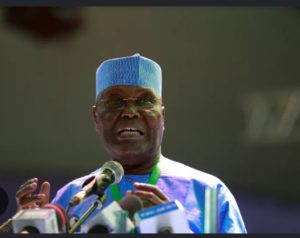
By Abdulkarim Abdulmalik
In Nigeria’s political history, few figures have generated as much admiration, controversy, debate, and sustained relevance as Alhaji Atiku Abubakar. For more than three decades, he has remained a significant player in the nation’s democratic evolution, serving in government, building political alliances, contesting presidential elections, and contributing to national conversations on governance and economic development.
Today, as the Presidential Flag Bearer of the African Democratic Congress (ADC), Atiku once again finds himself at the center of national discourse. To his supporters, he represents experience, economic competence, and national unity. To his critics, he symbolizes the persistence of an old political order that has repeatedly failed to deliver transformative change. Between these opposing perspectives lies a more nuanced reality that Nigerians must carefully examine.
*A Career Built on Experience*
Few politicians in contemporary Nigeria possess Atiku’s breadth of experience. From his years in the Nigeria Customs Service to his role as Vice President between 1999 and 2007, he has participated in some of the most important political and economic transitions in Nigeria’s democratic era.
Supporters argue that this experience is precisely what Nigeria needs at a time of economic hardship, insecurity, unemployment, and political polarization. They point to the economic reforms of the early Fourth Republic, including privatization initiatives, telecommunications expansion, banking reforms, and efforts to attract investment.
Many analysts agree that the economic liberalization policies pursued during that period helped create opportunities that transformed sectors of the Nigerian economy. The explosion of mobile telecommunications, growth in private-sector investment, and modernization efforts are frequently cited as examples.
However, critics maintain that experience alone should not be the primary qualification for leadership. They argue that Nigeria’s persistent challenges—including poverty, corruption, infrastructure deficits, and weak institutions—are partly products of a political class that has dominated governance for decades.
From this perspective, Atiku’s long presence in politics can be viewed not only as an asset but also as a reminder of unresolved national problems.
*A National Bridge Builder*
One of Atiku’s strongest political advantages is his ability to build relationships across regional, ethnic, and religious divides.
Throughout his political journey, he has cultivated alliances with leaders from Northern Nigeria, the South-West, South-East, South-South, and Middle Belt. His political engagements have consistently reflected an effort to appeal to a broad national constituency.
Supporters believe this cross-cultural appeal is especially valuable in a country where political tensions often mirror ethnic and religious identities. They argue that Nigeria requires leaders capable of fostering dialogue, compromise, and national integration.
Atiku’s personal and political networks extend across diverse communities, enabling him to engage stakeholders from various backgrounds. In an era of increasing polarization, this ability to build bridges is often cited as one of his greatest strengths.
Yet some critics question whether political alliances necessarily translate into national unity. They argue that many Nigerian politicians have mastered coalition-building during elections without fundamentally addressing structural grievances that fuel division.
According to this view, the real test of national leadership lies not merely in building alliances among elites but in creating policies that improve the lives of ordinary citizens regardless of ethnicity, religion, or region.
*Economic Credentials and Business Experience*
Atiku’s entrepreneurial background distinguishes him from many career politicians.
Before and during his political career, he invested in business ventures that generated employment and contributed to economic activity. This private-sector experience has shaped his long-standing advocacy for market-oriented reforms, investment promotion, and economic diversification.
Supporters argue that Nigeria’s economic challenges require leaders who understand both governance and business. They believe Atiku’s familiarity with investment, entrepreneurship, and job creation provides practical insight into the realities facing businesses and investors.
His supporters frequently highlight his emphasis on restructuring the economy, encouraging private-sector growth, improving infrastructure, and creating an enabling environment for enterprise.
However, critics raise concerns about the relationship between wealth, business interests, and political power. Some argue that successful business experience does not automatically translate into effective governance. Others contend that economic reforms must be accompanied by stronger social protections to ensure that growth benefits ordinary citizens rather than primarily serving elite interests.
These concerns reflect a broader debate within Nigeria about the balance between market-driven policies and social welfare considerations.
*A Skilled Communicator in a Changing Media Environment*
Another reason Atiku remains politically relevant is his ability to engage with the media.
Over the years, he has maintained strong relationships with journalists, editors, broadcasters, and digital communication platforms. His accessibility has helped him remain visible in national discussions even when not holding public office.
Supporters view this as evidence of transparency and openness. They argue that democratic leaders must communicate effectively with citizens and remain accessible to public scrutiny.
Atiku’s ability to engage different demographics—including youths, professionals, traditional institutions, and international audiences—has strengthened his national profile.
Critics, however, caution that effective communication should not be confused with effective governance. In today’s media-driven political environment, visibility often generates influence, but citizens increasingly demand measurable outcomes rather than persuasive messaging.
For many Nigerians, the key question is not whether leaders can communicate their vision but whether they can successfully implement it.
*Resilience and Democratic Participation*
One of the most remarkable aspects of Atiku’s political journey is his resilience.
Despite experiencing multiple electoral defeats and political setbacks, he has remained active in public life. His continued participation demonstrates a commitment to democratic processes and constitutional politics.
Supporters see this persistence as evidence of dedication and belief in democratic competition. They argue that leaders who continue engaging through lawful political channels contribute to democratic stability.
Critics interpret the same persistence differently. Some suggest that repeated presidential ambitions may indicate an overreliance on familiar political figures at a time when younger generations are demanding fresh leadership and innovative approaches.
This debate reflects a larger national conversation about experience versus generational change in Nigerian politics.
*The Question Before Nigeria*
Ultimately, the debate about Atiku Abubakar is also a debate about Nigeria’s future.
Supporters view him as a seasoned statesman whose extensive experience, national outlook, business background, and political networks make him uniquely qualified to guide the country through difficult times. They see him as an untapped asset whose leadership could help foster economic recovery, political stability, and national unity.
Critics acknowledge his experience but question whether Nigeria’s challenges require a fundamentally different political approach. They argue that the country needs not only experienced leaders but also new ideas, stronger institutions, greater accountability, and broader generational representation.
Both perspectives raise legitimate questions.
Nigeria’s future will depend not merely on personalities but on policies, institutions, leadership quality, and the ability to build consensus around national priorities. Citizens must therefore evaluate all candidates—not only on the basis of their achievements and experience but also on their vision, credibility, capacity for reform, and ability to address contemporary challenges.
*Conclusion*
Alhaji Atiku Abubakar remains one of the most influential and experienced figures in Nigerian politics. His record offers compelling arguments both for supporters who see him as a valuable national asset and for critics who believe Nigeria should chart a different course.
The discussion surrounding his candidacy should therefore move beyond personal loyalties and political sentiments. Instead, it should focus on substantive questions: Who can best address Nigeria’s economic difficulties? Who can strengthen national unity? Who can improve governance and security? And who can inspire confidence among citizens across generations?
As Nigerians continue to debate these questions, Atiku Abubakar’s place in the nation’s political history is already secure. Whether his future role becomes one of renewed leadership or respected elder statesmanship will ultimately be decided by the Nigerian people and the democratic process.
– Abdulkarim Abdulmalik is an Abuja-based Journalist. Email: nowmalik@gmail.com