
 By joshua
 AHEAD OF 2027: ANOTHER URGENT CALL FOR DEEPER UNITY, ONENESS, AND TOGETHERNESS IN OKUN NATION
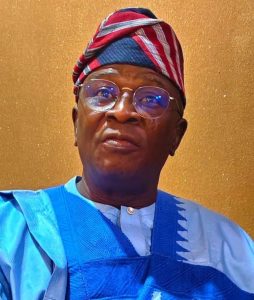
By Musa Asiru Bakare
As the 2027 gubernatorial election in Kogi State draws nearer, the air is once again thick with political conversations, alliances, and permutations. For the Okun people, this moment calls not for complacency, disunity, or a cacophony of unwieldy opinions, but for renewed reflection and collective resolve.
Okun’s political journey has been long and their contributions immense, yet their rightful place in the leadership of Kogi State remains unrealized. If that story is to change, unity must no longer be a slogan, it must become a living strategy.
The Okun people are proud, highly cerebral and resilient group, bound by shared history, language, and cultural heritage. They have produced scholars, administrators, entrepreneurs, and public servants of outstanding integrity and capacity. Despite this wealth of talent, they continue to suffer from political fragmentation and internal rivalries that weaken their collective strength.
The divisions of the past, whether along party lines, personal ambitions, or local sentiments have been the greatest obstacles to their political ascension. Okun must now face a simple truth, until the Okun nation speaks with one voice, others will continue to speak for them. Others can only call you what you can yourself.
The 2027 election presents not just another political season, but a defining opportunity to assert unity and demonstrate readiness to govern. The political map of Kogi State has shifted many times, but one constant remains, no region can win or govern effectively without cohesion. The Okun people must therefore rise above parochial interests and forge a single, unbreakable front.
This is not a call to ignore political diversity. Democracy thrives on plurality. Rather, it is a call to strategic unity, unity of purpose, vision, and agenda. Whether one belongs to the ruling party or the opposition, all must share a common objective: ensuring that the next phase of Kogi’s leadership does not again pass the Okun nation by.
Now is the time for dialogue among our leaders, elders, traditional rulers, youth, and women groups. We must identify competent and credible sons and daughters who can carry the aspirations of our people and engage meaningfully with other parts of the state.
Our political history offers valuable lessons. Each time we have come close to power, disunity among our ranks has been the stumbling block. The time has come to rewrite that narrative.
The Okun people must not longer be seen as spectators in the political theater of Kogi State. We must organize, mobilize, and strategize as one indivisible bloc that others can respect and negotiate with in good faith.
Beyond politics, unity is essential for development. The neglect of infrastructure, the slow pace of economic growth, and the limited access to government opportunities in Okunland are all tied to our lack of political leverage. Only a united front can attract the level of attention, politics, investment, and policy commitment Okun, our fatherland deserve.
The 2027 election, therefore, should be a referendum on our collective maturity as a people. Are we ready to put aside ego and selfishness and embrace unity ? Are we prepared to prioritize the Okun agenda above personal ambition ? These are questions that every leader, youth, and women must answer sincerely.
Let us not wait until it is too late. The time to build alliances, strengthen structures, and inspire hope is now. Let us remember that the future of Okunland, and indeed the political balance of Kogi State depends on what we do in the next two years.
History beckons, and destiny awaits. United, we can achieve what decades of division have denied us. Divided, we will remain a chorus unheard in the symphony of Kogi politics.
May wisdom guide our choices, and may unity be our compass as we journey toward 2027.
Musa Asiru Bakare, a political analyst, writes from Lokoja, Kogi State.