 By joshua
Ayo Ola
A Senior Advocate of Nigeria, Yusuf Ali, has said that if the agreement of the federal government to pay $496 million to settle a $5.3 billion claim made by Indian-owned firm: Global Steel Holdings Limited, will lead to the commencement of operations at the Ajaokuta Steel Company Limited, Nigeria will progress from a car assembly country to a car manufacturing nation.
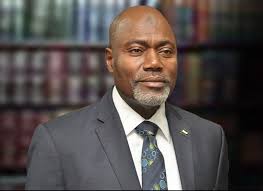
In an interview on Sunday, he also said it will also create many jobs, improve power generation and supply and fasttrack industrialisation in the country.
The Attorney-General of the Federation and Minister of Justice, (AGF), Abubakar Malami, (SAN) according to Reuters, said that the federal government has agreed to pay $496 million to settle a multi-billion dollar claim from Global Steel Holdings Limited, following the termination of a contract to upgrade the Ajaokuta steel plants.
According to the Minister of Justice who led the negotiations on behalf of the government, the federal government managed to get a 91 per cent haircut on the original claim of $5.258 billion.
Malami said, “I pay tribute to President Buhari for his dedication to resolving this problem and wrestling back a crown jewel of our national industrialisation plans rather than leaving the endeavour to the future administration to deal with.”
The agreement was reached under the alternative dispute resolution framework of the International Chamber of Commerce.
This deal has “rescued” the Nigerian steel industry from complex disputes, Justice Minister Abubakar Malami said in the document.
Ali said, “If it is true that the FG has agreed topay $496 million to settle a multi-billion dollar claim from Global Steel Holdings Limited, it should be greeted with a standing ovation. Such development could bring the steel industry on stream and provide millions of jobs to Nigerians. Without steel and power, you can not manufacture anything. If Ajaokuta comes on board, then we can start to talk of being car manufacturing companies and not car assembly plants.
“I like to keep hope alive. The way this issue plays out, sometimes, provides you with caution and the optimism should be managed. Ajaokuta was started about the same time they started the first Steel Rolling Mill in India. At that USSR supported us but America and other countries in the west said no because they knew the potential that once you become a steel-producing country, it will affect their exportation of steel products to Nigeria.
“I think these elements, with what I will call Nigerian collaborators had ensured that since 1977 or1988, that place remained non-functional. So anything that can be done, to put the place on track will be very much welcome, not even in terms of jobs, but also in terms of power supply because it has excess power supply capabilities that could be harnessed in the national grid.
“So I pray that this time around, we would have gotten to the end of the glut of that project. If it happens that the project comes on board and on stream, that will be a tremendous breaking achievement. Again we have had this story several times, so I am very cautious.I try to be optimistic that you have heard something good from a government official. We want to believe that that represents the true reflection of what happened.”
Global Steel Holdings Limited, with headquarters in the United Arab Emirates (UAE), acquired Nigeria’s entire state steel industry via five major concessions and share purchase contracts.
The deal also included access to Nigeria’s iron ore reserves and the central railway network.
However, the contracts were revoked in 2008 when the federal government accused the firm of asset stripping – a development that led to a court case between the two parties.
According to the report, Global Steel sought arbitration at the International Chamber of Commerce, Court of Arbitration in Paris, the same year.
Between 2011 and 2020, Global Steel and the Nigerian government made several attempts to settle but the efforts did not yield the expected result.
The largest steel complex in Africa’s biggest economy was meant to reduce the country’s dependence on oil by tapping into its vast iron-ore deposits to produce as much as 5 million tons of steel in a year. It’s yet to produce any steel since it was built by Russia’s Tyazhpromexport.
The Ajaokuta steel company is located in Kogi State, and it was incorporated in 1979. The infrastructure was expected to boost Nigeria’s economy and also provide employment for people. However, despite its nearing completion at a point, it has now become moribund. At one point, there was an attempt to resuscitate the company, but it failed before the federal government took over again. The steel company has gulped $10 billion from the country since its creation to get it working, but the country has continued to import steel products.
According to the Nigeria Bureau of Statistics (NBS), Nigeria imported N837.761 billion worth of steel in the thirdand fourth quarters of 2021. In 2020, TheMinister of Mines and Steel Development, Olamilekan Adegbite, announced that $1.45 billion will be spent on the Ajaokuta steel company to make it work.