
 By joshua
 Kogi 2027: Don’t Use Rotation Summit to Deny West Its Turn, Ajileye Warns
By Our Correspondent
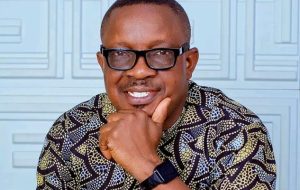
A Kogi West political activist and public affairs analyst, Pastor Stanley Omoniyi Ajileye, has warned stakeholders against using the proposed power rotation summit to reopen or postpone the question of which senatorial district should produce the next governor of Kogi State.
Ajileye said the immediate political expectation should be the emergence of a governor from Kogi West in 2027, while a broader conversation on subsequent rotations could take place after the next election.
He spoke against the backdrop of renewed calls for dialogue on power rotation in the state, with a proposed summit expected to bring together stakeholders from the three senatorial districts.
According to Ajileye, he has advocated a structured discussion on power rotation since 2015 and formally communicated his position to the Kogi State House of Assembly and former Governor Yahaya Bello.
He said the failure to address the issue at the time had contributed to the continuing controversy surrounding the rotation of political power in the state.
Recalling the 2019 political developments, Ajileye said some elders from Kogi West met with former Governor Bello in Abuja, where, according to his understanding, there was an arrangement that supporting Bello’s second-term bid would pave the way for Kogi West to take over the governorship thereafter.
He said he had expressed doubts about the arrangement but that many stakeholders nevertheless relied on it.
Ajileye said the political developments of 2023 eventually heightened the sense of disappointment among those who expected power to move to Kogi West.
He argued that the situation should not be repeated in 2027.
“What is important now is that power must shift to Kogi West in 2027,” Ajileye said.
He maintained that he was not opposed to a summit or dialogue on power rotation, but questioned why such a summit should be held before the 2027 election if its outcome could affect the immediate aspiration of Kogi West.
According to him, there is a distinction between determining who should produce the next governor and establishing a long-term framework for future rotations.
Ajileye proposed that the next governor, if elected from Kogi West in 2027, should immediately initiate a broad-based power rotation dialogue involving Kogi East and Kogi Central.
He said the proposed post-2027 summit could address the pattern for subsequent governorship elections and produce a framework acceptable to all parts of the state.
“We can discuss 2031, 2035 and beyond. We can negotiate the future and establish a system that protects every senatorial district,” he said.
The activist also urged traditional rulers and other respected elders to approach the issue with caution, saying their institutions should not be used to legitimise an arrangement that could be interpreted as postponing the aspiration of Kogi West.
He called for a process that would promote fairness and mutual trust among the three senatorial districts.
Ajileye’s position comes amid an increasingly active debate over the 2027 governorship succession in Kogi State. Different political and community groups have been advocating various approaches to power rotation, with some calling for an immediate consensus and others insisting on the established political expectations of the respective senatorial districts.
For Ajileye, however, the order of events is critical.
He said Kogi West should first be allowed to produce the governor in 2027, after which all three senatorial districts could come together to determine how power should rotate in subsequent years.
“Let Kogi West have its turn in 2027. After that, let the new governor call the summit. Let us sit down as brothers and sincerely agree on the pattern for subsequent rotations,” he said.
He described that approach as a more credible basis for building a sustainable power-sharing arrangement in Kogi State.
“2027 is Kogi West’s turn. The future can then be negotiated by all of us together.”