
 By joshua
 A Rare Politician with a servant heart, how Engr. Bashiru Gegu is touching lives.
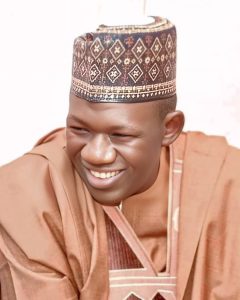
By Abu Micheal
In the politics of noise, grandstanding and broken promises, Engr. Bashiru Abubakar Gegu stands apart. Quiet, deliberate, and deeply rooted in his community, he is the kind of leader his people describe in one word: rare.
To call him a politician feels incomplete. To his constituents in Kogi, he is first an engineer, a problem-solver, and a servant. A man who measures progress not in press releases, but in boreholes sunk, classrooms roofed, and young people given a chance to stand on their own.
Born and raised among the people he now serves, Engr. Gegu imbibed early the values of hard work, humility and community. Those who grew up with him remember a young man who was never too big to fetch water for a neighbor or to sit under the tree to listen to elders. That upbringing shaped a worldview that service is not a title, but a daily responsibility.
That same spirit followed him into engineering. Trained to build, he chose to build more than structures. He chose to build people. And in doing so, he has built a reputation that now precedes him across Kogi State and beyond. His colleagues in the engineering field speak of his precision, but his community speaks of his compassion.
What makes Engr. Gegu different is not that he promises. It is that he delivers, and often without cameras. While others commission projects with fanfare, he prefers to commission results with impact. He believes that the true measure of leadership is not how loud you announce a project, but how long the project serves the people after the crowd has gone home.
In education, his footprints are everywhere. From payment of WAEC and NECO fees for indigent students, to scholarships for tertiary students, to the renovation of dilapidated classrooms, he has insisted that no child should be denied learning because of poverty. Teachers in several schools speak of his quiet visits to check on the condition of desks and roofs, not for publicity, but to ensure learning can happen in dignity.
“An educated child is a secured future,” he often tells parents at empowerment events. And he has backed those words with action, sponsoring hundreds of students and providing learning materials to schools across his constituency. Many beneficiaries now in universities and polytechnics call him their unseen guardian, the man who paid the fee that changed their story.
In health, he has taken medical care to the doorsteps of the people. Free medical outreaches, donation of drugs, and support for pregnant women and nursing mothers have become a hallmark of his intervention. For many rural families, his medical teams are the only doctors they have ever seen. He has also supported the equipping of primary health centers with basic equipment because he understands that prevention is cheaper than cure.
Water, the most basic of needs, has also received his attention. Communities that once trekked kilometers now drink clean water from boreholes facilitated by Engr. Gegu. He understands that development begins with dignity, and dignity begins with water. Village heads often point to those boreholes as the first real government presence their people have felt in years.
His passion for youth empowerment is impossible to ignore. Through skills acquisition programs, start-up grants, and direct employment linkages, he has helped young men and women trade idleness for industry. Mechanics, tailors, farmers, and ICT trainees all count him as a silent partner in their success. He does not just give them tools; he follows up to ensure the tools are being used.
For women, he has been a pillar. Market women have received capital support to expand their businesses. Widows have received food and financial assistance during difficult seasons. Women’s cooperatives have been strengthened because he believes that when you lift a woman, you lift a community. At every empowerment, he tells them, “Your success is the success of our homes.”
In infrastructure, his engineering background shows. Roads graded, rural electrification facilitated, and community halls built. He approaches every project with the mind of an engineer and the heart of a community man: will this last, and will this serve the people? Contractors working with him know he will inspect the foundation before he celebrates the roof.
Yet beyond projects, it is his accessibility that endears him most. Engr. Gegu answers his calls. He attends funerals and weddings. He sits with farmers to discuss rainfall and with students to discuss career choices. In him, leadership has a human face. A young graduate who got a job through his recommendation put it simply: “He does not make you feel like you are begging. He makes you feel like you are family.”
Traditional rulers and community leaders describe him as “a man of his word.” Political opponents grudgingly admit his sincerity. Beneficiaries simply call him “Baba Gegu” — a father who does not forget his children. In meetings, he listens more than he speaks, and when he speaks, it is usually to ask, “How can we do this better for the people?”
What drives him? Those close to him say it is gratitude. Gratitude to God, and gratitude to a people who believed in him. “Leadership is trust,” he says. “And trust must be repaid with service.” That philosophy has kept him grounded even as his profile continues to rise.
In a political era where many chase titles, Engr. Gegu chases impact. He does not measure his worth by the office he holds, but by the lives he has touched. That is why his name is mentioned in villages far from his base, always with respect. People remember the scholarship, the borehole, the medical outreach, not the slogan.
His style is not loud, but it is effective. He builds bridges across party lines, across religions, and across generations. For him, development has no party color, and service has no expiry date. He has been known to support projects initiated by others as long as they benefit the people, because for him, the goal is progress, not credit.
As Kogi continues to navigate its development challenges, men like Engr. Bashiru Abubakar Gegu remind us that politics can still be about people. That public office can still be about public good. In a time when cynicism is common, he offers a different example: that integrity and industry can coexist in public service.
He is not a perfect man, but he is a purposeful one. In Engr. Gegu, Kogi has found a rare blend: technical competence, moral uprightness, and a deep love for the people. A combination that is increasingly hard to come by. Those who work with him say he sleeps late and wakes early, not because he seeks attention, but because there is always another community with a need.
Beyond politics, he is mentoring the next generation. He opens his office to young engineers and aspiring leaders, teaching them that competence must be married with character. He tells them that the best legacy is not a building with your name on it, but a community that is better because you passed through.
His philanthropy extends even in quiet seasons. During emergencies, he has been among the first to mobilize relief for displaced families. During festivities, he ensures that the vulnerable are not left out. It is this consistency that has earned him the trust of the people, trust that no campaign can buy.
In business and in governance, he applies the same principle of due process. He insists on transparency, on value for money, and on projects that can be maintained by the community after he is done. That engineering discipline is why many of his interventions still stand years later.
Today, we celebrate him — not just for what he has done, but for what he represents: proof that leadership, when rooted in service, can still transform lives. Engr. Bashiru Abubakar Gegu. The People’s Engineer. A rare politician, and a proud son of Kogi whose story reminds us that the greatest power is the power to lift others.