
 By joshua
 ‘Cultivate Sources, Protect Them, and Put Public Interest First’ — Expert Tells Journalists at ANEEJ Workshop
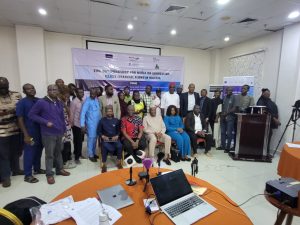
Journalists have been urged to build credible source networks, manage them responsibly, and always prioritize stories that serve the public interest.
The charge was given by Taiwo Hassan of the Institute for Security Studies, ISS, on Day 2 of a two-day workshop for media practitioners organised by the Africa Network for Environment and Economic Justice, ANEEJ.
The workshop, holding from 25th–26th June 2026 at Hawthorn Suites, Abuja, is themed “Strengthening the Capacity of CSOs and Journalists to Contribute to Addressing IFFs in Nigeria”, funded by the European Union under the SecFin Africa Project.
ANEEJ Deputy Executive Director, Mr. Leo Atakpu, said the training is part of efforts to close capacity gaps among journalists and civil society groups tracking Illicit Financial Flows, IFFs, in Nigeria. The organisation noted that informed reporting is critical to exposing leakages, tracking recovered funds, and holding institutions accountable for public finance. By equipping reporters with investigative and digital safety skills, ANEEJ hopes to strengthen media’s role in blocking IFFs and protecting national resources.
Speaking on “Media Ethics, Legal Risks, Protection of Sources, Digital Security and Managing Risks in Investigative Reporting,” Hassan described journalism as an institution that depends on the actions and words of others. He advised reporters to manage source relationships carefully, avoid conflicts, and be conscious of national security implications.
He urged journalists to rely on balance, verify the competence of sources, avoid single-source stories, and consult multiple independent sources. “Go underground where possible, research, consult experts, and seek comments from affected persons,” he said.
On digital safety, Hassan listed essentials for protecting communication, account access, data and documents. He stressed that journalists must be accountable for how they store and transmit sensitive information.
Before publication, he recommended a risk checklist to ensure stories align with the legal framework, avoid over-reliance on one source, maintain balance, and protect source identity. “Your best defense is fact,” he told participants.
The workshop brought together 30 media practitioners to improve their capacity to investigate and report on IFFs safely and ethically.