
 By joshua
 Momentum in
Kogi Mining Sector as Commissioner Gegu Drives Reform, Community Impact
By Our Reporter
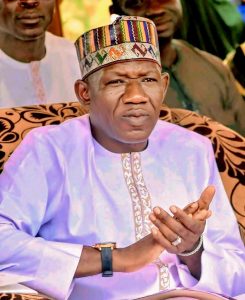
The solid minerals sector in Kogi State is undergoing a marked turnaround, with the Commissioner for Solid Minerals and Natural Resources, Engr. Bashiru Gegu, leading efforts to reposition the industry for revenue growth, industrialization, and direct benefits to host communities.
It is normal in times of political activities for some aspects of administration and governance to be relegated to the background, but not so with the State solid Mineral sector, with the driver, Engr. Bashiru Gegu doing the unusual.
Under the direction of Governor Ahmed Usman Ododo, the ministry has moved from managing untapped potential to implementing concrete measures aimed at formalizing mining operations and expanding the state’s revenue base beyond oil.
A key step has been the acquisition of 15 additional mineral titles, bringing the total to 30 titles spread across all 21 local government areas. The expansion had opened up new investment opportunities and increase internally generated revenue for the state.
To match policy with capacity, the state government also procured high-grade mining equipment, including excavators, pale loaders, and dump trucks. The equipment had enabled the ministry to participate directly in mining operations, placing Kogi alongside established mining companies operating in the country.
The ministry’s partnership with the Nigeria Geological Survey Agency, NGSA, has further strengthened the process of mineral characterization and reserve estimation. The exercise provides reliable data on the state’s iron ore, limestone, coal, gold, dolomite, tantalite, and other deposits, which officials say is critical to attracting credible investors and curbing illegal mining.
Governor Ododo described the sector as central to his administration’s plan to reduce dependence on federal allocations and create alternative streams of income. He maintains that Kogi’s mineral wealth must work for its people, stressing that there is no justification for the state to remain poor given its resource endowment.
Beyond revenue and infrastructure, the ministry’s activities are being felt at the community level. Officials say the push for formalized operations is creating jobs, supporting local suppliers, and opening space for community development initiatives tied to mining projects.
Engr. Gegu has described the progress as a shift from “pit to progress,” noting that the administration’s political will is translating into measurable gains in the sector. He added that the state is positioning itself as a driver of President Bola Tinubu’s renewed hope agenda for economic self-reliance.
Stakeholders in the industry say the combination of data-driven planning, equipment acquisition, and regulatory enforcement has set Kogi apart as one of the states actively repositioning solid minerals as a pillar of economic growth.