
 By joshua
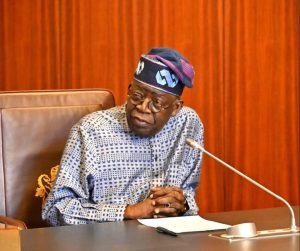
 Bola Ahmed Tinubu: From Pro Democracy Crusader to Policy Contradictions
By Christopher Sunday
In a recent reflection inspired by the position of Peter Obi, the irony of Nigeria’s political evolution becomes impossible to ignore. It is a painful paradox that those who once stood as symbols of resistance against oppression now find themselves accused of embodying the very tendencies they once fought to dismantle.
No figure captures this contradiction more vividly than Bola Ahmed Tinubu.
During the dark days of military rule under Sani Abacha, Tinubu was among those who stood on the side of history. As a key member of National Democratic Coalition, he endured harassment, persecution, and eventual exile. From abroad, he continued the struggle for the restoration of democracy, aligning himself with the moral force that demanded justice and the validation of the June 12 mandate.
That era defined Tinubu as a democrat, a man who risked everything for freedom, rule of law, and the dignity of the Nigerian people.
But history, as it unfolds, often tests the consistency of convictions.
Fast forward to the administration of Goodluck Jonathan in 2012. When the federal government announced the removal of fuel subsidy, it sparked nationwide outrage, culminating in the historic Occupy Nigeria protests.
At that critical moment, Tinubu emerged as one of the loudest voices against the policy. In a widely circulated statement, he described the subsidy removal as a violation of the social contract between government and the people, even branding it what many came to know as the “Jonathan tax.”
He warned of inflation, economic hardship, and the suffering it would impose on ordinary Nigerians. His argument was not merely political; it was deeply populist, rooted in the defense of the masses against abrupt economic reforms.
Yet, in a dramatic twist of history, on his inauguration day as president in 2023, Tinubu announced, “subsidy is gone,” triggering an immediate surge in fuel prices across the country.
The same policy he once condemned as anti-people became the cornerstone of his economic reform.
This is where the contradiction becomes glaring.
In 2012, subsidy removal was portrayed as economic cruelty. In 2023, it became economic necessity. The question that naturally arises is not whether policies can evolve, but whether leaders owe the people an explanation when their positions shift so fundamentally.
Beyond subsidy, the broader issue is the pattern of political transformation.
Tinubu’s journey from exile activist to political establishment figure reflects a deeper reality about power. The struggle against oppression often unites individuals around noble ideals, but the exercise of power reveals whether those ideals were enduring principles or situational tools.
This is the very irony that Peter Obi alludes to.
That those who once stood against authoritarian tendencies now face accusations of centralizing power, weakening opposition structures, and redefining democratic engagement in ways that raise concern. It is a troubling evolution that forces Nigerians to confront an uncomfortable question: has the promise of democracy been replaced by the pursuit of dominance?
History is not sentimental. It does not reward past heroism if present actions it.
The legacy of the National Democratic Coalition was built on sacrifice, courage, and an unwavering commitment to democratic values. To depart from those ideals is not just a political shift; it is a moral departure.
Nigeria today stands at a crossroads.
The real challenge is not whether leaders once fought for democracy, but whether they are still willing to be guided by its principles. Because in the end, the true measure of leadership is not what was done in exile, but what is done in power.
And history, as always, will deliver its verdict.