
 By joshua
2027: FALEKE, THE OKUN AGENDA AND THE POLITICS OF SELF-SABOTAGE
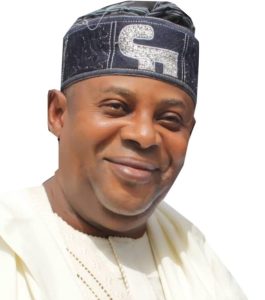
Why Okun Must Stop Fighting Its Own Destiny
By Alao Rufus Teddy
“A kingdom divided against itself cannot stand.” — Abraham Lincoln
George Santayana warned that “those who cannot remember the past are condemned to repeat it.” Winston Churchill reinforced the same timeless truth when he declared that “those who fail to learn from history are doomed to repeat it.” These profound observations have remained relevant across generations because history has never ceased to expose the consequences of collective amnesia.
Today, nowhere are these words more applicable than in the political journey of the Okun people.
As the conversation surrounding the 2027 governorship election gathers momentum, a disturbing and deeply troubling narrative has begun to gain currency. Ironically, some of the loudest voices arguing that Okun cannot produce the next Governor of Kogi State are not from Kogi East or Kogi Central. They are respected sons of Okun themselves. Nothing weakens the negotiating power of a people more than when influential members of that same community become ambassadors of doubt, pessimism and political surrender.
History teaches that every struggle for justice encounters opposition from outside. Yet, history also teaches that no people have remained politically marginalized without the active cooperation, whether by silence or by action, of some among them. External opposition may delay a people’s progress, but internal defeatism has the capacity to destroy it completely.
One is therefore compelled to ask a simple but unavoidable question.
Where were these voices when Okun’s governorship aspiration was derailed repeatedly?
Where were they when the Power Shift movement of 2007 was frustrated by promises that eventually proved worthless? Where were they when Okun leaders were persuaded to abandon a legitimate struggle with assurances that power would naturally come after another tenure? Where were they when the mandate jointly secured by the late Prince Abubakar Audu and Right Honourable James Abiodun Faleke in 2015 was diverted by circumstances that remain one of the most controversial chapters in Kogi’s political history? Where were they again when many expected the principle of equity to influence the transition that produced the current administration?
If history records repeated disappointments, why should today’s lesson be that Okun must once again postpone its aspiration? Why is patience always preached to those who have waited the longest?
Political history does not reward those who endlessly postpone their legitimate aspirations. It rewards those who organise, negotiate, build consensus and pursue justice with courage, wisdom and consistency.
Unfortunately, some among us have chosen another path. Instead of projecting confidence, they project impossibility. Instead of strengthening the negotiating position of Okun, they weaken it before negotiations even begin. Instead of inspiring hope, they normalize surrender.
Nothing is more damaging to a political cause than influential voices announcing to the world that their own people cannot succeed.
An African proverb reminds us that the lizard that exposes the cracks in its own wall should not complain when the snake finds its way inside. Our elders also taught us another timeless lesson: he who sells his household cheaply will never buy it back cheaply. A people who publicly depreciate the political value of their own sons should not expect others to place a premium on them. Politics, like every other human enterprise, is driven largely by perception. Once a community begins to negotiate against itself, others simply take advantage of that unfortunate bargain.
Every serious political struggle begins with confidence. Before any people can convince others that they deserve justice, they must first convince themselves that they are worthy of it. Self-belief has always been the first currency of political negotiation. A people who constantly proclaim their own political impossibility should not be surprised when others begin to believe them.
This is not an appeal for blind loyalty to any individual. Democracy thrives on debate, criticism and healthy disagreement. Every citizen reserves the right to support the candidate of his or her choice. However, there is a profound difference between opposing a candidate on the basis of ideas and publicly declaring that your own people cannot produce a governor.
The first strengthens democracy. The second weakens an entire generation. Difficulty has never been a sufficient reason to surrender.
Every significant political victory in history was once dismissed as impossible. The struggle against apartheid in South Africa was once described as unrealistic. The American Civil Rights Movement was ridiculed before it transformed a nation. Nigeria’s return to democratic governance was achieved because courageous men and women refused to accept that military dictatorship represented our permanent destiny.
History has never been written by those who surrendered before the battle began.
The Okun question is therefore much bigger than the ambition of any individual. It is about restoring confidence in the democratic promise that every constituent part of Kogi State has an equal opportunity to lead. Democracy loses its moral authority when an entire region gradually accepts that the highest office in the state exists beyond its reach.
That is why 2027 is more than another election. It is a defining test of justice. It is a defining test of equity.
It is a defining test of whether Kogi State truly believes in fairness or merely speaks about it when politically convenient.
Those who insist that Okun should continue to wait owe history an honest answer.
How long should justice remain on hold?
Every election cycle has produced a new explanation for postponement. Yesterday, it was another governor completing a tenure. Today, it is political expediency. Tomorrow, another excuse will certainly emerge. Justice that is permanently postponed eventually becomes justice permanently denied.
Communities earn respect when they first learn to respect themselves. Political relevance begins with self-confidence. Once a people lose confidence in their own capacity to lead, they unconsciously surrender the moral authority to demand fairness from others.
Within this broader historical context stands Right Honourable James Abiodun Faleke.
Whether one supports his aspiration or not, one undeniable reality remains. He represents one of the most nationally connected political leaders ever produced by Kogi West. His legislative experience, his visibility in the National Assembly, his strategic relationship with the highest levels of the Federal Government, and his developmental interventions across Kogi State have earned him recognition far beyond partisan politics.
The tragedy would therefore not be that James Abiodun Faleke failed to aspire.
The greater tragedy would be that some of his own people became the loudest advocates against the aspiration before the contest had even begun.
No society develops by consistently questioning the capacity of its finest sons and daughters while expecting others to celebrate them. Great communities project their best. They negotiate from positions of strength. They speak confidently about their own possibilities before asking others to believe in them.
Right Honourable James Abiodun Faleke does not need the governorship of Kogi State to establish his relevance. His political relevance has long been established. He has built a distinguished legislative career, earned national visibility, cultivated strategic relationships and attracted meaningful development to communities across Kogi State. The more appropriate question is whether Kogi State is prepared to benefit from the experience, goodwill, influence and national reach that he has accumulated through decades of consistent public service.
Leadership should never be measured by campaign slogans or political noise. It should be measured by competence, integrity, experience, vision, institutional capacity and the ability to attract opportunities that improve the lives of ordinary citizens. Those are the standards by which history judges leaders, and those are the qualities every serious democracy should seek.
Another lesson from history deserves careful reflection.
Marginalized communities have never secured justice by fighting among themselves. They succeeded because they understood that unity was more valuable than temporary appointments, contracts, patronage or individual political advantage. Personal interests may enrich a few individuals, but only collective purpose can elevate an entire people.
This is therefore a defining moment for every son and daughter of Okun.
Support whoever you choose. Exercise your democratic rights. Debate policies vigorously. Demand accountability from every aspirant.
But never become an ambassador of hopelessness against your own people. Never become the voice that tells the world that Okun cannot produce a governor. Never become the witness against your own household.
The philosopher Edmund Burke once observed that society is a partnership among the living, the dead and those yet unborn. The decisions taken today will therefore echo far beyond the present generation. Long after today’s political actors have exited the stage, history will ask only one question.
When the opportunity to advance justice presented itself, who stood with their people, and who stood in the way?
Posterity will not remember who received appointments. Posterity will not remember who benefited from contracts. Posterity will not remember who traded conviction for convenience.
Posterity will remember those who refused to mortgage the collective destiny of their people for temporary political gain.
The responsibility before every patriotic Okun son and daughter is therefore unmistakably clear. Let political competition remain healthy. Let democratic debate remain robust. But let no one diminish the collective dignity of Okun through defeatist rhetoric or surrender the aspirations of an entire generation on the altar of personal interest.
History is watching. Posterity is recording. The generation of 2027 will either be remembered as the one that finally restored hope to the Okun nation or as the one that allowed another historic opportunity to slip quietly into the archives of regret.
The choice, as always, belongs to us.