
 By joshua
 Why President Tinubu Should Release Hon. James Abiodu Faleke to Serve Kogi State in 2027
By Musa Tanimu Nasidi
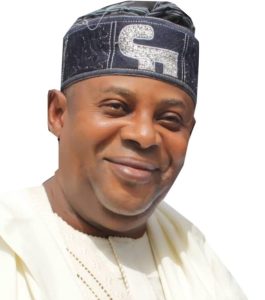
As political activities gradually gather momentum ahead of Nigeria’s 2027 general elections, discussions surrounding the future leadership of Kogi State have become more pronounced. Across the state’s three senatorial districts, one recurring name in political conversations is Hon. James Abiodun Faleke, the member representing Ikeja Federal Constituency in the House of Representatives and a long-standing ally of President Bola Ahmed Tinubu.
Many political observers argue that if President Tinubu allows Faleke to return home to pursue the Kogi governorship, the All Progressives Congress (APC) could consolidate its support in the state while addressing a long-standing demand for equity and political inclusion.
The roots of this conversation date back to the historic 2015 Kogi governorship election. The APC ticket of the late Prince Abubakar Audu and Hon. James Abiodun Faleke secured victory at the polls. However, before the Independent National Electoral Commission (INEC) could formally declare the final result, tragedy struck with the sudden death of Prince Audu.
The unprecedented development threw Kogi politics into constitutional and legal uncertainty. Faleke, who was Audu’s running mate, maintained that the votes belonged to the joint ticket and argued that the law entitled him to continue the process. The APC, however, nominated Alhaji Yahaya Bello to participate in the supplementary election, while Faleke declined to serve as Bello’s deputy.
The dispute eventually reached the courts, culminating in the landmark Supreme Court judgment, which affirmed Yahaya Bello as governor under the peculiar circumstances of the election. Although the legal battle settled the constitutional questions, many supporters of the Audu/Faleke political movement believe the political issues surrounding the mandate were never fully resolved.
Following Bello’s inauguration, many members of the Audu/Faleke political structure alleged that they were sidelined despite their contributions to the APC’s emergence in Kogi State. According to several party stakeholders, numerous grassroots mobilisers who worked tirelessly during the 2015 campaign found themselves excluded from appointments and government patronage.
Throughout Bello’s first four-year tenure and much of his second term, supporters of the Audu/Faleke political family maintained that they experienced political isolation while a new generation of political actors emerged within the APC hierarchy.
Yet, despite these grievances, the Audu/Faleke loyalists largely remained within the APC.
Ahead of the 2019 governorship election, President Bola Ahmed Tinubu, then the APC’s national leader, reportedly played a significant role in reconciling party stakeholders in Kogi. His intervention encouraged many Faleke supporters to support Governor Yahaya Bello’s re-election in the interest of party unity.
In one symbolic demonstration of reconciliation, Hon. Faleke led many of his supporters to Government House, Lokoja, where he publicly appealed to them to work with Governor Bello and strengthen the APC. Political observers believe the decision helped reduce internal divisions within the ruling party before the election.
As Bello completed his constitutional tenure, power remained within Kogi Central with the emergence of Governor Ahmed Usman Ododo, who hails from the same senatorial district and political structure established by Bello.
This development has renewed debates over political balancing among Kogi’s three senatorial districts.
Since Kogi State was created in 1991, Kogi West Senatorial District, comprising seven local government areas, has never produced an elected governor. For many advocates of power rotation, this remains one of the strongest arguments in favour of allowing the district to produce the state’s next governor in 2027.
Political analysts also point out that Kogi West has consistently played a decisive role in determining electoral outcomes in the state. From its support for former Governor Ibrahim Idris in 2003 to the overwhelming backing given to the Audu/Faleke ticket in 2015, the district has repeatedly demonstrated its electoral importance.
Supporters of Faleke argue that the patience displayed by the Audu/Faleke political family over the past decade deserves recognition. Despite what they describe as years of political neglect, they neither abandoned the APC nor openly worked against successive party candidates. Instead, they remained loyal while hoping that equity and fairness would eventually prevail.
Those advocating Faleke’s governorship ambition contend that he possesses qualities considered essential for governing a complex and diverse state like Kogi. They cite his legislative experience, grassroots political network, relationship with the Presidency, administrative capacity and reputation for constituency development.
Many believe that his emergence could help reconcile different political tendencies within the APC while attracting greater federal attention to infrastructure, education, healthcare and economic development in Kogi State.
Supporters further argue that President Tinubu has, in the past, allowed trusted associates to return to their states to provide leadership. They often reference former Osun State Governor Rauf Aregbesola, who served in Tinubu’s political structure in Lagos before returning to govern Osun State. In their view, permitting Faleke to contest the Kogi governorship would follow a similar political tradition of developing leaders who can serve both the nation and their home states.
Across Kogi East, Kogi Central and Kogi West, opinions remain divided. While many stakeholders from Kogi West insist that 2027 presents the most appropriate opportunity to address what they describe as a historical imbalance, others argue that the APC should adopt a process that prioritises competence, party cohesion and electoral viability alongside considerations of equity.
Nevertheless, a growing number of political commentators believe that conceding the governorship to Kogi West could strengthen the APC’s internal unity and reduce agitation over political exclusion. Some analysts also suggest that such a decision could energise APC supporters during the 2027 general elections by reinforcing perceptions that the party rewards loyalty and honours political sacrifices.
Whether Hon. James Abiodun Faleke eventually joins the Kogi governorship race remains a decision for him, his party and the electorate. However, the debate surrounding his possible candidacy has once again brought to the forefront enduring questions about justice, inclusion, political balance and the future direction of Kogi State.
As 2027 approaches, these issues are expected to remain central to political discourse across the Confluence State. Whatever path emerges, many Kogites agree that the overriding objective should be the election of a leader capable of promoting unity, accelerating development and ensuring that every part of the state feels adequately represented in governance.This column reflects viewpoints commonly expressed by Faleke’s supporters and political commentators.