
 By joshua
 THE UNGA AT 81: A World Searching for Trust, and Where Nigeria Stands
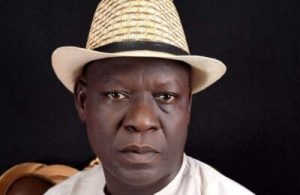
By Amb. Hon. Abdulsalam Bawa DANGANA
This week, the green marble podium in New York, United States of America (USA) is again the Centre of the World. The 81st Session of the United Nations General Assembly (UNGA 81) opened on September, 8, 2026 with the High-Level General Debate running September, 22-28, 2026.
The theme chosen by the new President of the General Assembly, Khalilur Rahman of Bangladesh, is telling: “Restoring Trust, Managing Transformation: A United Nations That Delivers for All.”
At 81, the United Nations (UN) is an old man in crisis. Secretary-General António Guterres, in his final UNGA as SG, warned that “fault lines in our World are widening” and “cracks have become canyons”. He spoke of two new existential threats – AI weapons moving from “science fiction to military reality” and climate collapse – while institutions “reflect the power realities of a largely bygone era”.
In other words, the World has transformed, but the UN has not. UNGA 81 is about whether multilateralism can be saved.
What is on the Table at 81?
Beyond the speeches, there are 5 high-level summits that show where the World is hurting:
1. Climate and Just Transition – after floods in West Africa and wildfires in Europe.
2. 40th Anniversary of the Right to Development.
3. Sea-level rise – an existential issue for Small Island States and for Nigeria’s Niger Delta.
4. Pandemic Preparedness.
5. Racism and Nuclear Disarmament.
And of course, the wars in Gaza, Ukraine, Sudan, and the AI governance race.
Nigeria’s Position: From Participant to Proposer
President Bola Ahmed Tinubu, GCFR has directed Vice President Kashim Shettima, GCON to lead Nigeria’s delegation, joined by Governors Siminalayi Fubara of Rivers State and Dauda Lawal of Zamfara State, Ministers and Senior officials. He will deliver the National Statement and hold bilateral meetings.
For public readership, Nigeria is not going to New York to just “attend”. Nigeria is going with three clear demands that define its global position:
1. REFORM OF THE GLOBAL FINANCIAL ARCHITECTURE
This is Tinubu’s economic diplomacy agenda. Nigeria is saying: The World Bank and International Monetary Funds (IMF) were designed in 1944 when Nigeria didn’t exist. Africa, which needs $108bn annually for climate adaptation, gets less than 5% of climate finance. Nigeria is pushing for debt-for-climate swaps, SDR reallocation, and fair credit ratings. As the Presidency noted, UNGA is to “strengthen the country’s position on reform of the global financial architecture”.
2. SECURITY AS DEVELOPMENT, NOT CHARITY
Nigeria cannot be lectured on terrorism while the Sahel burns. With Zamfara Governor in the delegation, Nigeria is linking banditry to ungoverned mining and illicit arms flow. The message: Africa’s security is global security. You cannot manage transformation while 60% of the World’s poor will be African by 2030. Counter-terrorism must come with investment, not just condemnation.
3. PERMANENT SEAT AND RIGHT TO DEVELOPMENT
Nigeria’s engagement on the “Right to Development” high-level meeting is strategic. After 81 years, Africa has 54 countries, 1.4 billion people, but no permanent seat on the Security Council. Nigeria, as Africa’s most populous nation and largest economy, is making the case that restoring trust means restoring fairness. A United Nations (UN) that delivers for all cannot be governed by the victors of 1945.
The Trust Deficit at Home
The theme – Restoring Trust – resonates deeply for Nigerians. The UN is suffering the same crisis Nigeria faces: citizens no longer believe institutions deliver.
For the average Nigerian reading this in Abuja, Kaduna, Lagos, Lokoja, Maiduguri, or Port Harcourt, UNGA can feel distant. But its decisions affect fertilizer prices, the cost of borrowing, and whether a young graduate in Kogi State can get a job in a green economy.
Nigeria’s best global position is not begging for aid, but demanding a system where our 39.6 million MSMEs, our women, youth, and our gas-to-energy transition plan are seen as part of the global solution, not a problem to be managed.
At 81, the United Nations (UN) is being asked to grow up. Nigeria is asking it to grow fair.
If UNGA 80 was about “Better Together,” UNGA 81 is a test: Can the United Nations (UN) prove it still works for a country like Nigeria?
Amb. Hon. Abdulsalam Bawa DANGANA, writes from Lokoja, Kogi State, Nigeria 🇳🇬
Peace Ambassador | Gender Advocate | Public Analyst |Technical Adviser to the Civilian Joint Task Force (CJTF), Kogi State Command.
© 25/09/2026