

The New Scorecard In Lokoja I: Why Influence Now Counts More Than Handouts
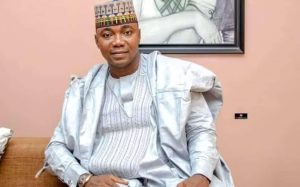
For a long time in Lokoja I, politics was measured in small things. A wrapper here. A bottle of oil there. A pack of Maggi pressed into a palm on election eve. For many voters, that was what representation looked like.
Today, the people of the state capital are asking a harder, more grown-up question: when your tenure ends, what will still be standing? What law will still be protecting mothers? What water will still be flowing? What school child will still be in school because you intervened?
That is the new test. And it is the test by which Hon. Bin-Ebaiya Shehu Tijjani, the man his supporters call Team-Best, is asking to be judged.
Let us be honest about what a lawmaker is, and what he is not.
A lawmaker is not a governor. He does not control contracts, ministries or the treasury. The constitution gives him three clear jobs: to make laws, to represent his people, and to hold the executive to account through oversight. Any honest assessment of Hon. Ebaiya must start there, not from the fantasy that a member of the House of Assembly is a walking bank.
And on those three constitutional jobs, the record of the Lokoja I representative in the 8th Kogi State House of Assembly is difficult to dismiss.
He has moved more than 15 motions on the floor, a figure that places him among the most active voices in the Assembly. These were not motions for applause. They were motions rooted in the daily pressures of a capital city.
He pushed for the expansion of the Lokoja Urban Mass Transit System, a direct response to the arbitrary fares charged by tricycles and motorcycles that punish ordinary commuters every day. He spoke up on youth unemployment. He demanded a comprehensive Social Protection Policy that would cover the aged, persons living with disabilities, women and children, the very people who are often forgotten when budgets are shared.
His fingerprints are also on major bills. He contributed to the debate on the Kogi State Anti-Corruption Agency Bill. He lent his voice to the Kogi State Free Maternal and Neonatal Healthcare Services Bill 2025, a bill that speaks to the survival of mothers and newborns. He supported the College of Agriculture, Ochaja-Egume Bill 2026. As Chairman of the House Committee on Water Resources, he has consistently tied his legislative work to one of Lokoja’s oldest pains: safe and potable water.
Outside the chamber, his style has been different from the loud, camera-chasing politics we have grown used to. He has preferred quiet lobbying to noisy grandstanding, working hand in hand with his brother-lawmaker and Speaker, Rt. Hon. Aliyu Umar Yusuf of Lokoja II, to pull state attention and interventions into the metropolis. In politics, that kind of synergy is not weakness. It is strategy.
Long before he held any office, when he was building his business in Lagos, his name was already known in Lokoja for the right reasons. He paid school fees for children who were not his own. He settled hospital bills for families he barely knew. He stepped in when communities cried out over water. That history is important because it explains 2023. His election was not bought. It was a vote of trust, cast by people who had already seen his character when he had nothing to gain.
That character followed him into public office. As Senior Special Adviser on Water Resources, he drove the reticulation and repair of dead pipes from Karaworo to Up-Garage and Felele, a job the Hakimi of Ward C publicly commended. As a lawmaker, he did not abandon that assignment. He sustained it with boreholes and by pushing water projects through the system.
In education, the numbers tell their own story: 500 free JAMB forms. Free computer-based preparatory classes for candidates sitting JAMB, WAEC, NECO and NABTEB. A reward scheme for the best-performing students, designed to make excellence attractive again. In health, a recent free medical outreach reached more than 1,500 constituents with consultation, drugs and referrals.
Has he put cash directly into every pocket? No. And he has never pretended otherwise. No lawmaker is a money bag. What he has done, with the little available to his office, is invest in the things that outlive a tenure, in the structure of a constituency rather than in the fleeting excitement of sharing.
The legislature rewards ranking. A first-term member is still learning the rules, the procedures, the art of the lobby. A returning member arrives with seniority. He becomes eligible for principal offices, for chairmanship of grade A committees, for a seat at the table where budgets are negotiated. He who chairs a committee influences what comes to his constituency. He already knows the ministries, the agencies, the executive, the politics across party lines. He does not waste two years finding his feet.
To send a performing lawmaker back is to send influence back. To replace him with a novice is to send Lokoja I back to the nursery while other constituencies are already in their final year.
Lokoja I is not a village. It is the state capital, a metropolis of endless needs. Needs are infinite. Resources are finite. Private philanthropy allows a man to choose who to help. Public office puts everyone on the same queue. Managing that pressure with humility, and remaining accessible while doing it, is itself a form of leadership, and it is one Ebaiya has carried with uncommon calm.
Yes, there has been noise. A few voices, mostly still bitter over the post-primary outcome, have tried to reduce his tenure to what he did not share. But let us remember the facts: that process was an open stakeholder ballot, and all aspirants agreed to it before it began. Dissent is legitimate in a democracy. But a sustained pull-him-down campaign after a credible process helps no one, least of all the constituency.
Every first term is for learning the ropes. The second term is for consolidation. Ebaiya is still a work in progress, but it is a work with a visible foundation, proven loyalty to the APC, and a record that is louder than the noise around him.
Other constituencies that kept their lawmakers grew strong. Those that change their representative every four years keep starting all over again, and remain backward. If Lokoja I loses a ranking member, it loses chairmanship, it loses voice in the budget, it loses its place in leadership.
Let us be brothers before politics. No community develops in division. To err is human, to forgive is divine. Put his record side by side with those who served Lokoja I before him, and judge with sincerity. He has redefined what representation means here.
A man who showed up when he held no office, and has continued to show up with the little he has in office, deserves to be stood by now. It is logical. It is fair. And for Lokoja I, it is the surest bet for the gains that are still to come.
By Abu Michael
Journalist, Author, President, Southerners Resident in Lokoja
