
 By joshua
 THE GOVERNOR ADELEKE’S REAFFIRMATION OF HIS ENDORSEMENT OF PRESIDENT TINUBU’S SECOND TERM BID
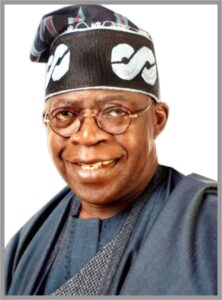
Governor Ademola Adeleke’s reaffirmation of his endorsement of President Bola Tinubu’s second term bid for the 2027 Presidential Election, coming swiftly after securing his own second term in the Osun State 2026 gubernatorial election underscores a political reality that ideological extremists often refuse to acknowledge: leadership transcends party lines when it is anchored in performance, vision, and national interest.
It is a quiet but powerful rebuke to those who believe Nigeria must remain trapped in permanent hostility, where disagreement is mistaken for enmity and opposition is confused with obstruction.
At its core, this moment invites a philosophical reflection on power itself. Power, in its truest form, is not the ability to dominate, but the responsibility to stabilize. It is not the noise of accusation, but the silence of results.
President Tinubu’s approach, often misunderstood by those who prefer emotional politics over structural thinking rests on the belief that nations are not built by outrage, but by order; not by slogans, but by systems; not by anger, but by architecture.
It is easy, in moments of political transition, for those who thrive on perpetual agitation to cry louder than the bereaved, to weaponize disappointment, and to dress partisan frustration in the garments of moral absolutism.
President Tinubu’s congratulatory message to Governor Adeleke cuts through this fog of noise with philosophical clarity: democracy is not sustained by insults, nor by the reckless branding of elected leaders with unprintable names, because policy choices demand discipline, sacrifice, and structural correction.
President Tinubu and Governor Adeleke have demonstrated the rare temperament of statesmen who understand that democracy is not a battlefield of bitterness, but a sacred covenant reflecting the people’s will. In congratulating Governor Adeleke on his electoral victory, the President reaffirmed a philosophy that is increasingly under assault in our national discourse: that power, in a true democracy, is never permanent, but always accountable to the sovereign voice of the people.
In a political climate often poisoned by hysteria, selective outrage, and manufactured indignation, this call is not mere rhetoric; it is a moral instruction to a nation dangerously flirting with political emotionalism over rational statecraft.
Those who today hurl names and manufacture narratives of tyranny often forget that governance is not a theatre of applause seeking, but a burden of hard decisions.
Leadership, especially in a nation as complex as Nigeria, is not a popularity contest of convenience; it is an arena of consequence.
The Tinubu administration, like all serious reform driven governments is engaged in the painful but necessary work of rebuilding economic foundations long weakened by years of distortion and delay.
The President’s message to Governor Adeleke reaffirmed a deeper truth: political competition must never destroy national cohesion. Elections end, but nations endure. The ballot may divide preferences, but governance must unite purpose.
This is why the President’s call for all political actors to put the election behind them and focus on the welfare of the people is not weakness, it is wisdom elevated to statecraft.
To recklessly label a reforming leader with pejoratives simply because the comfort of old inefficiencies is being disrupted is to misunderstand both democracy and development. Every serious nation in history has passed through seasons where leadership demanded discomfort in order to achieve long-term stability. Nigeria cannot be an exception.
The message from the President and the Governor to Nigerians is also a message to the world: unity is not the absence of disagreement, but the presence of shared destiny; governance is not a prize for victors, but a responsibility to all citizens, including those who did not vote for you; and the true measure of political maturity is not how loudly we celebrate victory, but how responsibly we accept defeat.
As Nigeria moves forward, the challenge before its political class is clear: to rise above the politics of insult and enter the era of ideas; to replace emotional extremism with institutional thinking; and to understand that history does not remember those who shouted the loudest, but those who built the strongest foundations.
In this unfolding national journey, President Bola Ahmed Tinubu stands not as a symbol of division, but as a figure of contested transformation, one whose legacy will ultimately be judged not by the noise of his critics, but by the endurance of the structures he leaves behind.
Musa Asiru Bakare, political analyst, writes from Lokoja, Kogi State.
August 17, 2026