
 By joshua
 Re – Kogi West Governorship: Between the Politics of Waiting and the Demand for Equity
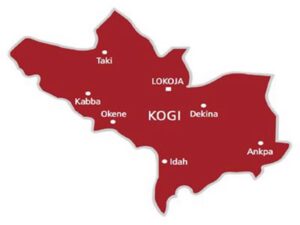
A recent political statement circulating from some quarters in Kogi West has attempted to close the 2027 governorship debate before it starts. Its core message is simple: Kogi West should be patient till 2031, Governor Ahmed Usman Ododo deserves a second term by default, and any agitation for 2027 is destabilization. This narrative, though dressed in the language of unity, it is hinged on selfish interest, it therefore deserves critical interrogation.
Firstly, the statement says, “Governor Usman Ahmed Ododo will seek a second term and most of us will support him. The people will decide in his favor by God’s grace.” This is a classic case of premature coronation. In a democracy, no second term is automatic. To declare it as a settled matter is to replace democratic choice with incumbency dogma. It shuts down internal debate, discourages performance appraisal, and rewards power for its own sake.
Secondly, The statement credits Governor Ododo with “capacity, transparency, inclusivity, good governance, bridging of gaps, securing the state and uniting the people.” This claim does not align with documented governance realities. Numerous assessments have questioned the prudent use of the state’s hugely increased revenues. The planned N50 billion Sukuk bond for an airport and market was described as a “costly vanity project” and a “misalignment between public borrowing and the public interest.”
At the grassroots, the picture is even starker. Despite official claims of 100% salary clearance, reports indicate that basic amenities such as health, education, water, roads, among others remain shadows of themselves. In Lokoja itself, the state capital, the water situation has been described as having reached alarming levels, while poor waste management has earned Lokoja the tag of being the “dirtiest state capital” in Nigeria. That is not the mark of a bridged gap. Besides, payment of salaries, is not an achievement; it is a basic obligation of government.
Thirdly, the most dangerous argument in the text is that Kogi West “will produce Governor in 2031 with proper dialogue.” History in Kogi and across Nigeria shows that promises of “next time” are often political tools to demobilize a zone. Kogi West is the only senatorial district that has never produced an elected Governor since the creation of the state in 1991. To ask it to wait till 2031 – making it 40 years of exclusion – and call that fairness is political irony. Unity cannot mean permanent exclusion of one leg of the tripod. True unity is built on equity, justice and fairness.
Fourthly, the original post warns that “Nobody should be allowed to hijack the conversation.” That is valid. But it becomes contradictory when the author claims “Kogi Local Government stand firmly” and “Ododo is our candidate” as if personal loyalty is now the collective position of the entire Kogi West. Kogi West has seven Local Governments – Lokoja, Kogi, Kabba-Bunu, Ijumu, Mopamuro, Yagba East, Yagba West – with diverse voices. No individual can mortgage that future in the name of loyalty.
Finally, Governor Ododo has every constitutional right to seek a second term. Kogi West also has every constitutional and moral right to aspire to produce the Governor in 2027. If the first term has truly delivered good governance, let it compete on performance at the ballot – job creation, roads, healthcare, transparent fiscal management, and civil service welfare – not on preemptive endorsements and threats of destabilization.
The debate should not be “wait till 2031.” The debate should be: Who can best unite and develop Kogi State, and is it not time for equity to take its course in 2027? One Kogi State, but Equity Must Come First.
Isa Sanusi
Lokoja