
 By joshua
KOGI POLITICS: WHY OKUNS MUST GO TO THE ANTS
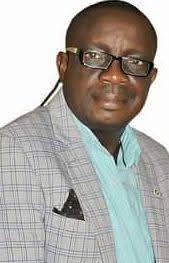
By Pastor Stanley Ajileye
Solomon, the wisest man ever, in his wisdom, recommends an ant—one of the tiniest creatures—as a positive example.
That message of Holy Scripture, in the sixth verse of the sixth chapter of the Book of Proverbs, is a charge against slackness. The ants are hardworking, foresighted, and orderly, pulling strength together to achieve unimaginable feats, even in the apparent absence of a leader.
Solomon’s message is also a charge on the necessity for humanity to unscrew its pads of ego and humble itself to learn from a lesser creature how to get right what it has gotten wrong for ages. The ants teach us the strength in collectivity and the consolidation of interests.
I don’t know how derogatory it may sound to tell the big political actors of Okunland to undertake a study of students’ politics.
My humble discovery is that many things we see in our national polity are clear reflections of experiences from students’ politics.
I hope I will not get my readers bored with some essential background details.
In 1988, the year I gained admission into Ahmadu Bello University, Zaria (the biggest university in Africa, south of the Sahara), as a Direct Entry student of Political Science, a ban was placed on students’ unionism. The ban was not lifted until 1990, when I was already in my final year. Final-year students were not permitted to contest in any of the students’ elections.
However, I was privileged to be one of the seven students of Ahmadu Bello University who received an official letter of invitation from the office of the Vice Chancellor to discuss modalities for the reactivation of the students’ union.
Yes, their ban for almost three years never worked. Some of us still led students in protest against the obnoxious policies of the Professor Nayaya–led administration.
Ahmadu Bello University (ABU) is a miniature Nigeria in terms of its inherent politics. A popular news magazine in the mid-80s once described ABU as “a hotbed of controversy.”
The politics of ABU is always a contest between North and South and/or Muslim vs. Christian.
The issue that led to the ban of the Students’ Union in the first place was a riot that erupted after an election which saw Stephen Awobi, a Christian from Benue State, defeat Lukman, a northern Muslim, to win the presidency of the union in 1988.
The authorities would not allow such an “aberration.” The norm must not be broken. A southern Christian must not lead the students’ union of a “northern university.” Then—pum!—crisis erupted, leading to the ban.
The task of reactivating the union became more ethno-religiously sensitive.
We called a congress to elect a Caretaker Government. I emerged as Secretary, with my albino friend and course mate, Emmanuel Iwegbu, as Chairman.
We presented the committee to the authorities, but they objected to its composition. Their reason? They claimed the caretaker government was dominated by students from the Faculty of Arts and Social Sciences.
But we all knew the truth. The objection was actually because the chairman was an Igbo Christian, I (the secretary) was a Yoruba Christian, and all members of the committee were considered hardliners behind various protests during the ban. So, our committee was dissolved.
Deans of the various faculties were mandated to nominate one student each into a new committee.
However, our group (the Progressives) still succeeded in getting one of us—Anana Donald—to head it. He did a great job.
The caretaker committee made up of representatives from each faculty was inaugurated, and real politics began.
Leaders of the Christian Fellowship visited my room to discuss the necessity of having a Christian as our union’s president. Many who did not know I was a final-year student wanted me, but the constitution did not allow it.
When matters intensified, we the Progressives—drawn from Kwara, Niger, Benue and Plateau, with some radical elements from Kaduna State—formed The Middle-Belt Forum with a strong mandate to sponsor Steven Aluko (a.k.a. Maradona) from Ogori, Kwara State (before Kogi State was created).
In our camp were: Ahmed Yusuf (Parrot, a postgraduate student of history from Kaduna state. He wrote the biggest thesis that I have seen in my life. He was said to have transported his thesis to the Senate on wheelbarrow, when he was forced to submit, as the school authority wanted to rid the school of those perceived as radicals.
About seven of us were listed for rustication but for the Executives of National Association of Nigerian Students, NAN, that came to A.B.U. in the night, and forced the school authorities to a meeting to remove the noose from our neck before daybreak.
Apart from Ahmed and yours truly, Stanley Ajileye, other activist in the political struggle were:
My late friend Ibiyemi Michael (J. J. Rawlings, from Kabba), Emmanuel Iwegbu (Yellow Man from Imo), the late Madam Hassana Garba (Iron Lady from Niger State), Pastor Abayomi Fatimehin (From Yagba), Joseph Mamman (From Kaduna), Jeff (Plateau), Steve Aloko (Maradona, From Ogori), and of course my very good friend, Alex Iyekolo from Yagba.
We agreed on Maradona (Steven Aluko) as our presidential candidate and Joseph Mamman, a blue-blood radical, as Secretary. Both were Christians, and it became a serious inter-religious war.
The university authorities also had vested interests.
Their two preferred candidates were Dasuki (son of a former Emir of Sokoto) and Nura Giwa from Kaduna State. Both were sponsored by the authorities in collaboration with a northern socio-religious/political group, the Gamji.
We were happy we had only one strong, radical candidate—our own Maradona.
Then the authorities introduced a divide-and-rule strategy to break the Progressives.
They sponsored people from within our ranks.
My brother and friend, Alex Iyekolo, was approached through colleagues in his faculty. They needed him to contest to break the ranks of the Kwara boys. They also raised another candidate from Benue, Prince Aduku, son of a top military officer. (He, I learnt, is also late.)
We knew Aduku would not fly among the Progressives, but Alex’s candidacy would be damaging.
Alex came to my room and informed me Fatimehin and Ibiyemi that some northerners who admired him wanted him as president and would prefer him over a northern Muslim if he could get our support.
I knew the implication of rejecting the offer too quickly, so we sent him back to them with a message that if they were serious, we could consider it.
I secretly met with key Progressives to alert them of the danger. We agreed on what to do.
Alex submitted his form. I signed as his sponsor and attested to his fine character. Truly, Alex was exceptional in character.
He was innocent. He never knew about the involvement of the authorities—we did not tell him.
The authorities produced expensive posters and campaign materials for him. He brought samples to my room, and I congratulated him.
On the closing date for form submission, when campaigns were to start, Mike Ibiyemi, Abayomi Fatimehin and I invited Alex to my room and broke the news:
“ Alex, You cannot contest. Go and tell your sponsors you are no longer interested.” I declared to him without looking at his face.
Alex was devastated. He wanted to know why—and why we allowed them to spend money before withdrawing.
If we rejected the offer early, they would have found someone else we could not control.
He feared for his life, thinking they might harm him. We reassured him and gave him a letter purportedly from his father forbidding him from politics:
“…Omo mi owon, mo gbọ pe oṣelu lo n ṣe nílé-iwe. Tí ìwọ kò bá jáwọ, emi yóò kọ ẹ l’ọmọ…” meaning, My dear son, I heard that you are into politics in school, if you don’t withdraw immediately, I will disown you.
That was how we removed their noose from his neck.
Eventually, Dasuki stepped down for Nura Giwa as expected. The battle was between Aluko and Giwa. Aluko won overwhelmingly, supported by southern students and the Christian Fellowship.
I left Alex and others in ABU after my graduation.
I have not seen him since. I hope he forgives me today when I say our action was necessary to stay on top of the game.
Back to Okun political actors.
We are tyros in politics if we are not on top of our game.
The reason Okun has always come out of elections disappointed is because our opponents appear smarter.
Between 2011 and 2012, a divisive strategy was used by the then Governor of Kogi State, His Excellency Ibrahim Idris. He raised the hopes of about five Okun aspirants, privately promising each of them the ticket, only to later unify the Igalas to clinch it.
Today, the same game is playing out.
Three sons of Okun—all eminently qualified—are slugging it out.
The Ebiras are united behind the “Flower Boy” of Governor Yahaya Bello.
I am sure the Igalas, who currently have four candidates, will soon consolidate into one.
I smell failure if Okun goes into the November election with three candidates, while Central and East each field one.
We must learn to frustrate the divisive strategies of our opponents.
We must be on top of our own game.
Let Okun go to the ants.
Stanley Ajileye
Clergy and Media/Political Consultant, Kogi State, Nigeria
The article below was written in 2023. Today, the message therein is as relevant to my people of Kogi West as ever.