
 By joshua
 Divide and Rule: The Political Fragmentation of the Igala Kingdom and the Burden of Internal Betrayal
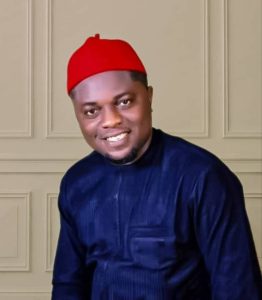
By Christopher Sunday
Politics, in its ideal and philosophical understanding, was never designed to destroy a people. From the ancient political thoughts of Aristotle to the social contract theories of Jean-Jacques Rousseau and the communal political philosophy of Africa, politics was conceived as an instrument for the advancement of the common good, social harmony, justice, development, and collective progress. Leadership was meant to unite communities around shared aspirations and protect the dignity of the people. Unfortunately, what we increasingly witness in contemporary Nigerian politics, and particularly within the Igala Kingdom, is a dangerous deviation from this noble purpose.
Today, the Igala nation stands at a critical political crossroads. Rather than politics serving as a platform for development, economic growth, educational advancement, infrastructure, and social liberation, it has gradually become an instrument of division, manipulation, suspicion, and internal destruction. The tragedy is not merely that external political forces seek influence within the Igala Kingdom. The deeper tragedy is that Igala sons and daughters are repeatedly being used against their own people in pursuit of temporary political interests.
The recent political events involving Murtala Yakubu Ajaka, popularly known as Muri, and Senator Jibrin Isah Echocho have once again exposed a painful pattern within the political history of Kogi East. Muri was suspended by members of his own ward in Ajaka. Echocho was also suspended by members of his own ward in Odu Ward 2 of Dekina Local Government Area. In both cases, regardless of political affiliations or personal opinions about the individuals involved, one painful reality remains undeniable: Igala people were used against fellow Igala people.
This raises profound philosophical and political questions. For how long shall this continue? For how long shall we allow ourselves to become instruments in the political weakening of our own land? For how long shall personal interests overshadow collective survival?
Throughout world history, great nations and strong ethnic nationalities survived because they understood the importance of internal solidarity even amidst political disagreements. The Jewish people preserved their identity through unity and strategic cooperation. The Chinese civilization rose through collective national consciousness. The Western democracies became strong not because they lacked political rivalry, but because they protected certain collective interests beyond partisan divisions.
Sadly, in many African societies, and particularly within our political environment, divide-and-rule strategies continue to flourish because internal actors willingly participate in weakening their own people. External political interests can only succeed where internal disunity already exists. No society collapses merely because of outside pressure; societies collapse when internal betrayal becomes normalized.
The Igala Kingdom must therefore begin a new political conversation. We must ask ourselves difficult but necessary questions. What exactly has political division brought to our people? Where are the industries? Where are the functional roads? Where are the quality hospitals and schools? Where are the massive youth empowerment programs? Where is the economic transformation that politics promised us?
Instead of development, what we increasingly see is bitterness, factionalism, political intimidation, character assassination, and the weaponization of party structures against perceived opponents. Politics has become less about the people and more about power preservation. Yet the ordinary citizens continue to suffer poverty, unemployment, insecurity, and neglect.
The future of the Igala Kingdom cannot be built on internal destruction. No ethnic nationality can rise politically when its elites continuously undermine one another for temporary advantage. Political disagreements are normal in every democracy, but they must never degenerate into collective self-sabotage.
This is not a call for blind loyalty to individuals. It is not a defense of any politician. Rather, it is a call for political maturity, strategic unity, and collective consciousness. The Igala people must begin to distinguish between healthy political competition and dangerous political manipulation designed to weaken the region from within.
Our politics must return to its original purpose: development, justice, progress, and the protection of collective interests. We must stop allowing politics to turn brothers against brothers while our land remains underdeveloped. We must stop celebrating division while our future is gradually being mortgaged.
History will not remember how loudly we fought ourselves. History will remember whether we preserved the dignity, strength, and political relevance of the Igala Kingdom for future generations.
The time has come for political awakening. The time has come for unity of purpose. The time has come to reject divide-and-rule politics and embrace a new culture of strategic cooperation, mutual respect, and collective advancement.
For if we continue to destroy ourselves from within, no external enemy will need to defeat us. We would have already defeated ourselves.