
 By joshua
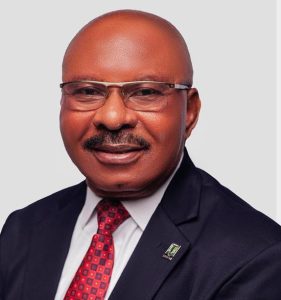
 Dr. Francis U. Ubani, Ph.D, FCTI is a Chartered Tax Professional/Tax Consultant. In this piece, he joins in the ongoing debate on the Tax Reform Bills and makes inputs: Ayo Ola reports. Excerpt:
THE EASTERN NIGERIA ECONOMY – BEYOND THE TAX REFORM BILLS:
THE MAIN ISSUES AND SUNDRY THINGS THEREIN THAT YOU NEED TO KNOW.
There is a quiet and deep message presented to us within the Bills that many are unaware or not paying attention in order to understand the inherent things embedded in the Bills.
In this respect, let us break it down in plain English words, without any form of prejudice toward any particular group of people, region and/or ethnic group. It is sometimes very difficult to speak out and speak the truth. But the fact remains that the truth may be bitter, but it is still the truth.
Main facts you need to know and understand about the Bills:
The current “Distribution Method” being used by Revenue Mobilisation Allocation and Fiscal Commission (RMAFC), and Federal Account Allocation Committee (FAAC) are that- “All revenue generated by the Nigerian Federation are sent to the Federation Account and distributed monthly. These funds are distributed based on the VAT distribution formula, as shown below:
The present “VAT Distribution Formula” and Allocation are: -Federal Government 15%, State Government 50%, Local Government 35%
The Federal Government uses this formula to calculate what each State Government share of the 50%
would amount to.
For example, assuming that ₦100B is generated: ➢ Federal Government takes 15% (₦15B) ➢ State Governments’ share 50% (₦50B) ➢ Local Governments share 35% (₦35B).
This is how the present revenue redistribution works.
However, it is important to note the following: The 50% and 35% share allocated to the State Governments are not shared equally, but are further divided into three fragments as shown below: –
A certain formula is used to determine what each State and Local Governments receives from the ₦50B and ₦35B respectively.
The State and Local Governments’ certain allocation sharing formula are as shown below: • Equality 50% • Population 30%; • Derivation 20%
The formula is explained thus: 1. Equality: This means that from the total generated revenue, 50% (₦50B) is allocated to the State Governments, plus the FCT. Under Equality sharing, 50% of the ₦50B, which amounts to (₦25B) is distributed equally among all the State Governments.
Equality sharing formula of the 50% is divided by the 36 State Governments.
2. Population: This means that after the first half (Equality sharing) is done; the remaining second half is split between “Population and Derivation.”
The Population is set at 30% of the ₦50B which amounts to ₦15B is again shared based on the size of the population of each State of the Federation.
Population sharing formula of 30% is divided by the 36 State Governments and FCT and categorized by State and its population size. The States with higher population receive more, while the States with smaller population receive less. The States with larger populations that receive more money than those with smaller ones are mostly the Northern Region States and Lagos State.
Meanwhile, at this point, 80% of the revenue funds allocated to the State Governments has been shared, benefiting primarily the States in the North and Lagos State.
3. Derivation: The remaining 20% to be shared from the ₦50B revenue funds allocated to the Federating States is to be shared through Derivation. Under the Derivation formula, Federating States that contributed more tax revenue receive more money, and those Federating States that contributed less tax revenue receive less money, irrespective of the population size of the State.
Derivation Sharing formula: The 20% remaining is divided by the 36 States and FCT categorized by the Federating State’s tax revenue contribution to the Federation Pool Account, (example: tax revenue remitted to the FIRS by the State).
States with higher tax revenue contribution to the Federation Account receive more money and the States with lower contribution to the Federation Account receive less. The States that benefit the most from Derivation are those States with major company Headquarters, Industrial, and Economic hubs, such as Lagos and Rivers States.
Nevertheless, the rest of the States, that gained greatly from the previous two formulas: – Equality and Population, will most likely not care about this.
The overall sharing formula beneficiaries are as follows: ❖ 50% Equality: – All the States benefited. ❖ 30% Population: – Northern States, and Lagos State benefited most. ❖ 20% Derivation: – Lagos, Ogun, Rivers, Oyo, FCT, Delta and somehow: Bayelsa, Kano, Akwa Ibom, Anambra, Edo, Ekiti benefited most.
The New Tax Reform bills, especially the one currently being mostly discussed: – The Federal Government reduced its allocation by 5% and added it to the States, increasing the States’ share to 55% and the Local government allocations still remains unchanged at 35%.
Thus the new VAT Distribution formula: ✓ Federal Government 10% ✓ State Governments 55% ✓ Local Governments 35%
Also changed in the States sharing formula are: ▪ Equality is lowered to 20%. ▪ Population is lowered to 20%. ▪ Derivation is increased to 60%.
The new Tax Reform Bills sharing formula beneficiaries are as follows: ❖ 20% Equality benefits all the Federating States. ❖ 20% Population benefits States in the North, and only Lagos State in the West mostly. ❖ 60% Derivation benefits Lagos, Ogun, Rivers and somehow Oyo, FCT, Delta, Bayelsa, Kano, Anambra, Edo, and Ekiti States mostly.
In the light of the foregoing analysis, it is obvious the States and Regions that would benefit most from the new Tax Reform Bills.
Nevertheless, it is germane at this point to bring our attention to the fact that the economic policies in Nigeria since after the civil war has largely been designed in favour of the “Western Nigeria Economic Corridor”, and carefully and tactically preventing the “Eastern Nigeria Economic Corridor” from performing. This calculated and well-crafted strategy, automatically, compels most Nigerians to depend solely on the Western Nigeria Economic Corridor for most economic activities in Nigeria to the detriment of the Eastern Nigeria Economic Corridor.
The Eastern Nigeria Economic Corridor which extends from the right flank of the Atlantic Coast, through to the North-East of Nigeria verge, is left unused and/or to waste. This entire area was economically vibrant and importantly dynamic, and was the major economic corridor before the Civil War. It also played a very critical role and contributed greatly to the Nigerian economy before the advent of oil, with very active and bustling seaports, an international airport, and very effective and busy railway system stretching from Port-Harcourt, all the way through the South-East, Middle-Belt, North-East and terminates in Maiduguri, Borno State.
Having effectively blocked the Eastern Nigeria Corridor economically, and leaving only the oil and gas allocations driving the economy, tax revenue becomes a mirage. It is therefore very difficult for the States in the Eastern Nigeria Economic Corridor to create jobs and improve their tax revenue contributions to the Federal Government.
On the other hand, the States in the Western Nigeria Economic Corridor which is the left flank of the Atlantic Coast, through to the North-West, with Two (2) International Airports, Two (2) Seaports, and functional Railway Services, has a huge potential to create jobs and generate tax revenue and improve their tax contributions to the Federal Government.
The above-mentioned factors automatically forced foreign companies and Nigerians from the Eastern Nigeria Corridor extraction, to relocate to the Western Nigeria Corridor; Lagos and surrounding States for ease of doing business. Just visualise someone traveling all the way from Calabar to Lagos, just to board a plane going outside Nigeria. As a company operating in the Eastern Nigeria Corridor, how do you imagine telling your foreign partners to book another flight to the State where your Head Office is located, after a long flight to Lagos (Western Nigeria) from the foreign country and why not just move your company to Lagos for convenience?
No foreign embassy would leave a State or Region with functional International Airport to build their visa centers in a State or Region where there is none, it is just not possible and that is why they are all located in Lagos and Abuja.
Take a look at all the International Oil Companies operating in the Eastern Nigeria Corridor of the Country, their Head Offices are all in Lagos. That is the same reason they pay taxes to Lagos State.
The Eastern Nigeria Corridor States’ conversation and appeal should focus on reopening the Eastern Nigeria Economic Corridor, and not withdrawing the Tax Reform Bills.
Reopening the Eastern Nigeria Corridor would create a third trade route within Nigeria’s Eastern flank and Central Africa Countries. Central Africa includes Eleven (11) Countries namely: Angola, Chad, Equatorial Guinea, Gabon, Cameroon, the Central African Republic, the Democratic Republic of Congo, the Republic of Congo, Rwanda, and Sao Tome and Principe. The overall economic benefits to the Eastern Nigeria Corridor States’ would be substantial. As it stands now, it appears that the Tax Reform Bills mostly benefit Western Nigeria Economic Corridor States’.
Think of the huge benefits that would be derived from the Middle-Belt, and North-East farmers for not having to transport their produce through very poor roads, facing multiple police checkpoints, extortion & high energy costs. However, with a functional Railway System Arrangement in place, this would reduce the unnecessary strain associated with road transportation, boost productivity, effective distribution, and lower food prices nationwide.
Again, think of importers from the Eastern Nigeria Corridor States not having to clear their goods and pay Lagos State just to get their goods out of the seaport in Lagos, regardless of their location, then carrying them through very rough roads like the East-West Road. But with a functional Onitsha, Calabar, Port Harcourt, and Warri seaports nearby, they could be importing directly, and ensuring that every day and/or essential commodities are made more affordable to Nigerians.
There would be more attraction for establishment of industrial, manufacturing, agricultural, and distribution companies that would take advantage and open in these areas due to closeness and nearness to the seaports for import & export. These activities would mean more tax revenue and a larger tax allocation for the Eastern Nigeria Corridor States’.
The Central African Countries trading route would bounce back and thrive again with the resultant effect of more tax revenue for the Eastern Nigeria Corridor States’. Many people may not know that Nigeria retains the gateway to a waterway connecting at least Nine (9) Countries. The River Niger in the Eastern Nigeria Corridor, flows through West and Central Africa Countries, and was regularly and constantly used by the colonial expatriates’ as a significant and key trading route during the slave trade era.
In conclusion of this discussion and article, I am of the opinion and strongly believe that continuously holding down and locking the Eastern Nigeria Economic Corridor is actually holding down the entire Nigerian economy. Igbo adage says: (Oji madu n’ala ji onwe ya), (He who holds another on the ground, is actually holding himself as well). However, and in sharp converse, reopening the Eastern Nigeria Economic Corridor would essentially unlock Nigeria’s full economic potential, boost local economy, create jobs, lower costs, increase tax revenue, & rejig active trade activities across West and Central Africa Countries. The enormous benefits from all the foregoing activities would be felt by all Nigerians irrespective of Regions. I therefore humbly appeal to all Leaders in Nigeria, and Diaspora, Leaders of thought in Nigeria, and all the citizenry to kindly, let us all move past the Civil War, because until we are able to sincerely put the Civil War behind us, Nigeria would remain still and continue to move in a vicious circle.
Thank you all and God bless the Federal Republic of Nigeria.