
 By joshua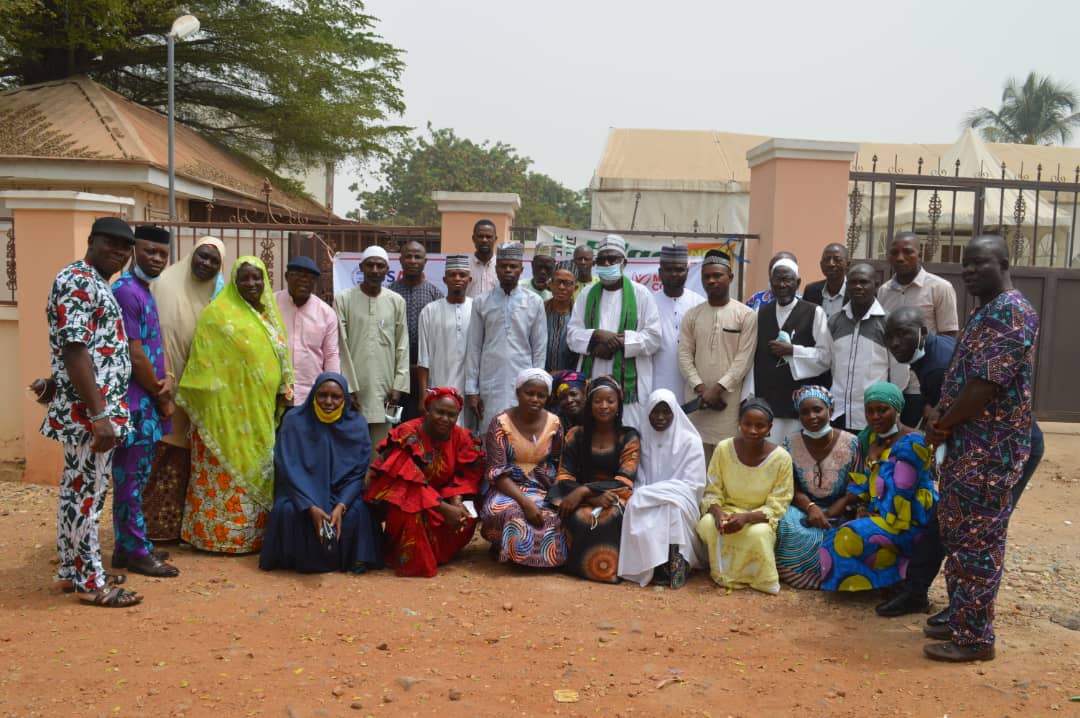
COMMUNIQUE ISSUED AT THE END OF A 3-DAY WORKSHOP ON COUNTERING/PREVENTING VIOLENT EXTREMISM HELD FROM FEBRUARY 18-20 AT EDGE DRIVE HOTEL, KUNAMA CRESCENT, LOKOJA
Preamble
The Community Initiatives to Promote Peace (CIPP) Program held a three-day workshop with senior religious leaders, representatives of religious institutions, PLWDs, women and youth leaders drawn from the CIPP target Local Government Areas LGAs (Dekina, Igala Mela, Lokoja and Yagba West). The Christian and Muslim participants at the workshop bared their minds on likes and dislikes on the practice of each other’s religions. Issues that border on stereo-types and prejudices were debunked during the inter session of the Workshop which led to connections between the Muslim and Christian participants. Common grounds in the beliefs and practices of both religions were also highlighted. At the interactive intra and inter sessions, the undermentioned salient topics on Countering and Preventing Violent Extremism were considered –
Indicators of Radicalization/Root causes of Violent Extremism
Recruitment Tactics/Cyber Sanctuary
Typology of Violent Extremism
Local and Global types of Violent Extremism
Drivers of Violent Extremism (Economic Exclusion, Limited Opportunity for Upward Mobility, Political Exclusion, Shrinking Civic Space, Selective Mistreatment)
Push & Pull Factors
Tools for Countering and Preventing Violent Extremism
Issues
The workshop recognizes the following issues of concern bordering on violent extremism in the communities of Kogi State:
That violent extremism persists in some communities in recent times in Kogi State.
That extremism and its violent tendencies in various manifestations in the State are largely driven by political, social and economic exclusions as well as acts of injustices which strongly breed tension, insurrection and rebellion amongst the aggrieved groups or parties
That violent extremism is caused by the neglect of putting into practice the true tenets of religious knowledge as well as absence of proper teachings of religious ethics and norms
That there is an apparent neglect and shift in utilizing the ideals of both religious and cultural mechanism established and known for alternative dispute resolutions for the acceptance of all and to the joy of the community which often strengthen the bond of unity, cooperation and peaceful coexistence among the people.
That failures in taking prompt action against any known form of extremism in any of its ugly nature creates gaps for the destructive eruption of violent extremism
That absence of proper monitoring of the youth activities, children behaviors and conducts by both the parents and communities give wider room for the inability for early detection or signals to violent extremism
Recommendations
At the end of the workshop, the Muslim and Christian Religious Leaders came up with the following recommendations:
Promote interfaith and intergroup education in Kogi State as lack of true and objective knowledge of the other’s religion create basis for false, offensive or malicious statement or actions while deliberate and positive interfaith dialogue and education promote understanding and accommodation leading to preventing of Violent Extremism
Setting of an agreed powerful community body made up of all representatives such as men, women and youth of proven integrity fully supported by the community and its leaders
Religious leaders, community elders and the members of various communities should closely work in synergy with one another to effectively prevent any extremism before it turns violent
Share all that were learnt in the workshop with their communities with the sole intention to build peace bridges among the people and have a change from the old order of known violent extremism to the new order of peaceful coexistence, tranquility and mutual understanding
That religious leaders should establish means of communication among themselves to maintain good relationship
Governments at all levels should as a matter of urgency revalidate its responsibilities and commitment to introduce true religious programs to be compulsorily studied by all students at all levels of our educational system aimed at not only to deradicalize the youths from extremism of any form but build in them a new mindset of love, cooperation and development
Unity should be enhanced among the religious, community leaders/elders and community members to rise in unison to fight down any form of violent extremism in their communities
That religious leaders should exhibit absolute honesty, purity, unselfishness and unconditional love in their dealings
That religious leaders in both faiths should teach their subjects never to look down on each other’s religion
That the Christian and Muslim practitioners should see themselves as brothers and sisters in the bond of love and humanity from one Creator
The available religious tools for preventing Violent Extremism (Ladder of Tolerance) should always be explored by religious leaders in Kogi State in dispute management/settlement using bottom top approach
Understand that the essence of religious proselytization is to call people to God, and this must be done using exemplary words and conducts and apply wisdom
Encourage self-regulation amongst scholars and preachers of the same religion as well as supporting interfaith collaboration and cooperation for the sake of promoting textual and practical knowledge of the two religions and their dividing lines
Prohibiting provocative, insulting or inciting messages or sensitization of our own or other religions, and avoiding use of platform of religion or the notion of freedom of speech to spread hate messages or commit blasphemy
Create a platform for possible constant exchange of visits to share ideas, collaborate and joint efforts to boost the confidence of the communities
This Communique is issued on behalf of all participants at the end of the interfaith dialogue/workshop by the following persons:
1. Mallam Zakariya Zaak Abubakar Aliyu – 08036997208
2. Inikpi Ali (Mrs.) – 08035075241
3. Pastor Emmanuel Ekpa Esq – 07036553781
Communiqué Committee