
 By joshua
TINUBU 2027: THE BATTLE FOR CONTINUITY BEGAN ON MAY 29, 2023
By Musa Bakare
The difference between a politician who spends three years searching for faults and blames and a president who spends those same three years implementing policies, executing projects and confronting national challenges is the difference between political noise and the responsibility of leadership.
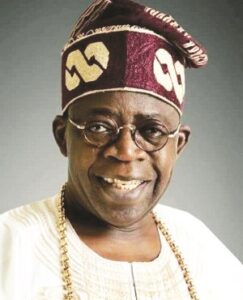
President Bola Ahmed Tinubu began his 2027 campaign for re-election on May 29, 2023, not with trading blames, slogans or or exchange of banters, but with governance, reforms and an ambitious determination to reposition Nigeria.
While the opposition has continued to challenge his administration and position itself as not very credible alternative, Tinubu has pursued far-reaching economic reforms, infrastructure development, student financing, housing initiatives and institutional restructuring. His supporters believe these efforts provide a formidable foundation for seeking a second mandate in 2027.
The fundamental question is this: after nearly four years of political argument, what convincing alternative have Atiku and Obi presented that is stronger, more practical and more sustainable than the path they criticise ? None.
Opposition is a legitimate pillar of democracy, but criticism alone is not leadership. Condemning a government is considerably easier than governing a country as complex as Nigeria.
Nigerians deserve more than political rhetoric; they deserve credible answers, workable policies and demonstrable capacity to deliver.
From petrol subsidy removal and foreign-exchange reforms to major infrastructure projects, the Tinubu administration has made consequential decisions aimed at addressing longstanding structural challenges.
The Lagos–Calabar Coastal Highway, the Abuja–Kaduna–Zaria–Kano road corridor, the Nigerian Education Loan Fund and housing programmes reflect the administration’s development priorities.
The administration is working to translate its policies into affordable food, productive employment, reliable infrastructure, improved security and greater opportunities for ordinary Nigerians.
The strongest argument for continuity is not that every problem has been solved, but that Nigeria must consolidate worthwhile reforms, correct their weaknesses and turn ongoing investments into lasting prosperity.
The inauguration of the APC Presidential Campaign Council at the Presidential Villa on October 14, 2026, has given a solid organisational expression to the political drive towards Tinubu’s re-election.
Led by Director-General Senator Abdulaziz Yari and Rt. Hon. James Abiodun Faleke as the deputy, the council’s inauguration was notable for the reported breadth of political representation, including governors associated with different political parties and tendencies.
The participation of notable figures from the APGA, Accord and PDP, alongside APC leaders and stakeholders including the considerable political influence associated with FCT Minister Nyesom Wike points to the potential reach of a coalition extending beyond conventional party boundaries.
The message is unmistakable: Tinubu’s 2027 project will build a broad political alliance around continuity, national stability and the consolidation of ongoing reforms.
The council’s responsibility will be to take the administration’s record to every state, local government, ward and community, and to answer difficult questions with evidence rather than slogans.
Asiwaju Tinubu defeated formidable opponents in 2023. In 2027, he will massively defeat them by defending his record against Atiku, Obi and other contenders.
Possibly after 2031, Atiku and Obi must learn to do more than criticise. They must explain precisely how their alternatives would tackle Nigeria’s economic challenges, improve security, create jobs and finance national development.
President Tinubu has demonstrated that his reforms are delivering measurable improvements in people’s lives.
This is where the real battle lies: not in who shouts loudest, but in who can make the strongest, most credible case for Nigeria’s future.
The inauguration of the broadly supported campaign council adds an important organisational dimension to that effort.
The mission ahead is clear: consolidate progress, correct shortcomings, accelerate development and continue to ensure that Renewed Hope becomes a tangible reality for Nigerians.
Atiku and Obi may continue to challenge Tinubu politically, but the president’s strongest response is always a record of delivery, a united political coalition and a credible vision for the future.
For us, the teeming supporters of President Bola Ahmed Tinubu, the task is to defend his record with facts, acknowledge where improvement is needed, mobilise peacefully and democratically, and take the message of continuity to every corner of Nigeria.
Musa Asiru Bakare is a political analyst and member of the Tinubu Support Group (TSG). He writes from Lokoja, Kogi State.
October 20, 2026