
 By joshua
 Kogi Decides October 17: Inside The Nda Eri Model That May Finally Give Grassroots Democracy A New Face
By Abu Micheal
History is rarely made in noise. Sometimes it is made in the quiet, methodical work of a man and an institution determined to get it right, and that is exactly what is unfolding in Kogi State.
On Saturday, October 17, 2026, Kogites will walk into 3,508 polling units across 239 wards in 21 Local Government Areas to elect Chairmen, Vice Chairmen and Councillors. On paper it is another local government election. In reality, it is shaping up to be a reference point, a new benchmark for how council polls should be organized in Nigeria.
The reason is not far-fetched. This election is the product of continuity and institutional memory. Since March 2020 when Hon. Mamman Nda Eri assumed office as Chairman of the Kogi State Independent Electoral Commission, KOSIEC, he has midwifed two council elections in December 2020 and October 2024. Both were spread across the state’s 2,548 polling units and were largely peaceful, despite the usual political grumbling that follows every election. The journey from 2020 to 2026 has therefore been one of learning, consolidation and refinement, experience building on experience and history building on history.
What makes October 17 different is the discipline of its preparation. In strict compliance with the Electoral Act 2022, KOSIEC issued its Notice of Election on October 22, 2025, a full 360 days ahead, giving political parties, security agencies, observers and voters ample time to prepare. That single act set the tone. It signaled an umpire that wanted to be measured not by excuses, but by planning.
That planning has since translated into concrete action. With a voter population of 1,932,654 drawn from the INEC register which KOSIEC is constitutionally bound to use, the Commission has completed the training of electoral personnel, vetted and mapped Returning Officers to their respective local governments, secured sensitive materials under tight custody with a clear last-mile distribution plan, and fully activated the Inter-Agency Consultative Committee on Election Security, ICCES. The recent oversight visit by the House Committee on SIEC and the final stakeholders’ meeting in Lokoja only confirmed what many insiders already knew, that KOSIEC has moved beyond rhetoric into watertight operational readiness.
Yet, beyond logistics, what has endeared this Commission to many is its character. At a time when State Electoral Commissions are routinely dismissed as appendages of government, KOSIEC under Eri has shown spine in public glare. It invalidated the primaries of major parties including the PDP, ADC and SDP for breaching electoral timelines and failing to produce congress records and requisite court judgments. It insisted that only parties duly registered and recognized by INEC could sponsor candidates. It convened more pre-election consultations with political parties, traditional institutions, civil society, the media and security agencies than any previous leadership in the state’s history. These are not gestures of compromise, they are the unmistakable footprints of an independent institution.
That independence has been matched with an unmistakable assurance. On every platform, Eri has pledged a poll that will be free, fair, credible, transparent and inclusive, where results declared at ward and local government levels will be published on the Commission’s website, and where grievances will be ventilated only at the tribunal and not on the streets. In Nigeria’s charged political environment, that promise carries weight, and it has resonated.
The law is clear on KOSIEC’s mandate, to organize, undertake and supervise council elections, to fix dates, to screen candidates, to conduct voter education and to ensure compliance with the Constitution, the Electoral Act and the Kogi State Independent Electoral Commission Law 2025. By that statutory measure, the Eri leadership has not only performed, it has proven to be tested and trusted.
What is however striking about this election is the mood on the streets. Unlike in the past when council polls were greeted with apathy and cynicism, there is now a quiet enthusiasm, less noise, more faith. The people seem to have an abiding faith that this time, their votes will count and their participation will matter. That faith was not decreed, it was earned by a team led by Hon. Nda Eri that has built confidence brick by brick.
Of course, readiness of the umpire alone is not enough. Elections are a collective responsibility. The political parties that have enjoyed unprecedented access to KOSIEC must reciprocate with total cooperation and compliance with the rules. The security agencies, with the Police Command under Commissioner Naziru Kankarofi working in concert with other sister agencies, have assured that personnel are already on ground with strategies mapped out, that assurance must translate into professional, neutral conduct. Observers, civil society and the media must remain vigilant without being sensational. And the youths who constitute the bulk of voters must reject the old script of being used to disrupt. The ballot is their power, not a commodity to be traded.
What Kogi is about to witness on October 17 is therefore more than a routine exercise. It is a quiet revolution, an electoral body choosing process over politics and building a legacy that will outlive the day itself. It is an arrangement so thorough that even winners and losers may be left with little choice but to praise the outcome.
More importantly, it is an election designed to produce not just council leaders, but leaders groomed for quality service delivery at the third tier, leaders who understand that local government is not a distant outpost but the closest point of governance to the people.
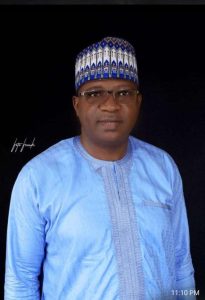
At the centre of this transformation is Hon. Mamman Nda Eri, a thoroughbred administrator, untainted, unbiased and calm under pressure, a man whose reputation has been built not by noise but by procedure, consistency and the courage to do what is right even when it is politically inconvenient. In an environment where electoral umpires are often second-guessed before they begin, Eri has shown that when all hands work in genuine collaboration, trust is possible, and that legacy, once established, will stand the test of time.
As things stand in Kogi, it is beyond the usual council election. One with a top notch arrangement that will make electrons from the state a benchmark for many other states and in years to come.