
 By joshua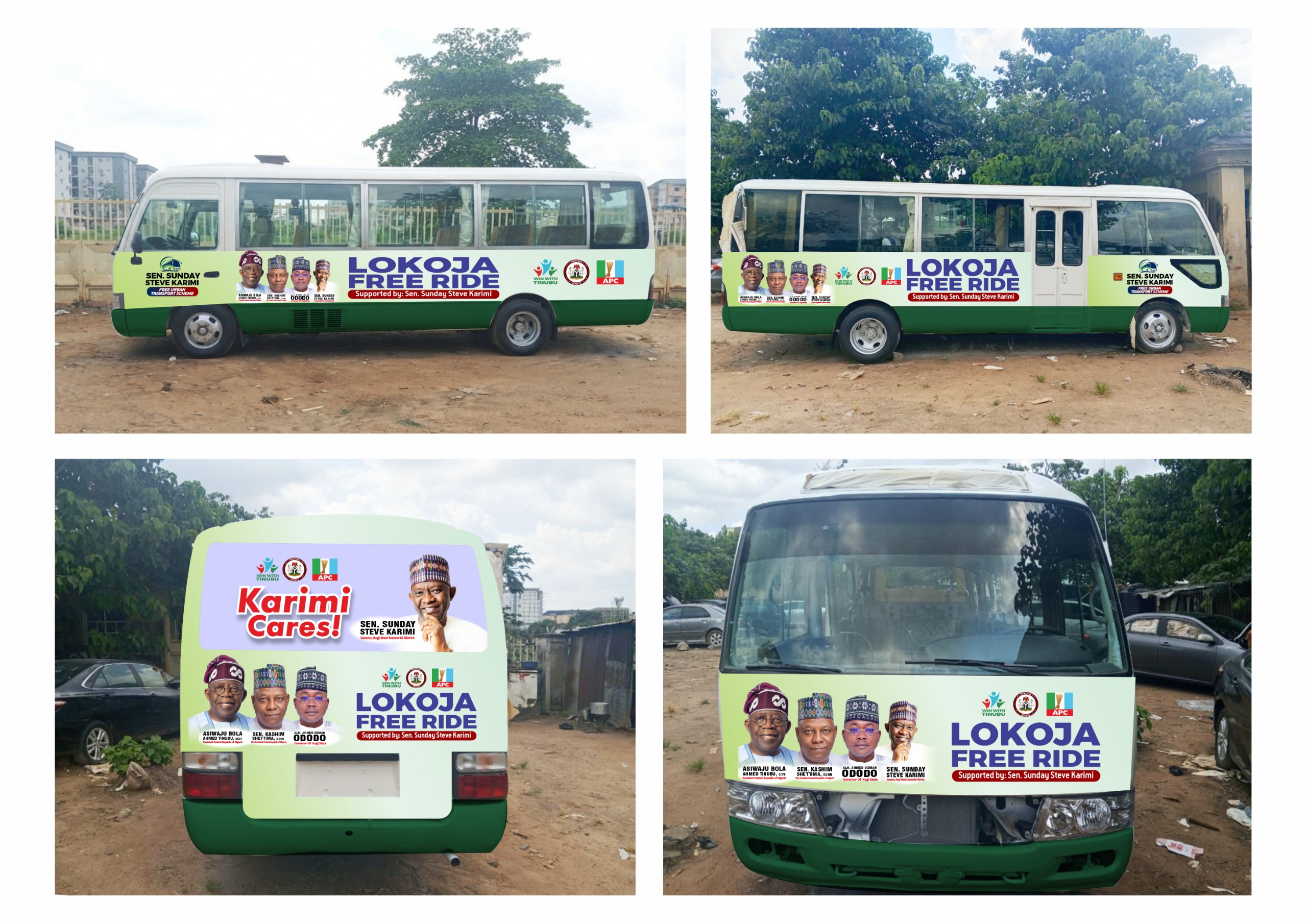
KARIMI CARES: WHEN REPRESENTATION BECOMES SERVICE, COMPASSION AND HOPE
By Musa Bakare
Today, 30 September 2026, marks the commencement of the Karimi Cares Free Shuttle Bus Service in Lokoja, the Kogi State capital, an intervention initiated by Senator Sunday Steve Karimi, representing Kogi West Senatorial District.
The launch of the free bus service is a response to rising transportation costs.
It initially covers the Army Barracks–Lokoja New Market/Nataco Junction corridor and is intended to provide relief to commuters, workers, students, traders and other residents.
There are moments in the life of a people when leadership ceases to be about speeches, ceremonies and political promises and becomes something much more profound: a helping hand extended to the ordinary citizen at the point of need.
Today is one of such moments in Kogi State.
The launch of the Free Shuttle Bus Service is more than the deployment of buses onto the streets of Lokoja. It is a practical statement that representation must ultimately be measured by its capacity to touch human lives.
The buses are not merely machines moving from Barracks to Nataco.
They are vehicles of relief.
They are vehicles of dignity.
They are vehicles of compassion.
They are vehicles of representation.
At a time when the rising cost of transportation continues to place additional pressure on households, the decision to provide free shuttle transportation is an intervention directed at one of the most immediate realities confronting ordinary people: the daily cost of moving from one place to another.
The service is designed to cushion transportation costs for commuters, civil servants, students, traders and other residents of Lokoja.
That is the beauty of people-centred representation.
For the worker rushing to the office in the morning, the free bus means money saved.
For the student travelling to school, it means transportation fare that can remain in the pocket.
For the trader heading to the market, it means additional resources for the day’s business.
For the low income family struggling to balance food, school fees, healthcare and transportation, it means that one burden has been lifted.
And for the elderly, the vulnerable and those whose daily existence is defined by economic pressure, it is a reminder that with Karimi, representation possesses a human face.
Behind every constituency figure is a human being with a family, a business, a dream, a struggle and a future.
This is why Karimi Cares deserves to be understood not merely as a transport initiative, but as an expression of a broader philosophy of representation: bring service closer to the people.
Today, in Lokoja, the Karimi Cares shuttle bus has become a symbol of something very important: the idea that politics must ultimately return to the people.
A bus carries passengers physically.
But a compassionate public intervention carries something deeper, it carries hope.
It tells the citizen: You have not been forgotten.
It tells the struggling family: Your burden matters.
It tells the young person: Your future is important.
It tells the electorate: with Karimi, representation would always be felt, not merely heard.
KARIMI CARES.
To care is to notice.
To care is to listen.
To care is to respond.
To care is to recognise that behind every economic statistic is a human story.
The free shuttle service represents an intervention at the level where citizens experience economic hardship every day.
There is also a timeless spiritual principle behind genuine public service: blessed is the hand that lifts another hand and it is built in the memories of people who will always say: When things were difficult, Karimi remembered us.
The launch of the free bus shuttle would stimulate a positive conversation about the huge benefit citizens should expect from another four years of Sunday Karimi in the Red Chamber.
Today, the Free Shuttle Bus Service has entered the streets of Lokoja. It should be welcomed as a positive and people-oriented intervention.
Musa Asiru Bakare, Chief Media Strategist of Win With Tinubu (WWT), writes from Lokoja, Kogi State.
September 30, 2026.