
 By joshua
 Tribute: Alhaji Ibrahim Idris, CON – Jakadan Sokoto
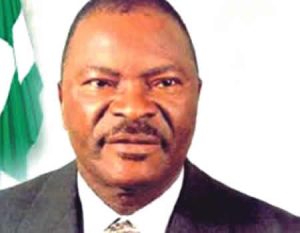
The man who came from nothing and gave everything
By JAMES OYEWOLE
Inna lillahi wa inna ilaihi raji’un.
The news that filtered in from the United Kingdom that Alhaji Ibrahim Idris, former Governor of Kogi State, has passed on, has thrown the entire confluence state and indeed Nigeria into mourning. A giant Iroko has fallen. A bridge between business and politics, between poverty and wealth, between power and humility, has collapsed.
Alhaji Ibrahim Idris, popularly and affectionately called Ibro by all, was not just a politician. He was a phenomenon. He was proof that in Nigeria, a man can rise from the dust of deprivation to the pinnacle of affluence and power without losing his soul. His death in the UK closes a remarkable chapter of almost eight decades of a life lived for others.
Humble Beginnings: From Idah to the World
Ibrahim Idris was born in 1949 in Idah, in present-day Idah Local Government Area of Kogi State, into a humble Igala family. His early life was a lesson in resilience and wandering in search of knowledge and survival.
He started his primary education in 1954 in Onitsha, Anambra State, in the heart of Igboland. That early exposure to the East made him fluent in Igbo language and culture, a trait he carried till his last days and which made him at home with every Nigerian. In 1962 he moved to Kano where he completed his primary education in 1963. He then proceeded to Buguma in Rivers State where he enrolled at King’s Commercial College in 1964.
Life, however, was not kind. For lack of funds, he could not complete his secondary education. He dropped out after about a year. For many, that would have been the end. For Ibro, it was the beginning. Dejected but not defeated, he returned home. It was his uncle who gave him a modest seed money. With that little capital, he ventured into furniture making.
What many did not know was that as a small boy, Ibro had cultivated the habit of service. In Idah, he used to go to the bush to fetch feeds for the livestock of a prominent politician, who lived in the same compound with his parents. The man noticed his diligence and once dashed him five shillings. That culture of selfless service became his compass for life.
The Business Empire: Ibro, The Builder
From that small seed, Alhaji Ibrahim Idris built an empire. He first established himself in Minna, Niger State, with a boutique and supermarket, then moved to Sokoto in 1970 where history would remember him.
In Sokoto, he established the Ibrahim Furniture Factory — which became the largest furniture factory in the entire old Sokoto State. He followed it with Ibro Hotel, the first 3-star hotel in the old Sokoto State. The people of Sokoto loved him so much that they gave him the prestigious traditional title of Jakadan Sokoto — the Ambassador of Sokoto. It was a title he cherished more than many political offices.
Not content, he diversified. Construction, property development, agriculture, education, general merchandise. His business interest under the umbrella of Ibro Holdings spread across Nigeria. But his flagship remains the Grand Ibro Hotel, with over 300 ensuite rooms, standing majestically in the heart of the Federal Capital Territory, Abuja. It is a hotel that has hosted Presidents, Governors, diplomats and ordinary Nigerians, all treated with the same Ibro humility.
His business success was not accidental. It was built on three principles: hard work, trust and philanthropy. He believed in employing people and empowering them. He believed that wealth has no meaning if it does not touch lives. Even at the height of his business success, he maintained a disarming simplicity. He preferred his trademark babanriga, cap and sandals. He would stop his convoy on the highway to buy roasted corn, banana or mango from roadside sellers and chat with them like old friends. Simplicity was his first name.
Later in life, to prove that it is never too late, he returned to school. He sat for his GCE as an external candidate, passed, and proceeded to the University of Abuja where he studied Law and graduated in 2004 — while he was already Governor.
The Reluctant Politician Who Became a Reference Point
For many years, Ibro kept a safe distance from partisan politics. He was a businessman, not a politician. But in 2003, the ordinary people of Kogi State came calling. Kogi, created in 1991, was yearning for a new direction, for a leader who understood poverty because he had lived it.
He yielded to popular demand and joined the Peoples Democratic Party (PDP). In the PDP primary of 2003, he contested against formidable opponents including Ebira leader, Senator Ahmed Tijani Ahmed. To the surprise of many, he won the ticket. And in April 2003, he achieved what was thought impossible — he defeated an incumbent Governor, the late Prince Abubakar Audu, who was once his bosom friend, to become Governor of Kogi State. He was the first man in the Fourth Republic to defeat an incumbent Governor in Nigeria.
He took office on May 29, 2003. He was re-elected in April 2007. His election was nullified by the Court of Appeal on the grounds that INEC wrongly excluded ANPP candidate, Audu from the ballot. President Umaru Yar’Adua ordered the Speaker, Clarence Olafemi, to take over as acting Governor on February 6, 2008. But in the repeat election held on March 29, 2008, Ibro returned, resoundingly elected by his people. He served until January 26, 2012, handing over to his friend, Captain Idris Wada. In total, he governed Kogi for nearly nine years — the longest anyone has governed Kogi State, and one of the longest in Nigeria’s history.
What did he do with those nine years? He made them a golden era that Kogites still reference today.
His philosophy of governance was simple: projects must be sited based on need, not on where the Governor comes from. For that, he was loved across the three senatorial districts.
He inherited three months salary arrears from his predecessor and he paid them immediately. And when he left office in 2012, he did not owe a single month’s salary. Workers got their salaries as at when due. He also was paying WAEC fees for all Kogi students — a policy that opened the door of education to thousands of poor children.
Infrastructure was his trademark. He constructed housing estates across the 21 local government areas of the state. In Lokoja alone, he built the Otokiti Housing Estate, the 500-unit Ganaja Village Estate and the 50-unit Assembly and Judges’ Quarters. He dualised major roads in Lokoja, built the Kogi State University Teaching Hospital, Anyigba, upgraded the Kogi State University, Anyigba which was established by Audu, and built roads linking rural communities that had never seen asphalt before.
He was a Governor who picked his calls. He returned missed calls even if the number was not saved. He initiated handshakes. He did not put on the airs of power. He was accessible to the market woman, to the okada rider, to the traditional ruler. That was his power — his humility.
Family Man, Philanthropist, Father to All
Alhaji Ibrahim Idris was a family man in the truest sense. He was blessed with many wives and many children, and he loved them all fiercely. His home in Asokoro, Abuja, and his country home in Idah and Abuja were always open. On Sallah days, his house was a Mecca for the less privileged — disabled persons, widows, beggars, orphans — who came from far and near to receive his generosity.
His family has known both joy and pain. In April 2024, he lost his beloved son, Honourable Mohammed Ibrahim Idris, former member of the House of Representatives for Ankpa/Olamaboro/Omala Federal Constituency (2011-2015). Mohammed slumped and died in Abuja, shortly after returning from Eid prayers. It was a devastating blow that Governor Ahmed Usman Ododo and former Governor Yahaya Bello both mourned publicly. Ibro bore the loss with faith, as a devout Muslim who believed that to Allah we belong and to Him we shall return.
In his later years, he was blessed with twins — Imaan and Ikram, and Ibrahim and Ilhan who turned six in 2026 — who brought him renewed joy. He celebrated his 77th birthday on April 6, 2026, in Abuja, hale, hearty, younger and stronger, exchanging banters with associates after returning from a business trip and routine medical check-up in the United States.
He held the national honour of Commander of the Order of the Niger (CON). But his greatest honour was the love of his people. He was Ibro. The man who never forgot where he came from.
Final Farewell
Alhaji Ibrahim Idris has gone to be with his Maker in the UK. Details of his burial in accordance with Islamic rites will be announced by the family. He leaves behind a legacy of business acumen, political tolerance, developmental strides and uncommon philanthropy.
Kogi has lost a father. Nigeria has lost a builder. The Igala nation has lost its shining star. Sokoto has lost its Ambassador.
May Almighty Allah forgive his shortcomings, grant him Aljannatul Firdaus, and grant his family, the people of Kogi State and all Nigerians the fortitude to bear this irreparable loss.
Adieu, Jakadan Sokoto. Adieu, Ibro.