
 By joshua
 KOGI GOVERNMENT STRENGTHENS IMPLEMENTATION OF WORLD BANK-ASSISTED HOPE PROGRAMME
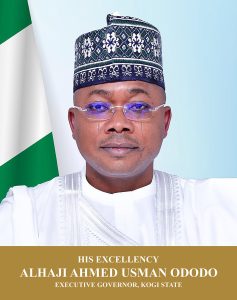
…Gov. Ododo to Chair State Steering Committee as Finance Commissioner, Health, Education, Local Government Commissioners and other key officials join implementation structure
The Kogi State Government has taken another major step towards strengthening human capital development with the proposed constitution of the State Steering Committee (SSC) and State Technical Working Committee (TWC) for the implementation of the Human Capital Opportunities for Prosperity and Equity – Governance (HOPE-GOV) Programme.
The proposed implementation structure, submitted for the consideration and approval of the Executive Governor of Kogi State, Alhaji Ahmed Usman Ododo, FCA, is designed to provide strategic oversight, policy direction, technical coordination and effective collaboration among critical Ministries, Departments and Agencies involved in the programme.
HOPE-GOV is part of the Federal Government and World Bank-supported Human Capital Opportunities for Prosperity and Equity initiative, with strong linkages to governance reforms and improved delivery in the education and health sectors. World Bank documentation confirms that HOPE-GOV is a Program-for-Results operation involving participating states and focused substantially on public administration, education and health.
Under the proposed arrangement, Governor Ahmed Usman Ododo, FCA, will serve as Chairman of the State Steering Committee, while the Honourable Commissioner for Finance, Budget and Economic Planning, Hon. Asiwaju Asiru Idris, will serve as a member alongside the Commissioners responsible for Health, Education, Local Government and Chieftaincy Affairs, as well as other senior government officials.
Other proposed members of the Steering Committee include the Executive Director of the Kogi State Primary Health Care Development Agency, Executive Chairman of the Kogi State Universal Basic Education Board and the Accountant-General of Kogi State, while the State Project Coordinator, Pharm. Ramat Molo Aliyu, is proposed to serve as Secretary.
The Steering Committee is expected to provide the overall strategic leadership and policy guidance required for the coordinated implementation of HOPE-GOV, HOPE-PHC and HOPE-EDU programmes in Kogi State.
The proposed State Technical Working Committee will complement the Steering Committee by providing technical leadership, coordination and operational support. Its membership cuts across the Ministries of Finance, Budget and Economic Planning; Health; Education; Local Government and Chieftaincy Affairs; Office of the Accountant-General; Kogi State Primary Health Care Development Agency; SUBEB and relevant HOPE programme desk offices.
The structure reflects the Ododo administration’s commitment to an integrated approach to human capital development, where improvements in public financial management and institutional governance are deliberately connected to measurable outcomes in health and education.
The World Bank has emphasised the importance of stronger investment in health, education, skills and effective institutions in addressing Nigeria’s human-capital challenges. Its 2026 Human Capital Report identifies human capital as a critical foundation for economic growth, productivity and poverty reduction.
For Kogi State, the HOPE implementation framework is expected to further strengthen accountability, coordination, transparency, data-driven decision-making and efficient utilisation of public resources, while ensuring that interventions ultimately translate into improved services and better outcomes for citizens.
The constitution of the committees also reinforces Governor Ododo’s broader commitment to building institutions capable of delivering sustainable development beyond individual programmes and administrations.
With the proposed Steering and Technical Working Committees, Kogi State is positioning itself to effectively coordinate the various components of the HOPE Programme and maximise the opportunities provided by the Federal Government–World Bank partnership for the benefit of its people.
… Kogi is not merely participating in HOPE; the State is putting in place the governance architecture required to translate the programme into measurable improvements in the lives of its citizens.