
 By joshua
 Dan Orbih Dies At 64 , PDP Loses Strategist Politician
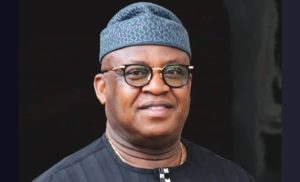
By Ikhili Ebalu, Benin city
Chief Daniel Osikhena Orbih, a prominent Edo politician and one of the longest-serving chieftains of the Peoples Democratic Party (PDP), has died at the age of 64.
Orbih died on Monday, August 31, 2026, according to a statement issued on behalf of the Orbih family by Francis Udukhomoi Orbih, Esq.
The family, announcing his death with “profound sadness and a heavy heart,” described the deceased as a beloved brother, husband, father and uncle, while submitting to the will of Almighty God.
His death marks the end of a political career spanning several decades and characterised by party organisation, political mobilisation, fierce electoral contests and an enduring influence on Edo and South-South politics.
Born on October 27, 1961, in Ogbona, Etsako Central Local Government Area of Edo State, Orbih was the son of the late Chief M.C.K. Orbih, himself a prominent politician of the First Republic who represented Afenmai-East Federal Constituency in the Federal House of Representatives.
Following in his father’s footsteps, Dan Orbih became deeply involved in politics and eventually emerged as one of the most recognisable figures in Edo’s political landscape.
Orbih’s name became virtually synonymous with the PDP in Edo State after he assumed the leadership of the party in the state.
He served as chairman of the Edo State chapter for nine years, from 2011 to 2020, a period during which the party remained a dominant force in the state’s political affairs.
As state chairman, Orbih developed a reputation as a formidable party organiser and an outspoken defender of the PDP. He was frequently at the centre of major political battles involving the party, its opponents and successive administrations in Edo.
His political influence eventually extended beyond Edo when he became National Vice-Chairman of the PDP, South-South, giving him a prominent role in the affairs of the party across the region.
In that position, Orbih remained an influential voice on questions concerning party discipline, internal democracy, opposition politics and the future of the PDP.
He was particularly vocal about the need for the PDP to remain a strong opposition party, arguing that adherence to the party’s constitution and internal democratic principles was essential to rebuilding its political strength.
Orbih’s political career was not without controversy. His confrontational approach to political contests frequently placed him at odds with powerful figures within and outside his party. His disagreements with former Edo Governor Godwin Obaseki and his political allies became particularly prominent after Obaseki joined the PDP in 2020.
The disagreement subsequently developed into a prolonged struggle over the control and structure of the Edo PDP.
The crisis produced rival factions, parallel congresses and legal battles, with Orbih emerging as the principal leader of one of the factions. The dispute eventually reached the Supreme Court in connection with the party’s 2023 Edo primary controversies.
Orbih’s political activities also attracted the attention of the PDP’s national leadership. In July 2024, the party’s National Working Committee suspended him after considering complaints concerning his activities relating to the 2024 Edo governorship election.
Despite the internal battles, Orbih continued to assert his influence within the party and remained a major figure in the South-South political establishment.
Orbih’s contribution to Nigerian public life extended beyond his activities as a state party chairman.
Through his position as National Vice-Chairman, South-South, he became part of the PDP’s national political leadership and participated in debates over the direction, organisation and survival of Nigeria’s major opposition party.
He was also involved in political mobilisation and party-building activities, particularly in the South-South, where his extensive political networks made him an important interlocutor among party stakeholders.
Even during periods of intense internal disagreement, Orbih continued to insist that the PDP could recover its national relevance if its leaders returned to the party’s constitutional principles and strengthened its internal structures.
Whether admired or criticised, Orbih was rarely a peripheral figure in Edo politics. For his supporters, he was a political strategist who spent years building and defending the PDP and creating structures that enabled the party to remain competitive in Edo and the wider South-South.
For his critics, his uncompromising political style sometimes contributed to the factional battles that plagued the party.
But beyond the disagreements, his place in the political history of contemporary Edo is difficult to ignore.
He belonged to a generation of politicians who helped shape the state’s transition from the political dominance of the old PDP establishment to the increasingly competitive multi-party environment that defines Edo politics today.
His political journey also reflected a broader Nigerian story: the struggle within political parties over leadership, succession, ideology, loyalty and control of party structures.
Chief Dan Orbih is survived by his wife, Mrs. Florence Orbih; his children, Ms. Winifred Anwosiobor Orbih and Dr. Mildred Omonemi Orbih; his brothers and sisters; and other members of the extended family.
The family appealed to relatives, friends and well-wishers to remember them in their prayers as they mourn the loss.
It said details of the funeral arrangements would be announced in due course. The statement signed by Francis Udukhomoi Orbih ended with a prayer for the deceased: “May his soul rest in perfect peace.”