
 By joshua
 COALITION FAILURE: THE OPPOSITION’S DIVIDED HOUSE AND ATIKU’S CHANCE IN 2027 – Adabara
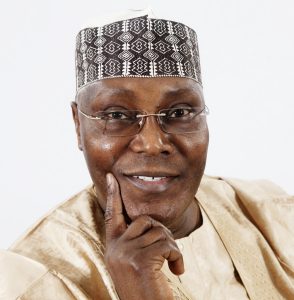
Photo by www.mortenfauerby.dk
©mortenfauerby 2010 – all rights reserved
Nigeria’s 2027 presidential election is gradually becoming a contest defined not only by the strength of the ruling APC, but also by the inability of the opposition to build a single, united political platform capable of confronting President Bola Ahmed Tinubu.
What initially appeared to be the beginning of a powerful opposition coalition involving major political figures has increasingly turned into competing political camps, particularly around the ADC and the emerging NDC.
The African Democratic Congress (ADC) and the Nigeria Democratic Congress (NDC) now appear to be the two major opposition centres attracting national attention. The original expectation was that the major opposition personalities—Atiku Abubakar, Peter Obi, and Rabiu Kwankwaso could put their personal ambitions aside and build a single platform.
That expectation has suffered a major setback.
Peter Obi’s movement away from the ADC and the emergence of the NDC have fundamentally changed the political calculation. Rather than having one strong opposition candidate confronting Tinubu, Nigerians may now be presented with different opposition candidates appealing to different sections of the electorate.
This is where the greatest danger lies for the opposition.
Atiku Abubakar is an experienced national politician with a political structure that cuts across several regions of the country. Peter Obi, on the other hand, has retained considerable enthusiasm among young Nigerians and voters who identify with his 2023 political movement. Rabiu Kwankwaso equally commands significant influence, particularly in Kano and parts of the North-West.
If these forces remain divided, the opposition vote could once again be fragmented.
The important question, therefore, is no longer simply whether Atiku, Obi, and Kwankwaso are popular individually. The question is whether any of them can defeat Tinubu while the others remain in the race.
Atiku may, however, have an important advantage.
If the opposition remains divided between the ADC and NDC, Atiku’s long political experience, nationwide network, and established electoral structure could make him the strongest beneficiary of the fragmentation. Obi may retain a powerful base, while Kwankwaso remains influential in the North, but Atiku has demonstrated the ability to operate across Nigeria’s complicated political landscape.
There is also the unresolved question of the PDP.
The Peoples Democratic Party remains one of Nigeria’s most important political organisations, but its internal crisis has weakened its ability to act as a united opposition force. Some of its prominent figures are already taking positions that could bring them closer to the Tinubu administration.
Nyesom Wike has openly spoken about a broader “Rainbow Coalition” that could support Tinubu in 2027. If more PDP politicians conclude that their political future is better secured through cooperation with the incumbent than through another divided opposition campaign, the APC could benefit substantially.
Bukola Saraki is another political figure whose position will be closely watched. His long-term political relevance can not be separated from the calculations surrounding 2027 and beyond. However, it would be premature to conclude that his political decisions are exclusively motivated by a 2031 presidential ambition. Nigerian politics is much more complicated than that.
Donald Duke could also become relevant if efforts are made to reconcile the different opposition tendencies. Rather than assuming that he will automatically support Atiku or Obi, it may be more accurate to see him as one of the personalities who could participate in negotiations aimed at creating a broader opposition understanding.
But the greatest obstacle remains the presidential ticket.
Who will step aside?
Will Atiku agree to surrender the ADC presidential ticket to Obi?
Will Obi agree to support Atiku after building a separate political platform?
Will Kwankwaso accept a secondary position?
These are not easy questions.
Every major presidential contender believes he has a legitimate path to victory. Once politicians invest enormous resources, supporters, and political capital into a presidential campaign, convincing them to step aside becomes extremely difficult.
This is why the failure of the coalition could ultimately become President Tinubu’s biggest political advantage.
But there is another side to this argument.
Nigerians are not necessarily interested in the political calculations of Atiku, Obi, Kwankwaso, Wike, or any other politician. The ordinary Nigerian is interested in something much more fundamental: How do I survive? How do I feed my family? Can I afford transportation? Can I pay school fees? Can I access healthcare? Can I find employment? Can my business survive? Can my children have a better future?
What Nigerians want now is an improved standard of living, not continuous hardship.
This means that the 2027 election can not be reduced to coalition mathematics alone.
If Nigerians believe that their economic circumstances have improved significantly by election time, the incumbent will have a strong argument for continuity. But if the majority of Nigerians continue to experience severe economic pressure, unemployment, high food prices, insecurity and declining purchasing power, the opposition could have a powerful opportunity, provided it can present a credible and united alternative.
This is where Atiku Abubakar may become lucky.
If the opposition remains divided and Atiku succeeds in positioning himself as the most credible and nationally acceptable alternative, he could emerge as the principal beneficiary of the anti-incumbency vote. He does not necessarily need every Obi or Kwankwaso supporter to become an Atiku supporter. He only needs to become the candidate around whom enough dissatisfied voters, political structures, and regional interests eventually converge.
The irony is that Atiku could benefit from the very coalition failure that appears to weaken the opposition.
If Obi and Kwankwaso maintain separate presidential ambitions, their votes could be divided. If the PDP remains internally fractured, some of its structures could move toward either Atiku or Tinubu. If the ADC retains its organisational advantage and Atiku successfully expands beyond his traditional base, he could gradually become the most formidable challenger.
Nevertheless, nobody should underestimate Tinubu.
The APC controls the federal machinery, possesses a substantial political structure, and will campaign on continuity, achievements, and the argument that the difficult economic reforms require more time to produce results.
The opposition’s challenge is, therefore, not merely to criticise the government. It must convince Nigerians that it has a better plan for their lives.
Ultimately, 2027 will not be won simply by the loudest political coalition. It will be won by the candidate who succeeds in convincing the majority of Nigerians that he can deliver a better future.
That is why one principle should remain at the centre of every political calculation:
MAJORITY CARRIES THE WAY.
In a democracy, politicians may negotiate, parties may merge, coalitions may collapse, and alliances may change. But at the end of the day, the people decide.
If the majority of Nigerians believe their lives are getting better, they may choose continuity.
If the majority believe their hardship has become unbearable and they see a credible alternative, they may choose change.
For now, the opposition’s failure to unite gives Tinubu an advantage. But if economic hardship remains the dominant experience of the Nigerian people and Atiku successfully emerges as the strongest alternative, Atiku Abubakar might just be lucky in 2027.
Ultimately, political calculations belong to politicians, but the final decision belongs to the majority.
MAJORITY CARRIES THE WAY.
Comrade Abduljelil Adabara El-Okene,