
 By joshua
 Expert at ANEEJ/EU Workshop Outlines Key IFF Typologies, Distinguishes Illicit Financial Flows from Money Laundering
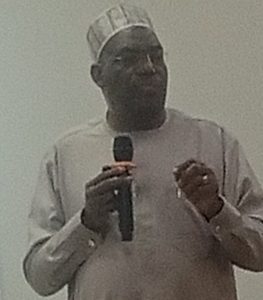
ABUJA, 26 June 2026 – Prof. Abdullahi Shehu, former Director General of GIABA and SECFIN representative, has urged Nigerian journalists to focus on five major typologies of Illicit Financial Flows, IFFs, and to understand the factual difference between IFFs and money laundering as part of stronger financial crime reporting.
Prof. Shehu made the call on Day 1 of a two-day workshop for 30 media practitioners organised by the Africa Network for Environment and Economic Justice, ANEEJ, with funding from the European Union under the SecFin Africa Project. The workshop, held 25th–26th June 2026 at Hawthorn Suites, Abuja, is themed “Strengthening the Capacity of CSOs and Journalists to Contribute to Addressing IFFs in Nigeria.”
In a presentation titled “Understanding Illicit Financial Flows and Financial Crimes in Nigeria,” Prof. Shehu broke down the main sources and forms of IFFs affecting Nigeria’s development:
He said the major types/sources of IFFs include Tax evasion, Trade mis-invoicing where importers/exporters deliberately falsify the value, quantity, or nature of goods on invoices.
He also mentioned Corruption and embezzlement, government funds diverted into secret foreign bank accounts, Money laundering, used to disguise the origin, movement, and ownership of illicit funds and Illegal markets, including drug and arms trafficking, smuggling, and cybercrime.
Prof. Shehu also highlighted common public sector patterns: embezzlement through diversion of budget allocations, procurement fraud involving inflated contracts and ghost projects, bribery and kickbacks for licences/permits, and state asset diversion through unauthorised transfers or manipulation of privatisation processes.
Clarifying a key misconception, Prof. Shehu said the “golden rule of money laundering is that the money is always illegal, while IFFs can involve money that was earned legally but moved or used illegally.” He added that IFFs are not simply the reverse of money laundering or terrorism financing, stressing that the issue of ownership and intent is central.
Prof. Shehu recommended that Nigeria must address governance and corruption risks by enforcing accountability at all levels, enforcing conflict of interest rules, reducing political interference, and strengthening judicial independence.
Furthermore he called for identifying enhance beneficial ownership transparency by maintaining accurate BO registers, requiring companies to disclose true owners, improving public access to BO information, and verifying submitted data.
He mentioned the need for Increase international cooperation and information sharing between institutions, Enhance tax administration to expand the tax base while reducing tax-related IFFs through improved tax collection systems and better monitoring of transfer pricing.
He concluded that combating IFFs is a collective responsibility and has a direct impact on achieving the Sustainable Development Goals, SDGs.
“The media and CSOs have critical roles to play in exposing IFFs. International collaboration and support are also essential. We must balance investigation with prosecution for results,” Prof. Shehu said.
ANEEJ said the workshop aims to equip journalists with data and skills to simplify complex IFF issues for citizens and hold institutions accountable.